

Trump's China Mission Pays Off: America's Top CEOs Open Doors in Beijing
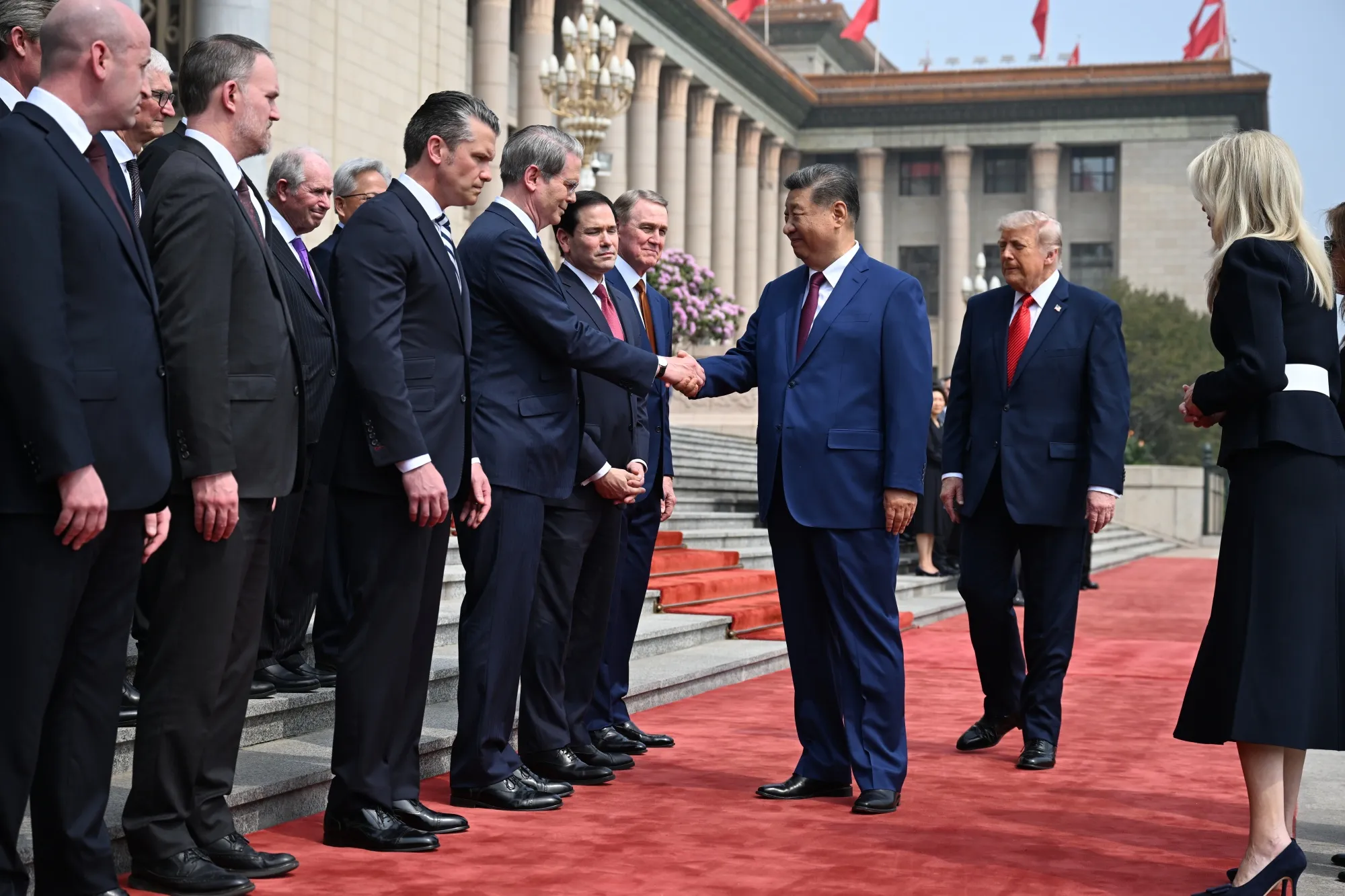
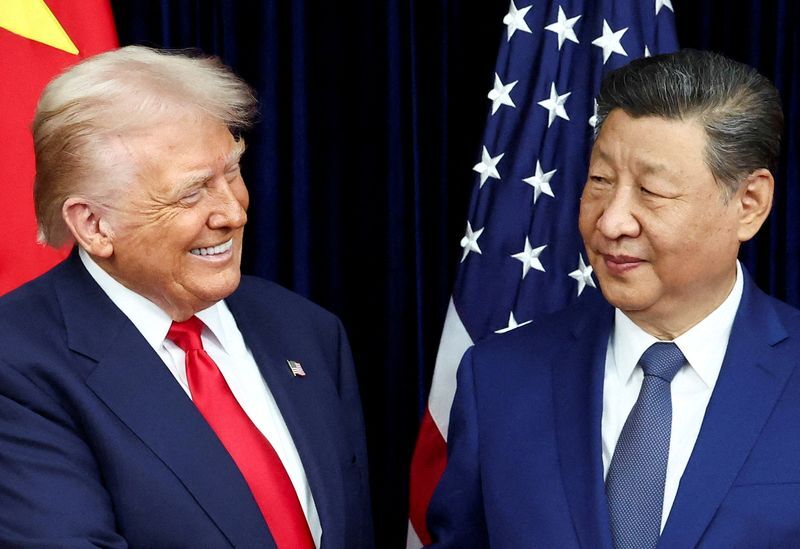
President Trump's first state visit to China in nearly a decade brought more than diplomacy — it brought Wall Street and Silicon Valley to Beijing's doorstep. Top U.S. executives held direct talks with Chinese regulators and ministers, laying the groundwork for major business deals. The results may take time to fully materialize, but the contacts made this week are real — and so is the momentum.

.
A Business Delegation Unlike Any Other
When President Donald Trump touched down in Beijing last week, he didn't come alone. Accompanying him was arguably the most powerful group of American business leaders ever assembled for a foreign visit: more than a dozen CEOs whose companies collectively represent trillions of dollars in corporate value.
Among them were the chiefs of Boeing, GE Aerospace, Goldman Sachs, Citigroup, Qualcomm, Visa, Cargill, Nvidia, Apple, BlackRock, Mastercard, Micron Technology, and Tesla. Trump had stated his intention to ask Chinese President Xi Jinping to "open up" China so that these executives could "work their magic" — and in Beijing, that is exactly what began to happen.
The visit was, as Trump himself called it, "an amazing period of time."
Direct Access to China's Power Centers
In diplomacy, access is everything. And in Beijing this week, American CEOs got precisely that.
The heads of GE Aerospace and Boeing met directly with China's National Development and Reform Commission (NDRC) — the country's all-powerful economic planning authority. GE Aerospace CEO Larry Culp and Boeing CEO Kelly Ortberg were part of the broader executive delegation accompanying Trump on his first state visit to China in almost a decade. The NDRC confirmed both meetings officially.
Citigroup CEO Jane Fraser held talks with the chairman of China's securities regulator (CSRC) and the Beijing party secretary, with discussions covering wealth management and cross-border financing. Goldman Sachs CEO David Solomon met the vice governor of the People's Bank of China and the director of China's foreign exchange regulator. China's commerce minister, meanwhile, sat down separately with the CEOs of Visa, Cargill, and Qualcomm.
These are not ceremonial photo ops. These are the exact regulators and ministries that control market access, licensing approvals, and investment conditions in the world's second-largest economy.
The Boeing Deal: A Decade in the Making
The most concrete and headline-grabbing result of Trump's Beijing visit is an agreement in principle for China to purchase American aircraft on a significant scale.
Trump announced that China had agreed to order 200 Boeing jets and between 400 and 450 GE Aerospace engines — with a standing promise to purchase up to 750 planes total "if they do a good job."
It would be a major feat for Boeing to regain its foothold in China, and revive faith in the 737 MAX, which China was the first country to ground seven years ago following a series of fatal crashes. A return to the Chinese market at this scale would be transformative for the company.
The deal has become a centrepiece of Trump's effort to portray the trip as a major success. And rightly so — no such deal had been in sight before this visit.
How Corporate Diplomacy Works — and Why It Takes Time
Critics who point to the absence of dozens of signed contracts are missing the point of how high-level economic diplomacy actually functions.
Deals of this magnitude — involving regulatory approvals, financing structures, technology licensing, and geopolitical sensitivities — are never finalized overnight. What happened in Beijing this week was the essential first step: senior-level human contact between decision-makers on both sides.
Both sides discussed expanding access for U.S. companies into Chinese markets, a top priority for executives on the trip. That conversation, held at the highest levels of government and business simultaneously, is what moves bureaucratic processes forward.
As one senior analyst put it, the summit served as a critical window for U.S. executives to position their strategic priorities directly with China's top authorities — exactly what a presidential visit is designed to enable.
A Signal Beijing Cannot Ignore
The sheer weight of the American delegation sent a message that no press release could. Together, the group represents trillions in corporate power with deep business ties to China, despite years of trade tensions between the world's two largest economies.
Their companies still rely heavily on Chinese consumers, manufacturing and supply chains, even as Washington and Beijing clash over tariffs, technology and national security. That mutual dependence is a foundation — not a weakness.
Nvidia's Jensen Huang, one of the most recognizable figures in global technology, spent time walking through central Beijing, trying local food and taking pictures with scores of fans — a quiet but powerful signal of goodwill and brand visibility in a market that matters enormously for the future of AI.
The Road Ahead
No one should expect that a two-day summit resolves decades of complex economic tension. That is not how geopolitics works. What Trump's Beijing visit accomplished is something more durable: it re-established direct, high-level channels between American business and Chinese state institutions at a moment when those channels had been narrowing.
The Boeing and GE orders, if formalized, will be worth billions. The regulatory conversations opened by Fraser, Solomon, and others at Citigroup and Goldman Sachs could unlock capital markets access that American financial firms have been seeking for years.
Contacts have been made. Meetings have been held. Deals will follow — on terms that, for the first time in years, the United States is helping to shape.
.
Sources:
- Reuters – US CEOs meet Chinese officials in Beijing: https://www.reuters.com/business/finance/chinese-officials-meet-citigroup-goldman-chiefs-beijing-2026-05-16/
- Reuters / Spokesman-Review – Boeing, GE Aerospace CEOs meet China's state planner: https://www.spokesman.com/stories/2026/may/14/boeing-ge-aerospace-ceos-meet-chinas-state-planner/
- The Hill – Trump shares few details on Boeing, GE Aerospace deals with China: https://thehill.com/homenews/administration/5880005-trump-china-xi-trade-deals-boeing-ge-aerospace/
- CBS News – Top U.S. CEOs accompanying Trump to China: https://www.cbsnews.com/news/trump-china-trip-billionaire-ceos-musk-huang/
- CNBC – Trump invites CEOs to join China trip for Xi summit: https://www.cnbc.com/2026/05/11/trump-ceos-elon-musk-tim-cook-larry-fink-xi-china-summit.html
- Fortune – Boeing could be the biggest winner on Trump's Beijing trip: https://fortune.com/2026/05/14/boeing-china-500-planes-trump/
- Fox News – Trump leverages U.S. corporate titans in Beijing meeting with Xi: https://www.foxnews.com/politics/china-cozies-trump-touts-delegation-richest-business-heavyweights-xi-summit
.
What's Your Reaction?
 Like
0
Like
0
 Dislike
0
Dislike
0
 Love
0
Love
0
 Funny
0
Funny
0
 Wow
0
Wow
0
 Sad
0
Sad
0
 Angry
0
Angry
0












Comments (0)