

China's Organ Harvesting Machine: Congress Demands Action as Evidence Mounts
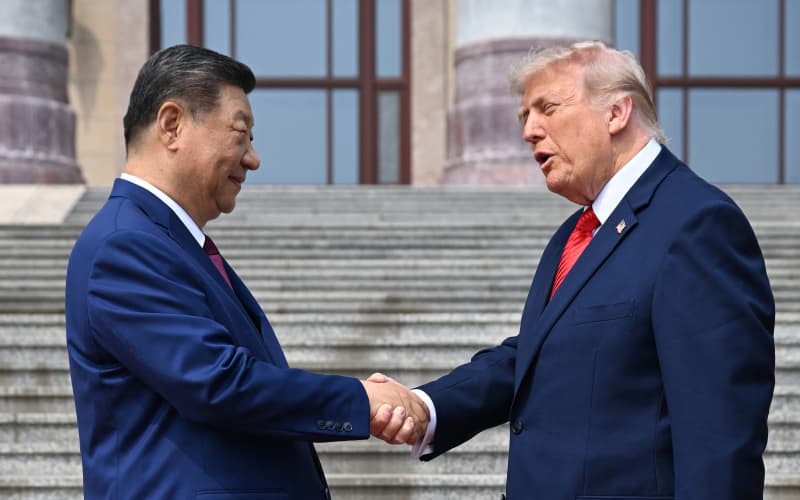
As President Trump met Chinese leader Xi Jinping in Beijing, U.S. lawmakers held a bipartisan hearing on what witnesses describe as a state-run system of forced organ harvesting targeting religious and ethnic minorities in China — including Falun Gong practitioners, Uyghurs, Tibetans, and Christians. The evidence, experts say, has never been more compelling — and the human cost never more urgent.


.
A Hearing Timed to a Summit
On May 14, 2026 — the very day senior U.S. and Chinese officials convened in Beijing — lawmakers on Capitol Hill sat down to hear testimony about one of the most disturbing human rights issues of our time.
The Congressional-Executive Commission on China (CECC) convened a formal hearing titled "A Market Built on Victims: Stopping Illegal Organ Trafficking in China and Beyond." The session was chaired by Rep. Chris Smith (R-N.J.), a veteran human rights advocate who has been pressing this issue in Congress for three decades.
The timing was not coincidental.
A Hot Mic Moment — and What It Revealed
Rep. Smith opened the hearing by referencing a striking incident from last September. During public ceremonies on Tiananmen Square, microphones captured a private exchange between Chinese leader Xi Jinping and Russian President Vladimir Putin. The two men were overheard discussing organ transplant technology and the possibility of extending their lives to 150 years.
Smith did not treat the exchange as a curiosity.
Writing in The Washington Times just days before the hearing, Smith described it as a window into a worldview that treats human beings as interchangeable spare parts — and power as something to be medically preserved indefinitely. He called forced organ harvesting "murder masquerading as medicine."
Eyewitnesses Speak: Prisoners on Stretchers, Blood Draws, Disappearances
The hearing brought several powerful firsthand accounts.
Seyed Alireza Motevalian, an Iranian-born businessman and refugee who lived in China, told lawmakers that as recently as 2021, he repeatedly witnessed unconscious prisoners arriving at prison hospital facilities on stretchers. They were taken directly into surgical rooms. None returned.
Kalbinur Sidik, a Uyghur woman who worked as a Chinese-language teacher inside detention camps in Xinjiang, described a systematic process she witnessed firsthand. Detainees had blood drawn every week. They were subsequently given injections of unidentified substances and small white pills that Chinese nurses described as nutritional supplements. Healthy men disappeared without explanation.
Sidik also testified that a police officer escorting her confirmed that a local drug rehabilitation center had been converted into an organ extraction facility. According to Sidik, the officer told her: the trade in so-called "halal organs" — taken from Muslim minorities and marketed to wealthy Muslim buyers abroad — was, in his words, "booming."
The Science: Data That Cannot Be Real
Beyond eyewitness testimony, academic research has called China's official assurances into serious question.
In 2015, Beijing announced it had ended the use of prisoner organs and transitioned to a voluntary donation system. The international medical community largely welcomed this development.
But a 2019 peer-reviewed study published in BMC Medical Ethics, led by researcher Matthew Robertson of the Australian National University, subjected China's official organ donation statistics to forensic statistical analysis. The conclusion was stark: the data appeared to have been generated using a simple mathematical formula rather than collected from real donors. When compared against datasets from 50 other countries tracked by the World Health Organization, no other nation's figures followed any such pattern.
The study's authors described the findings as "highly suggestive evidence of data manufacturing and manipulation that could only have been done by human intervention."
The Tribunal's Verdict
International scrutiny has also come through the courts of evidence, if not yet formal law.
In June 2019, the independent China Tribunal in London — chaired by Sir Geoffrey Nice KC, the prosecutor who led the case against Slobodan Milosevic at the International Criminal Tribunal for the former Yugoslavia — released its final judgment after a year of investigation.
The panel's conclusion, reached unanimously after reviewing testimony from over 50 witnesses, investigators, and medical experts: forced organ harvesting from prisoners of conscience has been carried out in China on a significant scale, and continues to this day. Falun Gong practitioners, the tribunal found, have likely been the primary source of organs. The tribunal described the practice as constituting crimes against humanity and called it one of the worst mass atrocities of the current century.
Beijing has consistently denied the allegations.
Falun Gong: A Community Targeted
Falun Gong — a spiritual discipline rooted in meditation, slow-motion exercises, and the values of truthfulness, compassion, and tolerance — was banned by the Chinese Communist Party in 1999 after tens of millions of Chinese citizens had taken up the practice. Since then, practitioners have faced systematic persecution including imprisonment, torture, and, according to accumulated evidence, killing for their organs.
Medical researchers have noted that the health-conscious lifestyle associated with Falun Gong practice tends to produce organs that are in particularly good condition — a grim factor, experts suggest, that has made practitioners especially targeted within the organ harvesting system.
At the hearing, investigative journalist and researcher Ethan Gutmann, a senior fellow at the Victims of Communism Memorial Foundation and author of The Xinjiang Procedure, provided a chilling data point: the estimated average age of harvesting victims is 28 years old.
"Killed to Order"
Also testifying was former U.S. Ambassador-at-Large for International Religious Freedom Sam Brownback, who told lawmakers that the Chinese Communist Party is currently conducting what he described as three simultaneous religious genocides — against Tibetan Buddhists, Uyghur Muslims, and Falun Gong practitioners.
Brownback called on Washington to adopt the same firm posture toward Beijing that it once took toward the Soviet Union. He pointed to the case of Cheng Peiming, a Falun Gong practitioner who went public in 2024 with the account of how portions of his lung and liver were surgically removed without his consent in China in 2004. He bears a scar of roughly 14 inches around his chest.
One particularly damning piece of evidence cited at the hearing: a 2022 study published in the American Journal of Transplantation — one of the leading peer-reviewed journals in the field — identified dozens of Chinese-language medical papers in which surgeons appeared to have removed organs from patients before confirming brain death. In plain terms, the papers suggested that donors were still alive at the time of surgery.
Rep. Smith noted that Chinese hospitals routinely offer organ transplants within days — a timeline that is medically impossible in any country relying on genuine voluntary donation, where wait times are typically measured in years.
The industry, according to estimates presented at the hearing, involves as many as 70,000 victims per year and generates revenues of up to $1.7 billion annually.
Legislation Stalled — Lives at Stake
The House of Representatives has already passed two pieces of relevant legislation: the Falun Gong Protection Act and the Stop Forced Organ Harvesting Act, the latter authored by Rep. Smith. Both bills would impose sanctions on individuals and entities that enable forced organ harvesting. Both are currently stalled in the Senate.
Rep. James Walkinshaw (D-Va.), who attended the hearing, stressed that human rights must not be allowed to disappear from the U.S.-China policy agenda even as trade, technology, and security dominate negotiations.
Rep. Dale Strong (R-Ala.) called for immediate action, noting that what is being exposed is something that should have been confronted long ago.
Smith urged the Senate to act without further delay. "For the victim who tomorrow is going to be slaughtered for their organs," he said, "delay is denial."
He added, without a trace of irony, that there is at least one point of bipartisan consensus in Washington: no one wants Xi Jinping or Vladimir Putin to live forever.
.
Sources
- Congressional-Executive Commission on China — Hearing Announcement, May 14, 2026: https://www.cecc.gov/events/hearings
- Rep. Chris Smith, The Washington Times, op-ed, May 12, 2026: https://www.washingtontimes.com/news/2026/may/12/pass-stop-forced-organ-harvesting-act/
- Washington Examiner — "GOP trying to stop US involvement in China's organ harvesting scheme": https://www.washingtonexaminer.com/policy/healthcare/4558254/gop-us-involvement-china-organ-harvesting-scheme/
- Robertson et al., BMC Medical Ethics, 2019 — Full study via PubMed/NIH: https://www.ncbi.nlm.nih.gov/pmc/articles/PMC6854896/
- ANU press release via EurekAlert, November 2019: https://www.eurekalert.org/news-releases/523179
- China Tribunal Final Judgment, June 17, 2019: https://chinatribunal.com/china-tribunal-final-judgement-and-report-17th-june-2019/
- NBC News — "China forcefully harvests organs from detainees, tribunal concludes," June 2019: https://www.nbcnews.com/news/world/china-forcefully-harvests-organs-detainees-tribunal-concludes-n1018646
- Al Jazeera — "UN urged to investigate forced organ harvesting in China," September 2019: https://www.aljazeera.com/news/2019/9/25/un-urged-to-investigate-forced-organ-harvesting-in-china
.
What's Your Reaction?
 Like
0
Like
0
 Dislike
0
Dislike
0
 Love
0
Love
0
 Funny
0
Funny
0
 Wow
0
Wow
0
 Sad
0
Sad
0
 Angry
0
Angry
0












Comments (0)