

Trump and Xi Agree: The Strait of Hormuz Must Reopen — But Iran Isn't Ready to Deal
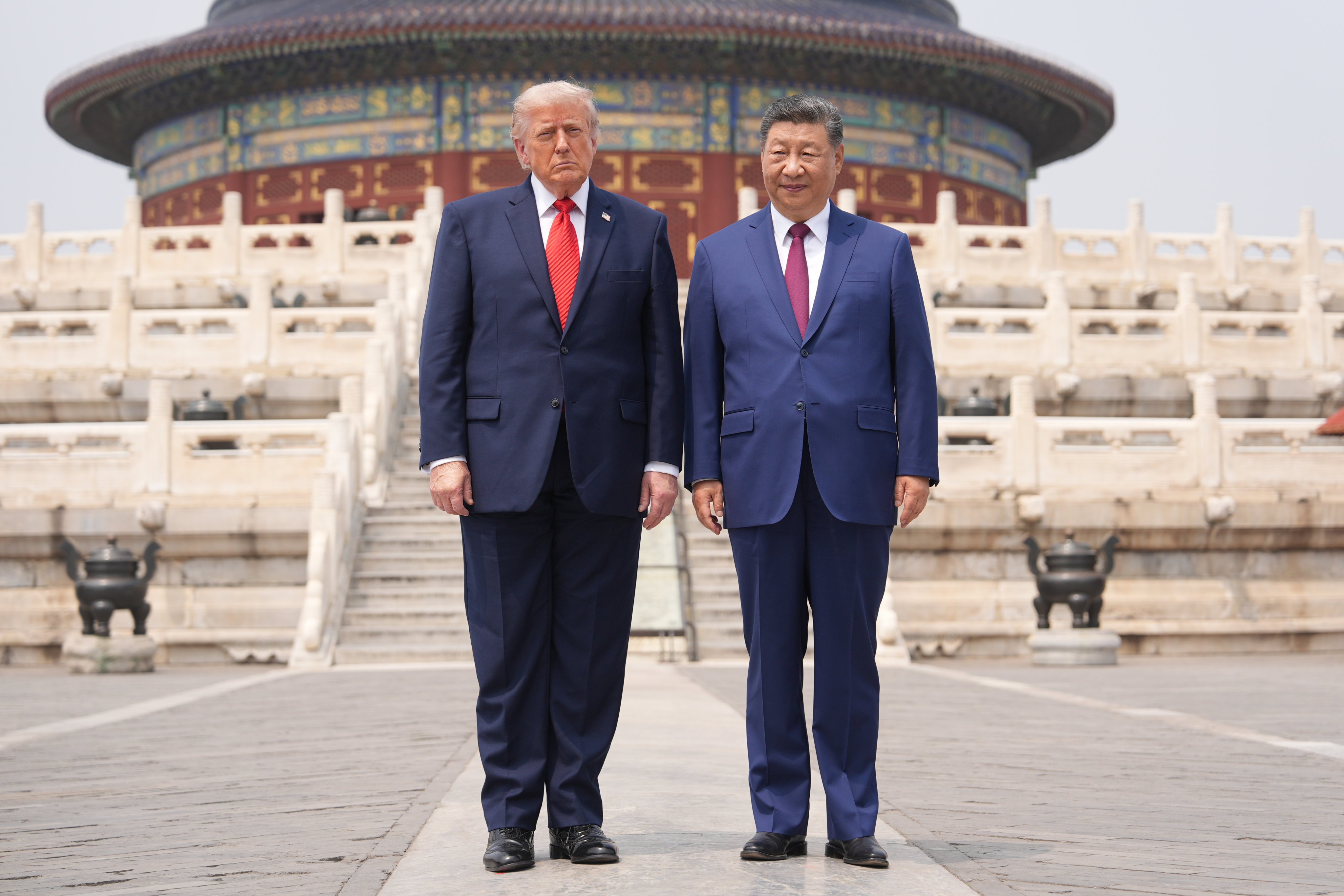
Following a high-stakes summit in Beijing, U.S. President Donald Trump says China's Xi Jinping is on board with demanding Iran reopen the Strait of Hormuz — the world's most critical oil chokepoint. But Beijing is playing it carefully, peace talks remain stalled, and Iran is refusing to budge.

.
A Summit With Real Consequences
When Donald Trump touched down in Beijing for a two-day summit with Chinese President Xi Jinping, the stakes could hardly have been higher. The backdrop: a war between the United States, Israel, and Iran that has now entered its third month, a global oil supply shock of historic proportions, and a diplomatic impasse that is costing the world economy hundreds of billions of dollars.
Trump left Beijing claiming a significant diplomatic win. According to the U.S. president, Xi has agreed that Iran must reopen the Strait of Hormuz — the narrow waterway connecting the Persian Gulf to the wider world. "We agree almost entirely on the situation in Iran," Trump told reporters aboard Air Force One on his way home.
The White House confirmed the joint position: both leaders "agreed that the Strait of Hormuz must remain open to support the free flow of energy" and that Iran "can never have a nuclear weapon."
What China Actually Said — And What It Didn't
Beijing's response was notably more measured. China's Foreign Ministry released its own summary of the summit — and it contained no mention of Iran or the strait at all. A ministry spokesperson later said only that "dialogue and negotiation is the right way forward," and that "there is no point in continuing this conflict, which should not have happened in the first place."
That carefully worded distancing tells its own story. Xi apparently told Trump that China would not supply Iran with military equipment — a statement Trump called "a big statement." But broader questions about Chinese intelligence sharing, electronics exports, and economic lifelines to Tehran remain unanswered.
China buys roughly 90% of Iran's exported oil, according to U.S. government data. That dependency gives Beijing leverage — and a reason to want the strait open. But it also makes openly pressuring Tehran a politically costly move for Xi.
The World's Biggest Oil Crisis — In Numbers
The scale of the disruption is staggering. Before the U.S. and Israeli strikes on Iran began on February 28, the Strait of Hormuz carried approximately 20% of the world's seaborne oil and liquefied natural gas supply — some 20 million barrels of oil per day. Today, commercial traffic through the strait has collapsed to roughly 5% of its pre-war levels, according to a UK parliamentary research briefing.
The result is the worst oil supply disruption in recorded history. Oil prices have surged above $109 a barrel as of Friday, up around 3% in a single day. U.S. Treasury yields hit their highest level in around a year, signaling that markets expect the Federal Reserve may need to raise interest rates in response to persistent inflation driven by energy costs.
The International Monetary Fund has warned that if the war drags on, global economic growth could fall to 2.5% this year — a serious slowdown that would hit developing nations particularly hard.
Iran's Position: Talks Yes, Trust No
Iran has not shut the door on diplomacy. Foreign Minister Abbas Araqchi, speaking to reporters in New Delhi on Friday, said Tehran had received messages from Washington indicating the U.S. was willing to continue talks. "We hope that, with the advancement of negotiations, we will reach a good conclusion so that the Strait of Hormuz can be completely secured," he said.
But Araqchi also made clear that Iran does not trust the United States. Previous rounds of negotiations have been derailed when Washington launched air strikes mid-talks — a pattern Tehran has not forgotten.
Iran's core demands remain unchanged: an end to the U.S. naval blockade of Iranian ports, international recognition of Iranian sovereignty over the strait, security guarantees against future attacks, and war reparations. Washington, in turn, demands that Iran give up its enriched uranium stockpile, end its nuclear research program, and allow free passage of ships through the strait.
These positions are currently incompatible. Talks have been on hold since last week, when each side rejected the other's most recent proposals.
Sanctions Relief on the Table?
One potentially significant signal came from Trump himself: he said he was considering whether to lift U.S. sanctions on Chinese oil companies that buy Iranian crude. That would be a major concession with significant economic and geopolitical weight.
It would also create pressure on China to deliver results. If Beijing benefits from softer sanctions enforcement, the expectation would be that it uses its leverage with Tehran constructively. U.S. Treasury Secretary Scott Bessent said he believed Beijing would "do what they can" to reopen the waterway, calling it "very much in their interest."
Analysts, however, are skeptical about how far China's influence actually extends. Yue Su, principal economist for China at the Economist Intelligence Unit, told CNBC that while the Trump-Xi summit showed real common ground, "the Iranian regime is operating in survival mode and will prioritize its own interests and agenda above all else."
A Conflict That Is Hurting Trump at Home
The war is also becoming a political liability for Trump. With U.S. congressional elections approaching in November, the combination of sky-high gas prices, a shaky ceasefire, and no visible path to resolution is creating domestic pressure. Trump has said the ceasefire with Iran is "on life support" and warned he would resume military attacks if no deal is reached.
Secretary of State Marco Rubio, meanwhile, pushed back against any suggestion that the U.S. had gone to Beijing hat in hand. "He didn't ask them for anything," Rubio told NBC News. "We're not asking for China's help. We don't need their help."
Trump's own framing was more pragmatic: "I'm not asking for any favors, because when you ask for favors, you have to do favors in return."
What Comes Next
The diplomatic calendar is crowded. Iran has said it welcomes Chinese involvement in the peace process. Pakistan continues to serve as a key back-channel mediator. Saudi Arabia and Gulf states are pushing for a return to pre-war conditions in the strait.
Whether China's carefully worded support translates into real pressure on Tehran — or remains a diplomatic gesture — will determine whether this week's Beijing summit is remembered as a turning point or a missed opportunity.
For now, the Strait of Hormuz remains largely closed. The oil flows that power much of the global economy remain disrupted. And the path to a deal is as narrow as the waterway at the center of it all.
.
Sources:
- Reuters – Trump says Xi agrees Iran must open strait, China says war shouldn't have started (May 16, 2026): https://www.reuters.com/world/china/trump-says-xi-agrees-iran-must-open-strait-china-says-war-shouldnt-have-started-2026-05-16/
- CNBC – Trump says Xi offered help on Iran — but how far is Beijing willing to go? (May 15, 2026): https://www.cnbc.com/2026/05/15/trump-xi-us-china-iran-war-deal.html
- Al Jazeera – Trump, Xi discuss Strait of Hormuz as Chinese vessels transit key waterway (May 14, 2026): https://www.aljazeera.com/news/2026/5/14/trump-xi-discuss-strait-of-hormuz-as-chinese-vessels-transit-key-waterway
- TIME – Trump Says Xi Offered To Help Broker Peace With Iran (May 14, 2026): https://time.com/article/2026/05/14/trump-xi-china-iran-strait-hormuz/
- CBS News – Trump, Xi agreed Strait of Hormuz 'must remain open' (May 14, 2026): https://www.cbsnews.com/live-updates/trump-xi-iran-war-strait-hormuz-lebanon-israel-peace-talks/
- U.S. Congressional Research Service – Iran Conflict and the Strait of Hormuz: Impacts on Oil, Gas, and Other Commodities (March 2026): https://www.congress.gov/crs-product/R45281
- UK Parliament Research Briefing – Israel/US-Iran conflict 2026: Reopening the Strait of Hormuz: https://researchbriefings.files.parliament.uk/documents/CBP-10636/CBP-10636.pdf
.
What's Your Reaction?
 Like
0
Like
0
 Dislike
0
Dislike
0
 Love
0
Love
0
 Funny
0
Funny
0
 Wow
0
Wow
0
 Sad
0
Sad
0
 Angry
0
Angry
0












Comments (0)