

Breakthrough Drug Daraxonrasib Cuts Pancreatic Cancer Death Risk by 60 Percent
A new oral drug called daraxonrasib has nearly doubled survival times for patients with advanced pancreatic cancer in a landmark Phase 3 clinical trial. Published in the New England Journal of Medicine and presented at the 2026 ASCO Annual Meeting, the results are being called the most significant advance in pancreatic cancer treatment in decades.

.
One of the Deadliest Cancers Finally Meets Its Match
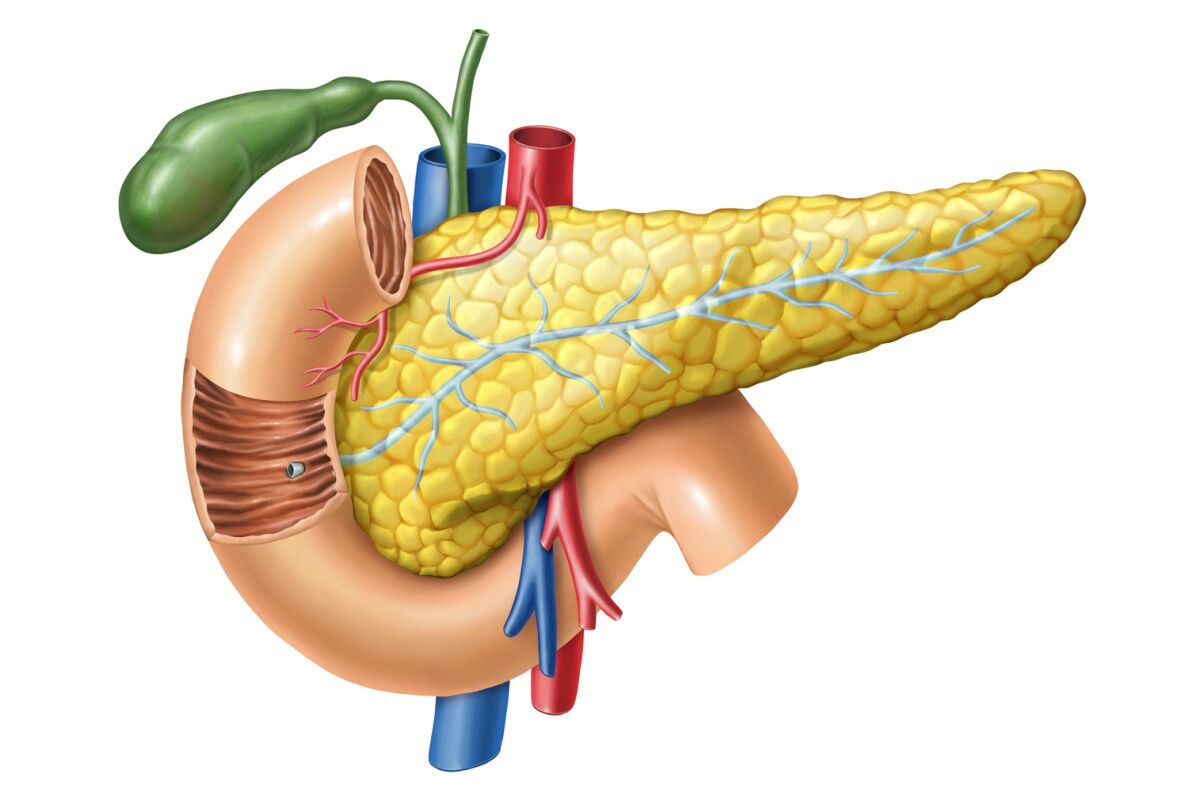
Pancreatic cancer has long been one of medicine's most stubborn problems. It is typically diagnosed at an advanced stage, resists most modern therapies, and kills roughly 50,000 Americans every year. For patients with metastatic disease, the five-year relative survival rate stands at approximately three percent. That bleak reality may now be changing.
Results from the global Phase 3 trial known as RASolute 302, presented at the American Society of Clinical Oncology (ASCO) Annual Meeting in Chicago on May 31, 2026, and published simultaneously in the New England Journal of Medicine, show that a new targeted drug called daraxonrasib dramatically outperforms standard chemotherapy.
The Numbers That Stunned the Medical World
In the overall study population, patients taking daraxonrasib achieved a median overall survival of 13.2 months, compared to 6.7 months for those receiving standard intravenous chemotherapy — with a hazard ratio of 0.40. That translates to a 60 percent reduction in the risk of death.
The drug met its primary endpoints of both overall survival and progression-free survival as a second-line therapy — meaning it was given to patients whose cancer had already progressed after an initial round of treatment.
The results support the use of daraxonrasib as the new standard of care for second-line treatment of metastatic pancreatic cancer, according to researchers at Dana-Farber Cancer Institute, who led the study.
How the Drug Works
The key lies in a gene called RAS. Activating RAS mutations occur in more than 90 percent of pancreatic cancer tumors. In healthy cells, the RAS gene helps regulate whether a cell grows or stops. In cancer patients with a RAS mutation, this switch gets stuck in the "on" position — cells multiply without control, forming tumors.
For years, scientists tried and failed to block this protein. The RAS protein was long considered undruggable because nothing seemed to stick to it — its surface was too smooth and slippery for conventional drugs to bind.
Daraxonrasib gets around this problem in an ingenious way. The drug binds to a cellular chaperone called cyclophilin A, acting as a kind of "molecular glue" that causes the drug to adhere to the RAS protein, ultimately leading to tumor cell death.
What makes the drug especially powerful is its broad reach: daraxonrasib is effective against both RAS-mutant and RAS-wild-type metastatic pancreatic cancer — meaning it also showed activity in the smaller group of patients whose tumors did not carry a RAS mutation.
A Landmark Trial with 500 Patients
The RASolute 302 investigators enrolled a total of 500 patients with metastatic pancreatic cancer at 59 sites in six countries. All participants had previously been treated with one prior chemotherapy regimen — the standard first-line approach for this disease.
A large majority — 459 of the 500 participants — carried RAS G12 mutations, the most common type found in pancreatic cancer. However, enrollment was open to all patients regardless of mutation status, making the findings applicable to a broader patient population.
Safety: Manageable But Not Trivial
No drug this powerful comes without side effects. The trial found that nearly all patients experienced some adverse effects, though serious complications were less common than with conventional chemotherapy.
Treatment-related adverse events of any grade were reported in 96 percent of patients; events of grade 3 or higher — meaning serious side effects interfering with daily functioning — were reported in 30 percent.
Common side effects included skin rash, diarrhea, mouth inflammation, and fatigue. Roughly half of patients at the standard 300-milligram dose required dose adjustments — but notably, no patients had to discontinue treatment entirely due to side effects.
Researchers also pointed out that the existing second-line chemotherapy options carry their own significant toxicity burdens, making the overall risk-benefit profile of daraxonrasib look favorable.
The FDA Is Already Moving
Regulators in the United States have been following this drug's development closely. The FDA previously granted daraxonrasib both Breakthrough Therapy Designation and Orphan Drug Designation, which offer faster development pathways and market incentives.
In May 2026, the FDA issued a "safe to proceed" letter, allowing the drug to be used for additional patients while the formal approval process continues. The positive Phase 3 results may lead to further FDA action to make the drug more widely available.
Daraxonrasib was also selected for the FDA Commissioner's National Priority Voucher pilot program, a new initiative designed to fast-track the most important drug candidates through the regulatory process.
Revolution Medicines has announced plans to submit the full Phase 3 dataset to health authorities globally as part of a formal New Drug Application.
"Practice-Changing" — What Experts Are Saying
The scientific community has greeted the results with unusual enthusiasm. Brian M. Wolpin, MD, the lead researcher and director of the Hale Family Center for Pancreatic Cancer Research at Dana-Farber, called the findings a "highly meaningful step forward" that he expects to be "practice-changing for physicians."
Other researchers at ASCO described the results as "landscape-changing," citing the unprecedented survival and efficacy data seen in second-line treatment.
The Phase 3 trial data were published simultaneously in the New England Journal of Medicine — the world's most prestigious medical journal — a sign of how seriously the scientific community is taking these results.
What Comes Next
Scientists are already working on the next set of questions. Resistance to targeted cancer therapies is a known challenge — tumors can sometimes find ways to adapt and grow despite the treatment. Researchers are now studying how and when daraxonrasib resistance develops, and how it might be overcome.
Revolution Medicines is also running additional Phase 3 trials evaluating daraxonrasib in other settings, including as a first-line treatment for pancreatic cancer and in previously treated non-small cell lung cancer, where RAS mutations are also common drivers of tumor growth.
For the hundreds of thousands of patients diagnosed with pancreatic cancer each year, this moment represents something rare: genuine, documented hope.
.
Sources
- Dana-Farber Cancer Institute – RASolute 302 Trial Results: https://www.dana-farber.org/newsroom/news-releases/2026/rason-inhibitor-doubles-median-overall-survival-in-results-of-phase-3-trial-for-patients-with-metastatic-pancreatic-cancer
- New England Journal of Medicine – Phase 3 RASolute 302 Full Paper: https://www.nejm.org/doi/full/10.1056/NEJMoa2605555
- Revolution Medicines – Official Phase 3 Press Release: https://ir.revmed.com/news-releases/news-release-details/daraxonrasib-demonstrates-unprecedented-overall-survival-benefit
- New England Journal of Medicine – Phase 1/2 Study Publication: https://www.nejm.org/doi/full/10.1056/NEJMoa2505783
- Memorial Sloan Kettering Cancer Center – Expert Commentary: https://www.mskcc.org/news/how-daraxonrasib-could-improve-pancreatic-cancer-treatment-offering-new-hope
- ASCO Post – Phase 3 Trial Summary: https://ascopost.com/news/june-2026/daraxonrasib-nearly-doubles-survival-in-previously-treated-metastatic-pancreatic-cancer/
.
What's Your Reaction?
 Like
0
Like
0
 Dislike
0
Dislike
0
 Love
0
Love
0
 Funny
0
Funny
0
 Wow
0
Wow
0
 Sad
0
Sad
0
 Angry
0
Angry
0
















Comments (0)