

Trump Defies Beijing: A Phone Call with Taiwan's President Could Reshape Asia's Balance of Power
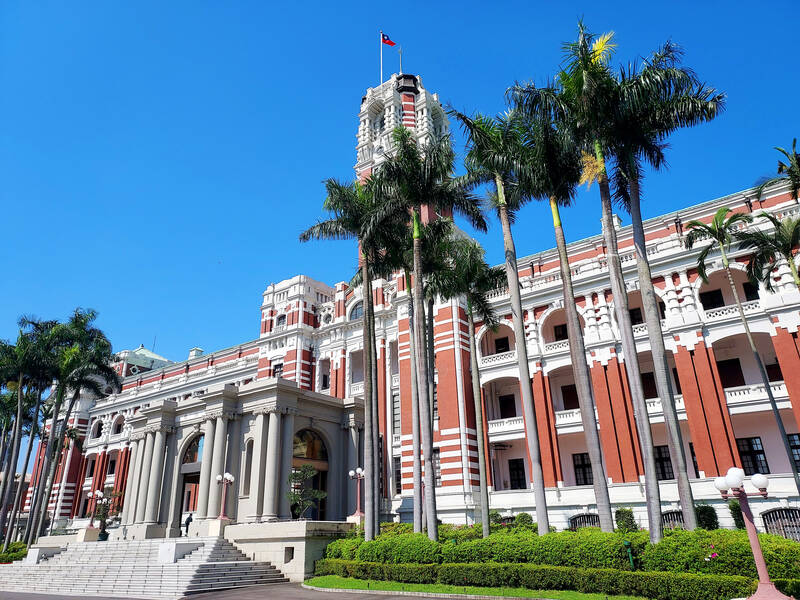
President Donald Trump has signaled he may speak directly with Taiwan's President Lai Ching-te — a move that would be unprecedented in modern U.S.-Taiwan relations and has already drawn sharp warnings from Beijing. The potential call adds another volatile layer to an already tense triangular relationship between Washington, Taipei, and Beijing.

.
A Phone Call That Could Shake Geopolitics
It is a simple thing — two heads of state picking up the phone. But in the complex world of U.S.-China-Taiwan diplomacy, a call between President Donald Trump and Taiwan's President Lai Ching-te would be anything but simple.
Trump confirmed Friday that such a call remains very much on the table. "I'll always talk to him," Trump told reporters aboard Air Force One when asked whether he still intended to reach out to Lai. The statement was brief — but its implications are enormous.
No sitting U.S. president has spoken directly with a Taiwanese president in several decades. If the call happens, it would mark a dramatic departure from decades of carefully managed diplomatic ambiguity.
Why Beijing Is Alarmed
The Chinese government wasted no time making its displeasure known. The Chinese Embassy in Washington issued a statement urging the Trump administration to "handle the Taiwan question with utmost prudence" and to avoid sending what it called "wrong signals" to Taipei.
Beijing considers Taiwan a breakaway province and has never renounced the use of force to bring it under its control. From China's perspective, a direct presidential call would implicitly elevate Taiwan's status — something the Chinese Communist Party (CCP) views as a direct challenge to its core territorial claims.
China's reaction is hardly new. After then-House Speaker Nancy Pelosi visited Taipei in August 2022, Beijing responded with large-scale military exercises, including launching short-range ballistic missiles over the island — a stark reminder of how Beijing responds to perceived provocations.
The Arms Deal Complicating Everything
Running parallel to the potential phone call is a proposed $14 billion arms package for Taiwan — approved by the U.S. Congress in January but still awaiting Trump's personal sign-off.
Trump has publicly described arms sales to Taiwan as a "negotiating chip" in the broader Pacific policy calculus. Critics say this framing — treating a democratic ally's defense needs as a bargaining tool — is deeply unsettling for Taipei and undermines decades of U.S. policy.
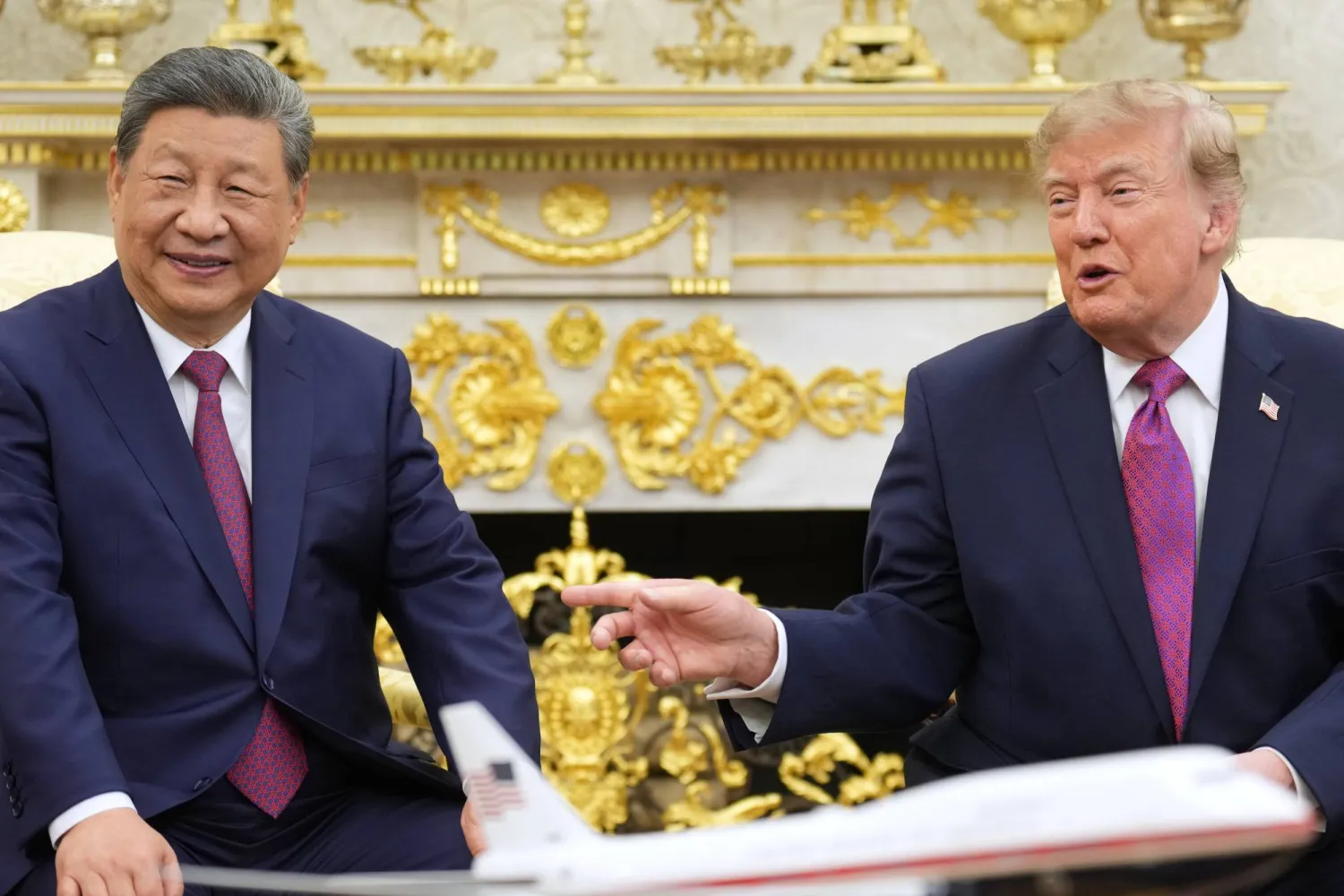
The concern has a legal dimension as well. The so-called Six Assurances, non-binding principles formulated under President Ronald Reagan in 1982, explicitly state that the United States "did not agree to consult with the People's Republic of China on arms sales to Taiwan." Trump's discussions with President Xi Jinping in Beijing about the arms package appeared to test that long-standing principle.
Secretary of State Marco Rubio, speaking before Congress this week, maintained that U.S. Taiwan policy has not changed. But analysts say the ambiguity in Trump's public statements is creating real uncertainty in Taipei.
What Taipei Wants Trump to Hear
Taiwan's President Lai has already indicated what he would say if the call takes place. He would stress that peace and stability in the Taiwan Strait are critical not just for Taiwan — but for global security and international trade.
Lai has also signaled he would make the case that China, not Taiwan, is the destabilizing actor in the region. Taiwan's growing defense budget, he would argue, is a direct response to Chinese military pressure — and U.S. arms sales are a key part of maintaining the deterrence that keeps the strait stable.
Taipei's representative office in Washington said Friday it would maintain "close contact" with the U.S. on both the arms sale and any potential call, adding that it would leave any announcement to Washington.
The Diplomatic Tightrope
Experts are divided on how Trump might ultimately play this.
Craig Singleton of the Foundation for Defense of Democracies noted that Trump's combined rhetoric — floating a presidential call while treating arms sales as a chip — has generated "more ambiguity than Taipei would like." For Singleton, the real test is not what Trump says, but whether the arms package actually moves forward and on what timeline.
Edgard Kagan, a former senior U.S. State Department official for East Asia policy and now China Studies chair at the Center for Strategic and International Studies (CSIS), offered a nuanced read: a Trump-Lai phone call would actually be viewed by Beijing as more provocative than even moving forward with the arms sale itself.
Kagan suggested that Trump might be using the possibility of a call as leverage — a way to make an eventual arms sale look like the more moderate option by comparison. By forgoing the call, Trump could potentially announce the arms package while giving Beijing just enough face-saving room to avoid a full-blown diplomatic crisis.
"This could give him the room to announce an arms sale, defuse the criticism that the U.S. is turning its back on Taiwan, and do it in a way that leaves the Chinese feeling there was some respect for their views," Kagan said.
What Comes Next
The United States formally switched diplomatic recognition from Taipei to Beijing in 1979 as part of the One China policy framework. Since then, Washington has maintained only informal relations with Taiwan — while simultaneously committed, through the Taiwan Relations Act, to providing the island with the means to defend itself.
That balancing act has held for over four decades. Trump's open willingness to call Lai — even under direct Chinese pressure not to — signals that the old rules of engagement may be shifting.
Whether the call happens or not, the message Trump is sending is clear: he will not be dictated to by Beijing on who he talks to. For a democratic Taiwan living under constant threat from a nuclear-armed neighbor, that posture — however unpredictable — may be the most reassuring thing Washington has offered in years.
.
Sources:
- Associated Press – Trump keeps door open to Taiwan call despite China warning: https://apnews.com/article/trump-china-taiwan-arms-sales-14dc4cfc46d51b98dbe3cbca51ebb5d1
- Reuters – U.S.-Taiwan arms sales and the Six Assurances explained: https://www.reuters.com/world/asia-pacific/what-are-six-assurances-us-has-given-taiwan-2022-08-03/
- Radio Free Asia – Taiwan Strait tensions and Lai Ching-te's security posture: https://www.rfa.org/english/news/china/taiwan-strait
- Center for Strategic and International Studies (CSIS) – Taiwan and U.S. Policy Analysis: https://www.csis.org/programs/china-power-project/taiwan
- Council on Foreign Relations – The Taiwan Relations Act and U.S. commitments: https://www.cfr.org/backgrounder/china-taiwan-relations-tension-us-policy-cross-strait
.
What's Your Reaction?
 Like
0
Like
0
 Dislike
0
Dislike
0
 Love
0
Love
0
 Funny
0
Funny
0
 Wow
0
Wow
0
 Sad
0
Sad
0
 Angry
0
Angry
0












Comments (0)