

Trump Heads to Beijing — but China's Exporters Have Already Stopped Worrying


.
A Long Road to the Negotiating Table
The trade rivalry between the United States and China did not start in 2025. But Trump's return to the White House brought it to a new level of intensity — fast.
Shortly after taking office, Trump imposed an initial 10% punitive tariff on Chinese goods. By April 2025, he launched sweeping "Liberation Day" tariffs on all imports. China retaliated, and within weeks, both countries had pushed tariffs on each other past the 100% mark.
The economic shock was real. Chinese exports to the United States dropped by 20% in 2025.
Geneva Truce — and Its Limits
In May 2025, negotiators from both sides met in Geneva and struck a 90-day tariff truce. The relief was short-lived.
Within three weeks, Trump accused China of violating the deal. Beijing fired back, calling U.S. measures "discriminatory." The dispute dragged on through the summer, with extensions, new export controls, and back-channel talks.
By October 2025, a second truce was reached — this time in Busan, South Korea — with Washington agreeing to trim some tariffs in exchange for Chinese concessions on fentanyl, soybeans, and rare earth exports.
China's Economy Didn't Collapse. It Adapted.
Despite the turbulence, China ended 2025 with a record trade surplus of $1.2 trillion — roughly the size of the Dutch economy. That figure tells a story that goes beyond tariffs.
While U.S.-bound exports fell sharply, China rapidly expanded into other markets. Exports to Africa surged nearly 26%. Southeast Asia grew by over 13%. Latin America and the European Union also posted solid gains.
Beijing had been preparing for exactly this kind of pressure for years — building nearly complete domestic supply chains across industries as part of a long-term national strategy of self-sufficiency.
"It Doesn't Pose a Major Threat to Us"
That confidence is now echoed in factory offices across China.
Yu Yangxian, a salesperson at a Chinese manufacturer of electric lockers and vending machines — products largely exported to the United States — says Trump's upcoming visit is, in her words, "none of her business." Her company survived triple-digit tariffs with its U.S. client base mostly intact, and has since opened new markets on multiple continents.
"As long as the United States continues to trade, it will have to do business with us," she said. "China's supply chains and product quality are strong."
Others in the industry have adopted the same attitude. Executives describe a growing sense of numbness toward Trump's trade statements — a sharp contrast to the panic that swept through supply chains in his first term.
The Rare Earth Card: Beijing's Ultimate Leverage
China's real power in this trade war is not just in factories. It lies underground.
Rare earth elements — critical materials used in semiconductors, military equipment, and clean energy technology — are produced almost exclusively in China. When Beijing began restricting their export in late 2025, U.S. industries took notice immediately.
"The rare earth thing really is just the ultimate trump card," said Cameron Johnson, senior partner at supply chain consultancy Tidalwave Solutions.
Beyond rare earths, China can also restrict exports of pharmaceuticals, industrial machinery, and electrical transformers — all of which the United States urgently needs for its infrastructure and energy expansion.
The Iran Factor: A Short-Term Shift
The ongoing conflict involving Iran has added a new dimension to U.S.-China relations.
When U.S. and Israeli forces began operations against Iran in early 2025, global energy supplies were disrupted. As the world's largest energy importer, China felt the pressure. In the short term, this gave Washington some leverage — the U.S. has surplus energy that China and others need.
But analysts warn this window may be narrow. Over the longer term, China's industrial breadth and supply chain dominance give it a structural advantage if tensions escalate further.
What Business Really Wants From This Summit
The American business community in China is watching Trump's visit with tempered expectations.
Eric Zheng, president of the American Chamber of Commerce in Shanghai, said the association's nearly 3,000 members would welcome an extended tariff truce — possibly paired with Chinese commitments to buy Boeing aircraft, U.S. soybeans, or American energy. But few expect a fundamental reset.
"A truce is great, better than a trade war, but a truce is temporary," Zheng said. "We need some certainty. Companies need to plan for the long term — not the next 90 days, not even six months."
Manufacturers on both sides of the Pacific say they've learned not to overreact. Those who waited out the worst of the tariff storm, rather than rushing to relocate production, now feel vindicated.
What to Watch: May 14–15 in Beijing
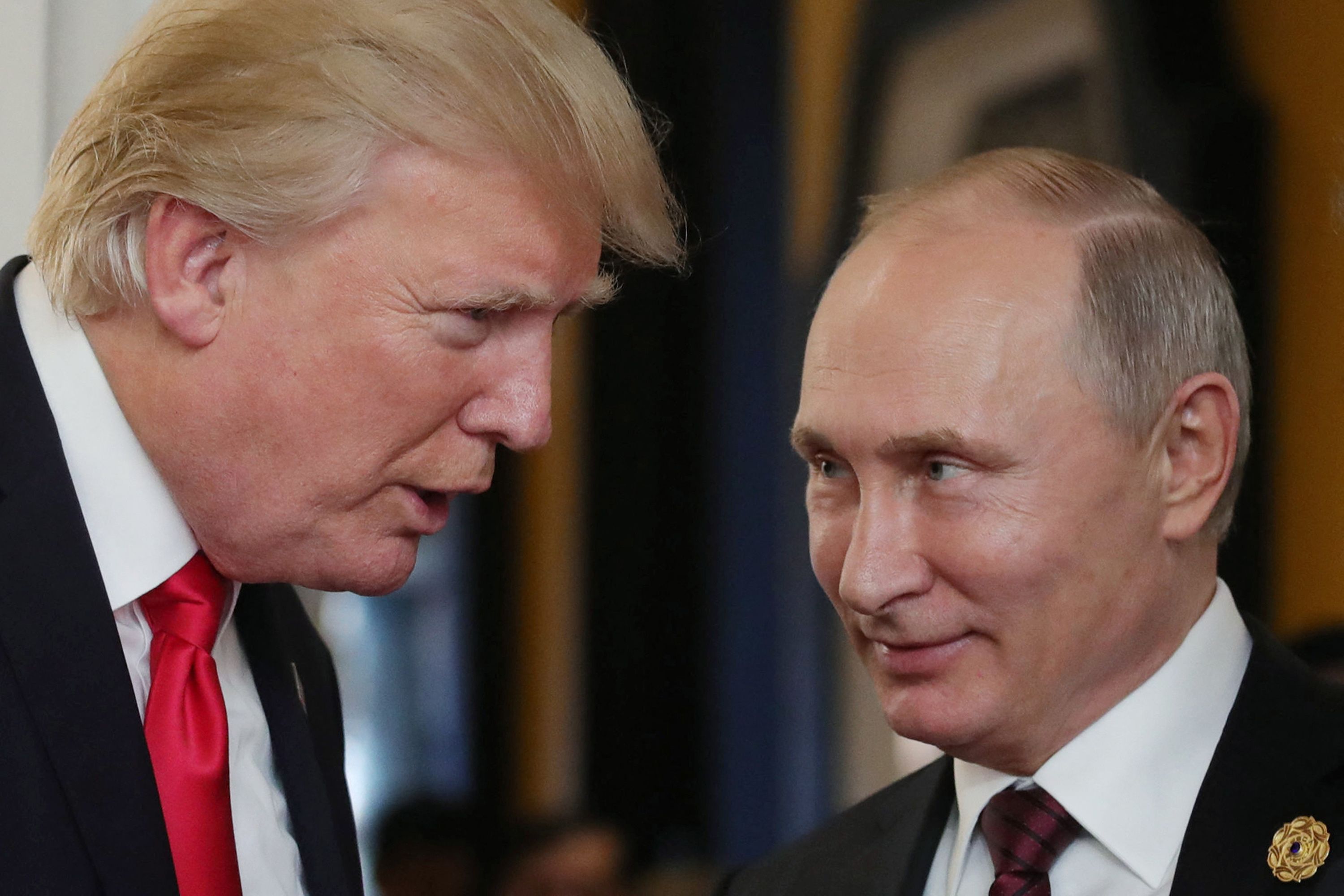
Trump's visit comes at a moment of relative calm — but fragile calm. Both sides have agreed to maintain a negotiating posture, and recent calls between senior officials have been described as "constructive."
The real test will be what follows. If the summit produces only another 90-day truce with no structural agreements, businesses will continue to operate in an environment of chronic uncertainty — adjusting, waiting, and growing increasingly immune to the political drama between Washington and Beijing.
China's message to the world — and to Trump — is already clear: it has built an economy that can absorb the pressure. The question is whether Washington has a long-term strategy to match it.
.
Sources
- Reuters – "U.S. President Trump's renewed trade war with China" (May 6, 2026): https://www.reuters.com/world/china/us-president-trumps-renewed-trade-war-with-china-2026-05-06/
- Reuters – "Chinese exporters 'numb' to U.S. threats as Trump set to visit" (May 7, 2026): https://www.reuters.com/world/china/chinese-exporters-numb-us-threats-trump-set-visit-2026-05-07/
- AP News – U.S.-China trade relations and tariff timeline: https://apnews.com/hub/china-united-states-trade
- Radio Free Asia – China rare earth export controls and strategic minerals: https://www.rfa.org/english/news/china/rare-earths
- Human Rights Watch – Background on CCP economic coercion and strategic leverage: https://www.hrw.org/topic/china
.
What's Your Reaction?
 Like
0
Like
0
 Dislike
0
Dislike
0
 Love
0
Love
0
 Funny
0
Funny
0
 Wow
0
Wow
0
 Sad
0
Sad
0
 Angry
0
Angry
0














Comments (0)