

China Stalls, Washington Warns: Visa Crackdown Looms Over Deportation Standoff
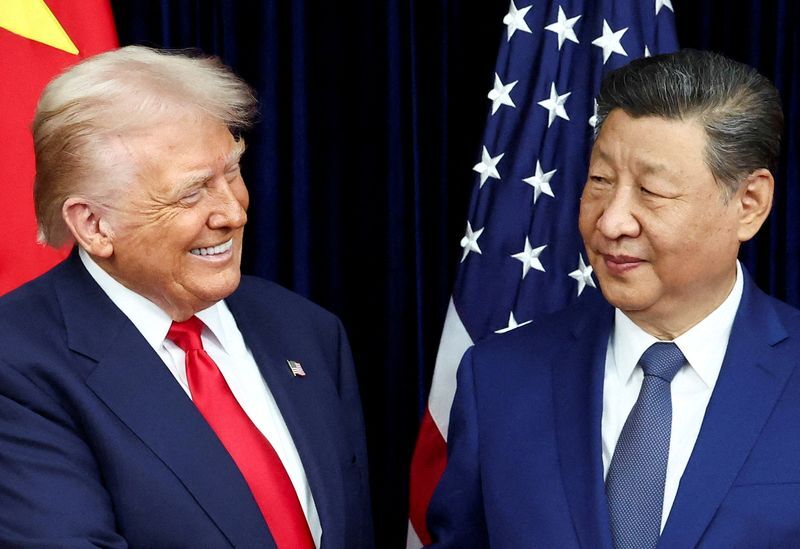
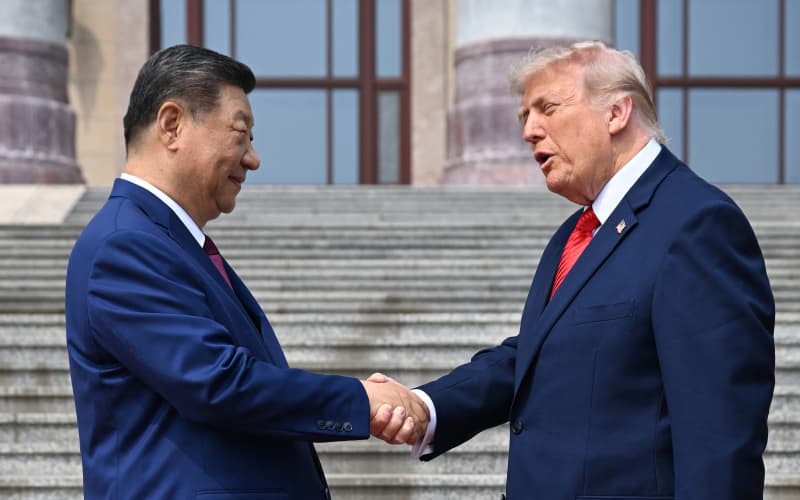
The Trump administration is putting Beijing on notice: if China doesn't take back its own citizens who are living in the United States illegally, Chinese nationals could soon face tougher visa restrictions. The warning lands just days before President Trump's planned state visit to Beijing – where the deportation dispute is set to land squarely on the negotiating table.


.
A Familiar Dispute Reaches a Boiling Point
The United States and China have long butted heads over the question of deportations. Now, with a high-stakes presidential summit just around the corner, Washington is turning up the pressure. A senior Trump administration official confirmed this week that Beijing has significantly slowed its cooperation on accepting deported Chinese nationals – a move the official described as a violation of China's international obligations toward its own citizens.
After an initial phase of cooperation in early 2025, during which roughly 3,000 Chinese nationals were returned via charter and commercial flights, Beijing has largely pulled back. Over the past six months, that willingness to accept deportees has faded considerably, according to the senior official, who spoke anonymously to discuss internal administration strategy.
Over 100,000 Undocumented Chinese Nationals in the U.S.
The scale of the issue is significant. More than 100,000 Chinese nationals without legal status are currently living in the United States, according to the administration official. Of those, over 30,000 hold final removal orders – meaning immigration courts have already ruled they must leave the country. More than 1,500 of them are currently held in detention, most with additional criminal convictions on their records.
Independent researchers put the numbers even higher. The Migration Policy Institute estimated that as far back as mid-2022, nearly 240,000 Chinese immigrants were residing in the U.S. without legal authorization. The surge in unauthorized border crossings from China occurred largely during the Biden years, when economic difficulties in China coincided with restricted legal visa pathways tied to COVID-era policies.
What the U.S. Is Threatening
The Trump administration is now weighing a package of punitive measures if China refuses to reverse course. These could include higher cash bond requirements for visa applicants, broader visa denials, and stricter border entry controls for Chinese citizens.
The legal basis for such steps already exists. Under Section 243(d) of the Immigration and Nationality Act, the Department of Homeland Security can impose visa sanctions on countries deemed "recalcitrant" (uncooperative) in accepting deportees. China has been on that list for years – going back through multiple administrations. What would change now is the willingness to actually enforce those sanctions at a broader scale.
The administration official put it plainly: inaction by the Chinese government will affect the ability of law-abiding Chinese citizens to travel to the United States.
Beijing's Strategy: Delay, Deflect, Leverage
U.S. officials and law enforcement analysts have long suspected that China deliberately drags its feet on issuing travel documents for deportees – a bureaucratic slowdown that effectively stalls removals indefinitely. The suspicion is that Beijing views the issue as a bargaining chip, linking Washington's requests on deportations to China's own demands that the U.S. extradite economic and political fugitives who have taken refuge on American soil.
Beijing's public stance remains carefully neutral. Chinese officials have acknowledged illegal migration as a problem and called it an international issue requiring bilateral cooperation – while doing little to advance that cooperation in practice. The Chinese embassy in Washington had not responded to requests for comment at the time of publication.
This pattern of using procedural delays as diplomatic leverage is consistent with the Chinese Communist Party's broader approach to managing pressure from foreign governments. Rather than direct confrontation, the CCP prefers to slow-walk compliance, extract concessions, and let time work in its favor.
The Timing: Trump Heads to Beijing
The escalation comes at a politically loaded moment. President Trump is scheduled to visit Beijing on May 14–15 – his first trip to China in eight years – for a summit with President Xi Jinping. The agenda is dominated by trade: Trump is seeking economic concessions he can point to before November's midterm elections, which polls suggest could be challenging for Republicans.
But immigration and deportations are also expected to feature prominently. The Trump administration has made deportation enforcement a cornerstone of its domestic policy, and China's resistance creates a visible gap in that record. For Trump, who has shown willingness to use tariffs and sanctions as leverage across a range of issues, the visa threat is part of a consistent playbook.
Other major countries with large undocumented populations in the U.S. – including India – have cooperated fully with American deportation requests. China's continued resistance stands out as an exception.
Broader Context: Trump's Immigration Crackdown
Since returning to office, the Trump administration has pursued one of the most aggressive immigration enforcement campaigns in modern U.S. history. This includes targeted deportation flights, visa revocations, enhanced vetting of social media activity and past public statements by visa applicants, and a series of travel restrictions affecting dozens of countries.
Beijing's refusal to accept deportees sits awkwardly within this framework. It signals that even as the two governments prepare for a summit framed around cooperation and stability, the CCP remains unwilling to meet basic international expectations when it comes to its own citizens abroad.
For ordinary Chinese nationals hoping to visit or study in the United States, the consequences of Beijing's stance could be severe – and entirely of the Chinese government's own making.
.
Sources:
- Reuters – Exclusive: US prepared for visa sanctions on China over migrants issue, official says (May 5, 2026): https://www.reuters.com/world/us/us-prepared-visa-sanctions-china-over-migrants-issue-official-says-2026-05-05/
- The Diplomat – The Real Role of a Trump-Xi Meeting (May 2026): https://thediplomat.com/2026/05/the-real-role-of-a-trump-xi-meeting/
- Brookings Institution – Beyond trade: Issues in a Trump-Xi summit (March 2026): https://www.brookings.edu/articles/beyond-trade-issues-in-a-trump-xi-summit/
- South China Morning Post – Trump-Xi summit: US trade chief casts doubt on pre-meeting Beijing visit (April 2026): https://www.scmp.com/news/us/diplomacy/article/3348590/trump-xi-summit-us-trade-chief-casts-doubt-pre-meeting-beijing-visit
- U.S. Embassy Beijing – Don't Risk Your Future: The United States Cracks Down on Illegal Immigration: https://china.usembassy-china.org.cn/dont-risk-your-future-the-united-states-cracks-down-on-illegal-immigration/
.
What's Your Reaction?
 Like
0
Like
0
 Dislike
0
Dislike
0
 Love
0
Love
0
 Funny
0
Funny
0
 Wow
0
Wow
0
 Sad
0
Sad
0
 Angry
0
Angry
0













Comments (0)