

Sweden Arrests Chinese Captain of Sanctioned Tanker Linked to Russia's Shadow Fleet
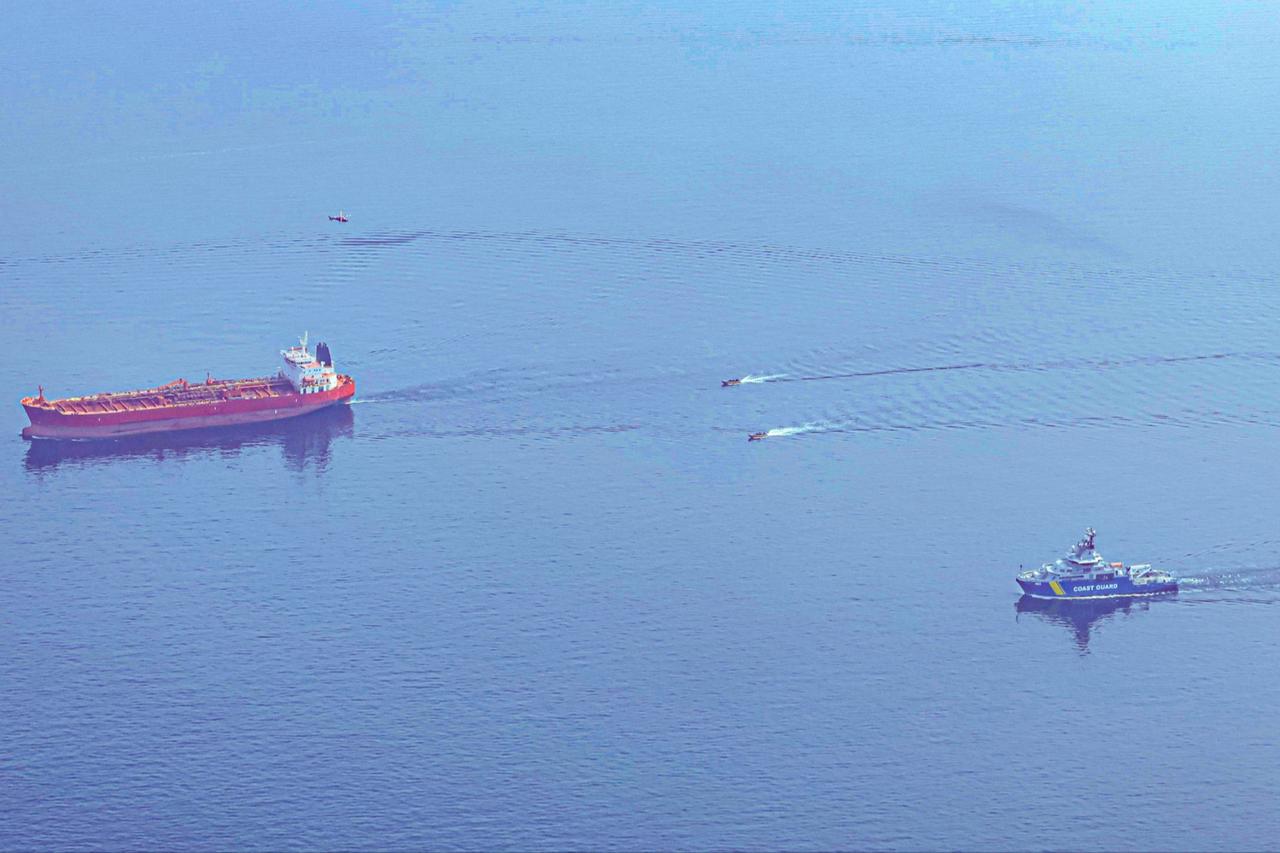
Swedish authorities have arrested the Chinese captain of the oil tanker Jin Hui, a vessel sailing under a Syrian flag and suspected of belonging to Russia's so-called shadow fleet. The operation near Trelleborg marks Sweden's fifth intervention against suspected sanctions-evading ships in 2026 — part of a growing European crackdown on Moscow's clandestine maritime network.

.
Captain Detained, Ship Seized in Swedish Waters
Swedish coast guard and police boarded the oil tanker Jin Hui on Sunday, May 3, in Swedish territorial waters southwest of Trelleborg in the Baltic Sea. The vessel's Chinese captain was subsequently placed under formal arrest on suspicion of carrying false documents and violating laws on seaworthiness — the legally required minimum safety standards a vessel must meet to sail.
Senior Prosecutor Adrien Combier-Hogg confirmed the arrest in an official statement on Monday, adding that the captain, whose name has not been released, was scheduled for interrogation the same day.
A Ship on Multiple Sanctions Lists
The Jin Hui is a 183-meter tanker, designed to carry oil and chemical products. At the time of its detention, authorities said the vessel was believed to be traveling empty and without a clear destination.
What made the ship particularly notable was its paper trail — or rather, the lack of a clean one. The Jin Hui appears on the sanctions lists of the European Union, the United Kingdom, and Ukraine. According to ship-tracking data, it sails under the Syrian flag, and investigators suspect this registration is false. Swedish Civil Defense Minister Carl-Oskar Bohlin confirmed publicly that the vessel also lacked valid insurance — a red flag in maritime law.
Swedish Prime Minister Ulf Kristersson wrote on social media that his country would not tolerate such ships in its waters: "We protect our waters," he stated, describing the boarding as part of an ongoing and deliberate enforcement campaign.
What Is the Shadow Fleet?
Russia's "shadow fleet" is a loosely coordinated network of aging, often underinsured oil tankers that Moscow has assembled to keep its energy exports flowing despite sweeping Western sanctions imposed after the 2022 invasion of Ukraine. The vessels typically sail under flags of countries with little oversight — such as Syria, Cameroon, or the Comoros Islands — and use opaque ownership structures, often registered in distant jurisdictions like the Marshall Islands, to conceal their true operators.
The scale of the operation is enormous. Analysts estimate the shadow fleet consists of somewhere between 600 and 1,400 vessels globally. According to research from Brookings Institution and S&P Global, between 60 and 80 percent of Russian seaborne oil exports now move through this clandestine network. In the Baltic Sea alone, nearly half of all crude leaving Russian ports in early 2026 was carried by sanctioned vessels.
The Jin Hui is registered under a company called Jinhui Shipping Ltd, based in the Marshall Islands — a structure typical for shadow fleet operators seeking to blur lines of accountability.
Sweden's Growing Role in Baltic Enforcement
Sunday's detention of the Jin Hui was Sweden's fifth intervention of this kind in 2026 alone — a striking escalation for a country that has historically maintained a cautious approach to maritime enforcement.
Earlier this year, Swedish authorities boarded and detained the cargo vessel Caffa in March on suspicion of transporting stolen Ukrainian grain from Russian-occupied territories. The Sea Owl was also inspected around the same time. In each case, seaworthiness deficiencies and suspected false flagging were at the center of the investigations.
"Ships with suspected deficiencies in their seaworthiness continue to sail in Swedish waters. This is not acceptable," said Daniel Stenling, Deputy Chief of Operations at the Swedish Coast Guard, following Sunday's boarding.
A Wider European Crackdown — With Russian Pushback
Sweden is not acting alone. Across Europe, coastal nations have shifted from occasional inspections to systematic enforcement operations targeting Russia's shadow fleet. France seized the tanker Grinch in January 2026 in the Mediterranean. Belgium and France jointly conducted "Operation Blue Offender" in the North Sea. Estonia's navy has also detained vessels in the Baltic.
The International Institute for Strategic Studies (IISS) noted in March 2026 that European states are "moving from symbolic boardings towards sustained maritime law enforcement intended to disrupt Russia's shadow fleet and raise the costs of sanctions evasion."
Russia has responded to this pressure with characteristic defiance. Moscow has publicly condemned Western interceptions as "hostile acts" and has begun using naval vessels to escort some shadow tankers through sensitive waterways like the English Channel. In late January 2026, the tanker General Skobelev transited the channel under the protection of a Russian corvette — a deliberate signal of intent.
Russia declined to comment on the latest detention of the Jin Hui.
An Environmental Time Bomb?
Beyond sanctions evasion, analysts are raising urgent environmental alarms. The shadow fleet relies heavily on vessels that are old, poorly maintained, and often uninsured. According to the Kyiv School of Economics, 96 percent of crude tankers in the shadow fleet are over fifteen years old. The Baltic Sea is a semi-enclosed body of water with limited capacity to recover from major pollution events.
"A major environmental disaster is only a question of time," researchers at the Kyiv School of Economics have warned. Estonia alone has already suffered an estimated €200 million in infrastructure damage — including broken undersea cables — linked to shadow fleet activity.
Outlook
The detention of the Jin Hui and the arrest of its captain signal a turning point in how European nations approach the shadow fleet — less as a political abstraction and more as an active threat to sovereignty, infrastructure, and the environment. Whether the momentum holds will depend on sustained political will and, crucially, on coordinated legal frameworks across the EU and NATO that allow for more decisive enforcement.
For now, Sweden's approach appears to be sending a clear message: vessels that flout international maritime law will not pass through its waters unchallenged.
.
Sources:
- Reuters – Sweden arrests Chinese captain of suspected Russia-linked vessel (May 4, 2026): https://www.reuters.com/world/china/sweden-arrests-chinese-captain-suspected-russia-linked-vessel-2026-05-04/
- Kyiv Independent – Sweden detains suspected Russian shadow fleet tanker in Baltic Sea: https://kyivindependent.com/sweden-detains-suspected-russian-shadow-fleet-vessel-in-baltic-sea/
- Atlantic Council – The Shadow Fleet Is Undermining the Maritime Order More Brazenly Than Ever: https://www.atlanticcouncil.org/in-depth-research-reports/the-shadow-fleet-is-undermining-the-maritime-order-more-brazenly-than-ever/
- IISS – Europe's coastal states tighten enforcement on Russia's shadow fleet (March 2026): https://www.iiss.org/online-analysis/online-analysis/2026/03/europes-coastal-states-tighten-enforcement-on-russias-shadow-fleet/
- Militarnyi – Sweden Detains Shadow Fleet Vessel Jin Hui: https://militarnyi.com/en/news/sweden-detains-shadow-fleet-vessel-jin-hui/
- Geopolitics and Security Studies Center – What is Next for Russia's Shadow Fleet: https://www.gssc.lt/en/publication/what-is-next-for-russias-shadow-fleet-closing-the-gaps-in-maritime-sanctions-enforcement/
.
What's Your Reaction?
 Like
0
Like
0
 Dislike
0
Dislike
0
 Love
0
Love
0
 Funny
0
Funny
0
 Wow
0
Wow
0
 Sad
0
Sad
0
 Angry
0
Angry
0













Comments (0)