

South Korea Could Get Nuclear Subs 10 Years Earlier Than Australia: Analysts


.
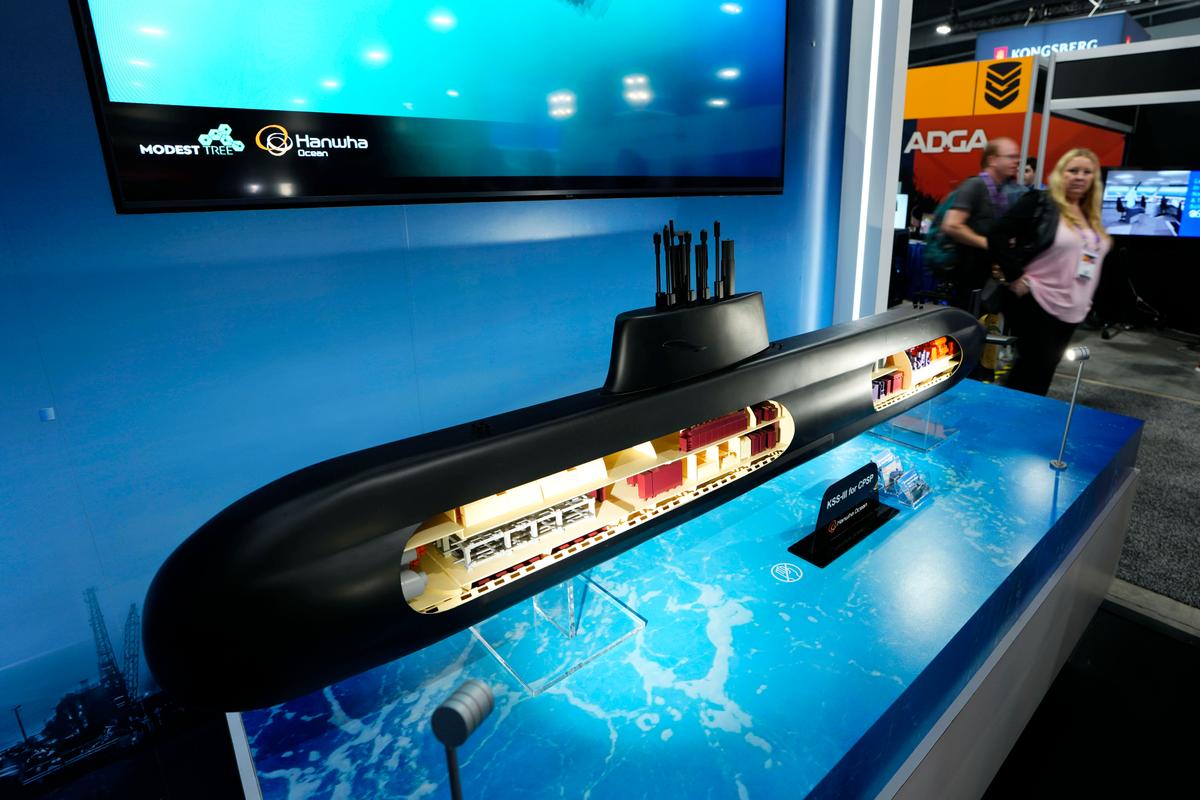
South Korea will likely have nuclear-powered submarines in the water before Australia does, despite starting four years later than the AUKUS deal.
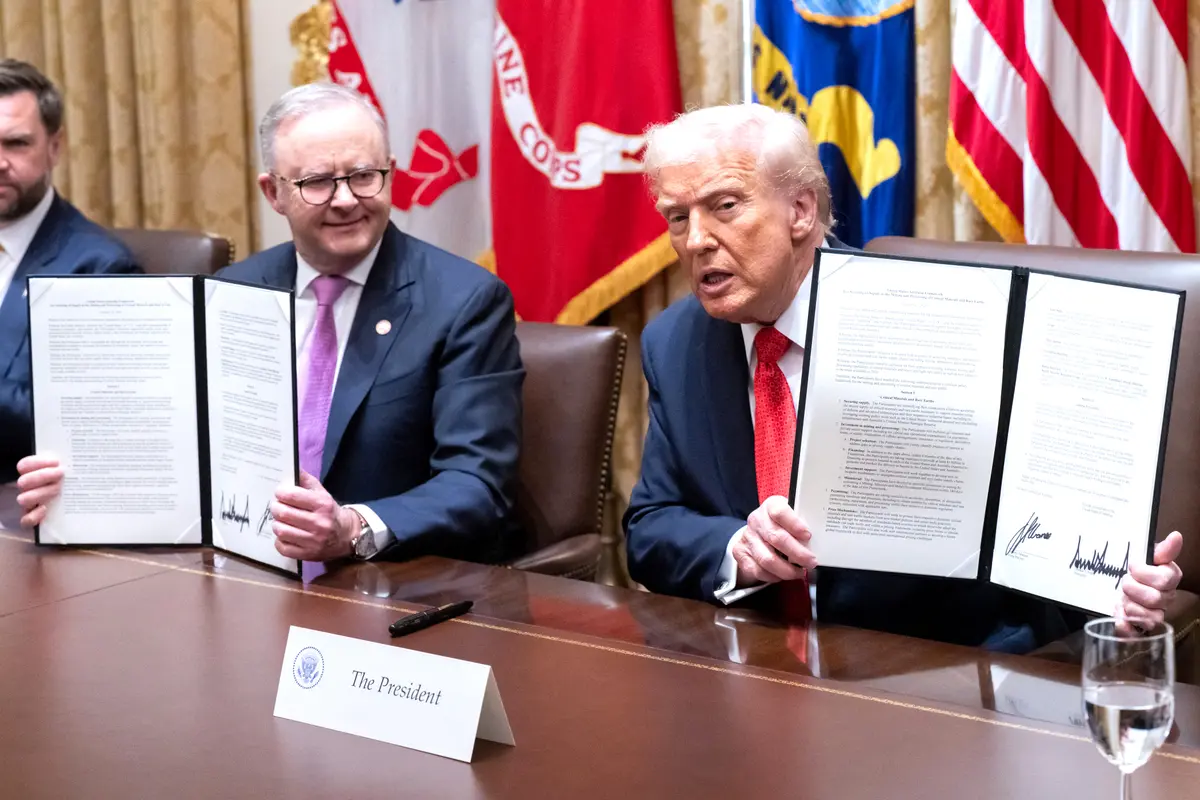
That’s the opinion of defence analysts in response to the Oct. 30 announcement by the Trump administration to support South Korea’s acquisition of nuclear-powered submarines.
This came after South Korean President Lee Jae Myung told Trump that Seoul’s diesel-powered submarine fleet has limited underwater navigation capabilities, restricting their ability to track North Korean or Chinese Communist Party submarines.
“With industrial heavyweights like Hanwha and Samsung leading the effort, I think Korea’s progress will be remarkably swift,” says Lincoln Parker, the former chair of the Liberal Party’s Defence and National Security Policy Branch, in an interview with The Epoch Times.
“Hanwha’s defence arm has already proven its mettle with the KSS-III conventional subs, and their push for domestic builds leverages a shipbuilding capability that’s globally unmatched, except perhaps by that of China. Importantly, they also have experience with nuclear engineering and the workforce [necessary] to make rapid progress,” said Parker, who has over 20 years experience in the defence technology industry.
.

“Dedicated, task-oriented, streamlined hierarchies, less bureaucracy and red tape, and a national security-driven work ethic that allows for rapid prototyping and production. [All things that] Australia lacks,” Parker says.
Far earlier than the 2040s timeline for Australia under the AUKUS trilateral deal. To plug the 2030s gap, the Australian Defence Department will acquire three existing U.S. Virginia-class nuclear-powered submarines with the option for two more.
Parker says non-proliferation issues and system integration might add a few more years, but notes that South Korea’s record in building and scaling defence equipment suggests they should move surprisingly fast.
“I'd say South Korea’s approach, being more self-reliant and less entangled in alliance logistics [like AUKUS across three countries], gives them a clear edge in speed,” Parker said.
“Without the same multi-national hurdles that [Australia faces], and building on their robust industrial base, they’re poised to field subs ... before us, which could shift dynamics in Northeast Asia and encourage more ad hoc U.S. tech shares.
.

The defence industry expert says it is a reminder to those working on AUKUS to stay focused on execution and implementation to stay ahead.
Euan Graham, a senior analyst with the Australian Strategic Policy Institute’s Defence Strategy programme, agrees.
“Assuming South Korea’s main interest is to obtain fuel from the U.S. for its naval reactors, rather than a broader swathe of nuclear submarine technology, then the effect on AUKUS should be fairly limited,” he adds.
“We have the best submarines in the world, anywhere in the world, and we’re building a few more, currently under construction,” Trump said.
.
Doubts that US Regulators Will Give Go-ahead
Other analysts have expressed doubt that, even with Trump’s backing, South Korea will gain access to American tech that so far has only been shared with its Anglosphere partners, Australia and the U.K.“Good luck getting it through the Nuclear Regulatory Commission,” said James Kim, director of the Korea Program at the Stimson Centre, told a forum hosted by the Washington-based Korea Economic Institute of America.
“Good luck getting the Public Utility Commission in Philadelphia, Pennsylvania, to approve this (the deal specifies that construction will take place at Hanwha’s Philadelphia shipyard).
“Having a facility that could handle and store these fissile materials or nuclear radioactive materials near a major metropolitan area in Philadelphia. Good luck with that,” Kim said.
Meanwhile, there’s speculation that other Asian nations may now seek a similar deal.
Speaking at a press briefing on Oct. 6, Japanese Defence Minister Shinjiro Koizumi said his country needed to re-evaluate its current submarine capabilities.
“The environment surrounding Japan is truly becoming so severe that we must debate whether to continue with diesel as we have, or to opt for nuclear-powered submarines,” Koizumi said.
Both Tokyo and Seoul have expressed interest in joining AUKUS Pillar 2, which focuses on the sharing of advanced defence technologies such as artificial intelligence, quantum computing, cyber warfare, and space systems.
That’s led to speculation that Pillar 1, which covers SSNs, may be expanded beyond the three member countries: Australia, the United States and the United Kingdom.
“If this trend continues, AUKUS could evolve from a strictly Anglosphere initiative into a broader Indo-Pacific defence innovation framework while retaining its core trilateral foundation,” Bence Nemeth, associate professor at King’s College London, told This Week in Asia. But he cautioned that Congressional support was not guaranteed.
“It is not automatic,” he said, noting that the Trump administration’s move appeared to be driven as much by industrial and economic considerations as by security concerns.
.

However, there is some support for the idea in Washington, with Congressman Adam Smith, the Democratic leader of the House Armed Services Committee, told reporters that America needed to improve its defence industrial base to meet its own needs and to have any hope of delivering submarines to other countries.
“We can’t do that on our own,” he said. “I hope we can explore partnerships with other nations as well—South Korea, Japan, Norway. They’re all capable shipbuilders. I hope we can grow the AUKUS partnership on those goals.”
However, Australian Prime Minister Albanese, while not explicitly ruling out such an expansion, has made it clear he sees the deal between the U.S. and South Korea as a separate bilateral arrangement.
But there are also advantages to Australia in allowing the U.S.-South Korea partnership to develop.
South Korean nuclear-powered submarines may be serviced at the Henderson precinct in Western Australia. Australia is seeking commercial investment in that facility to fund the $25 billion required for its expansion to handle the AUKUS submarines and to build surface ships and landing craft.
Both Hanwha and Hyundai are large conglomerates looking to invest—Hanwha is already considering doubling its stake in Australia shipbuilder Austal, given the potential to access its U.S. shipbuilding facilities.
.
What's Your Reaction?
 Like
0
Like
0
 Dislike
0
Dislike
0
 Love
0
Love
0
 Funny
0
Funny
0
 Wow
0
Wow
0
 Sad
0
Sad
0
 Angry
0
Angry
0













Comments (0)