

Philippines Pushes Back as Beijing Defends Chinese-Language Schools Accused of Serving as Influence Pipeline
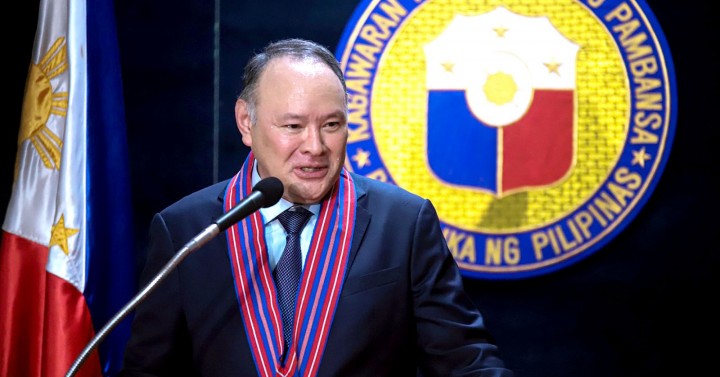
The Philippine Department of National Defense is demanding tighter scrutiny of Chinese state-funded education and cultural programs after a new investigation linked a major Chinese university to Communist Party influence networks. Manila's defense chief argues that "academic freedom" cannot be invoked by institutions operating inside a system that silences dissent — a rare public rebuke that touches on some of Beijing's most sensitive historical taboos.

.
A Investigation Sparks a Diplomatic Standoff
The Philippine Department of National Defense (DND) said on Friday that foreign state-backed academic and cultural exchange programs need far greater public scrutiny. The statement follows growing concern in Manila that Chinese state-linked institutions are quietly shaping education policy inside the Philippines.
Defense Secretary Gilberto Teodoro framed the issue in blunt terms: transparency about foreign government funding in local schools is not optional. He called it a "fundamental duty of national governance," necessary to protect both academic integrity and national security.
His comments were triggered by a report this week from the U.S.-based research group SeaLight, a Stanford-affiliated initiative that tracks Chinese "gray-zone" activity across Asia. The investigation identified Jinan University in Guangzhou as the single largest training hub for Chinese-language teachers now working in Chinese-Filipino schools across the Philippines.
.
The University Behind a Territorial Controversy
What makes the finding especially explosive is Jinan University's recent history. Scholars linked to the university's Center for Philippine Studies had earlier claimed that Batanes — the northernmost Philippine province, sitting in the strategically sensitive Luzon Strait near Taiwan — actually belongs to China. Philippine officials rejected the claim outright, and the university's own report on the matter was later quietly deleted without explanation, according to regional media tracking the story.
According to the SCMP, Philippine officials have described the episode as clear evidence of a deeper problem: an academic institution central to Chinese-language teacher training in the Philippines is the same one that produced a territorial claim widely dismissed as baseless.
SeaLight's report goes further, alleging that organizations tied to the Chinese Communist Party's United Front Work Department — a body responsible for expanding party influence abroad — have positioned themselves as the main brokers of Chinese-language education in the Philippines, controlling everything from teacher training and curriculum design to job placement.
.
Beijing Cries Foul, Manila Holds Firm
China's state-run Global Times published a rebuttal this week, quoting Dai Fan, director of Jinan University's Center for Philippine Studies, who argued that Philippine authorities were stretching the concept of national security too far without sufficient evidence.
The Philippine defense department was unmoved. It pointed to China's own National Security Law, which legally obligates Chinese citizens, educational institutions, and private organizations to cooperate with state intelligence agencies whenever asked. That legal reality, Manila argues, makes it impossible to treat Chinese state-linked academic exchanges as fully independent — regardless of how they are publicly framed.
The DND said its evaluations target "foreign malign influence, co-optation, and covert interference," and stressed they are not directed at the Filipino-Chinese community itself, which has deep historical roots in the country.
.
An Unusually Direct Challenge to Beijing's Sensitivities
What stands out most is how far the Philippine government was willing to go rhetorically. In its statement, the DND directly challenged the idea that Chinese state-run institutions can claim "academic freedom" while operating inside a political system where free speech is restricted and dissent is punished.
The department explicitly invoked the 1989 Tiananmen Square crackdown, stating that genuine academic freedom "cannot exist within state-owned propaganda channels" where history itself is heavily censored — pointing directly to the violent suppression of pro-democracy student protesters. It also referenced Beijing's policies toward Uyghurs and other ethnic minorities, subjects Beijing treats as strictly off-limits in diplomatic discourse.
This is a notable departure from the usual caution most governments in the region show when discussing topics Beijing considers politically explosive. Analysts quoted in regional outlets have noted that such direct references are rare from a government agency, rather than from human rights organizations or dissidents.
.
What Comes Next
China's foreign ministry did not immediately respond to requests for comment on the Philippine statement. Jinan University and the Chinese Embassy in Manila have also stayed silent on the specific allegations raised in the SeaLight report.
The episode adds to a string of recent frictions between Manila and Beijing, layered on top of long-standing disputes over the South China Sea. With Chinese vessels reportedly active near the Bashi Channel — the strategic gap separating Batanes from Taiwan — Philippine officials appear increasingly willing to treat questions of educational influence as part of the same broader security picture as maritime disputes.
For now, the Philippines has signaled it intends to keep pressing the issue publicly, rather than letting diplomatic sensitivities dictate silence.
.
What's Your Reaction?
 Like
0
Like
0
 Dislike
0
Dislike
0
 Love
0
Love
0
 Funny
0
Funny
0
 Wow
0
Wow
0
 Sad
0
Sad
0
 Angry
0
Angry
0












Comments (0)