

US Widens Blacklist: 43 More Chinese Firms Barred Over Uyghur Forced Labor
The United States has added 43 more Chinese companies to its forced labor blacklist, citing links to human rights abuses against Uyghurs in Xinjiang. The move marks the first such expansion under the Trump administration and brings the total number of blacklisted firms to 187.

.
Washington, July 31, 2026 — The Trump administration has escalated its pressure campaign against Beijing's treatment of the Uyghur minority. On Friday, the U.S. government announced that 43 additional Chinese companies would be barred from exporting goods to American markets. The reason: alleged ties to forced labor in China's western Xinjiang region.
.
What Happened
According to a government posting, the newly blacklisted firms include Hunan Aihua Group, one of China's largest manufacturers of capacitors (electronic components that store energy). The company did not respond to a request for comment. Other additions come from the pharmaceutical, metals, and cotton industries.
All of them were placed on the Uyghur Forced Labor Prevention Act (UFLPA) Entity List. This list blocks American companies from importing goods connected to firms the U.S. government believes are complicit in forced labor or broader human rights abuses in Xinjiang. With Friday's update, the roster of blacklisted entities grows from 144 to 187 — an increase of nearly 30 percent.
.
First Move of Its Kind Under Trump
Friday's action stands out for a specific reason: it is the first time the Trump administration has added companies to this list since taking office. The UFLPA itself is older. Congress passed it in December 2021, giving U.S. Customs and Border Protection a powerful tool to intercept goods suspected of being made with forced labor before they ever reach store shelves.
Under the law, any product tied to a blacklisted company is presumed to involve forced labor unless the importer can prove otherwise. That presumption puts the burden of proof on businesses, not the government — a deliberately tough standard.
.
Why Xinjiang Remains a Flashpoint
The United States has for years accused Chinese authorities of operating internment camps in Xinjiang, targeting Uyghurs and other religious and ethnic minorities. Washington describes the campaign as an ongoing genocide. Beijing rejects the accusations entirely and insists the facilities are vocational training centers meant to fight extremism and poverty.
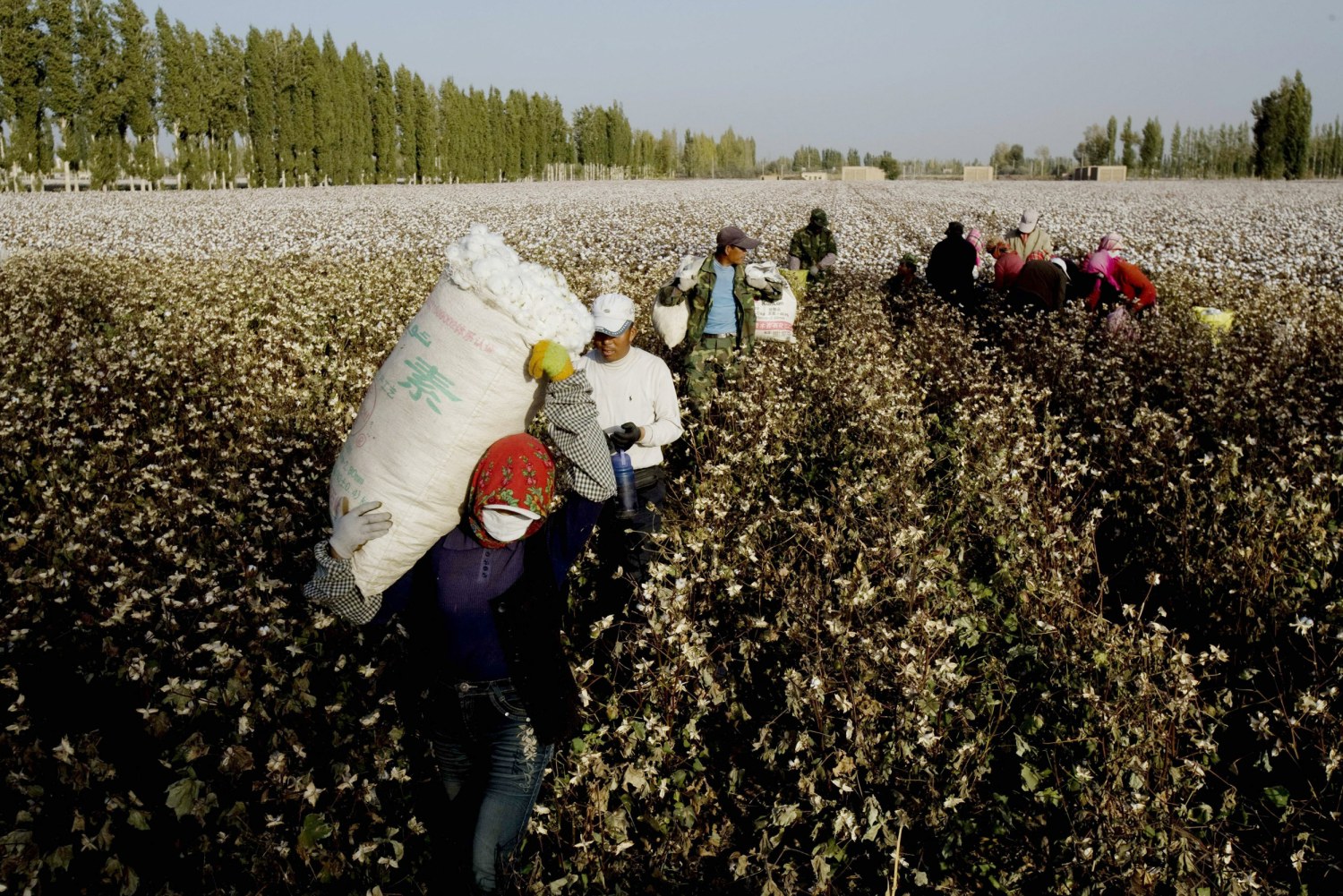
Independent researchers and investigative reporting have pointed to satellite imagery, leaked government documents, and testimony from former detainees to support claims of mass detention and coerced labor, particularly in the region's cotton and textile industries — sectors that account for a significant share of both Chinese and global raw cotton supply. Rights groups have also raised concerns about labor practices reaching into solar panel manufacturing and other export sectors.
Cases like this fit a broader pattern documented by human rights organizations: the Chinese Communist Party's willingness to subject religious and ethnic minorities — including Uyghurs, Tibetans, and practitioners of Falun Gong — to detention, forced labor, and re-education campaigns in the name of "stability."
.
What Comes Next
The expanded blacklist means American importers now face stricter due-diligence requirements across a wider range of industries, from electronics to pharmaceuticals to raw cotton. Companies wanting an exception must present clear evidence to Customs and Border Protection that their goods were not produced through forced labor — a high bar that has already reshaped supply chains for major clothing and electronics brands in recent years.
Whether this marks the start of a more aggressive enforcement push by the current administration, or a one-off update, remains to be seen. Given the political emphasis this White House has placed on confronting Beijing over trade and human rights, further additions to the list in the coming months would not be a surprise.
.
Sources
- Reuters — "US bars imports from 43 more companies over China's alleged forced labor involving Uyghurs": https://www.reuters.com/world/china/us-bars-imports-43-more-companies-over-chinas-alleged-forced-labor-involving-2026-07-31/
- The Daily Caller — "DHS Unveils Biggest-Ever Uyghur Forced Labor Blacklist": https://dailycaller.com/2026/07/31/dhs-uyghur-labor-blacklist-china-cbp-markwayne-mullin/
- Federal Register — Notice Regarding the Uyghur Forced Labor Prevention Act Entity List: https://www.federalregister.gov/documents/2025/01/15/2025-00901/notice-regarding-the-uyghur-forced-labor-prevention-act-entity-list
- U.S. Department of Labor — "Against Their Will: The Situation in Xinjiang": https://www.dol.gov/agencies/ilab/against-their-will-the-situation-in-xinjiang
.
What's Your Reaction?
 Like
0
Like
0
 Dislike
0
Dislike
0
 Love
0
Love
0
 Funny
0
Funny
0
 Wow
0
Wow
0
 Sad
0
Sad
0
 Angry
0
Angry
0










Comments (0)