

Oil Above $110, Bonds Tumble: Global Markets Brace as Trump Sets Tuesday Deadline to Bomb Iran
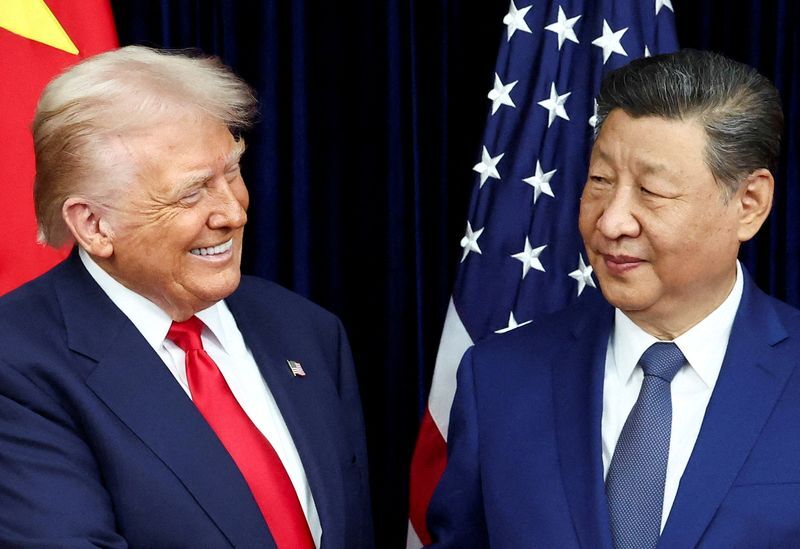
Global financial markets kicked off the new week under the shadow of war. As trading opened across Asia on Monday, oil surged past $110 per barrel, government bonds sold off, and stock indexes moved in different directions — all driven by one overriding question: Will U.S. President Donald Trump follow through on his threat to bomb Iran's civilian infrastructure by Tuesday evening? Trump issued a stark warning over the weekend, threatening to destroy Iran's power plants and bridges unless the Strait of Hormuz is fully reopened. In a social media post, he gave Tehran until 8:00 p.m. Eastern Time on Tuesday — framing the stakes in near-apocalyptic terms.

.
War Ultimatum Sends Shockwaves Through Asia's Opening Bell
Global financial markets kicked off the new week under the shadow of war. As trading opened across Asia on Monday, oil surged past $110 per barrel, government bonds sold off, and stock indexes moved in different directions — all driven by one overriding question: Will U.S. President Donald Trump follow through on his threat to bomb Iran's civilian infrastructure by Tuesday evening?
Trump issued a stark warning over the weekend, threatening to destroy Iran's power plants and bridges unless the Strait of Hormuz is fully reopened. In a social media post, he gave Tehran until 8:00 p.m. Eastern Time on Tuesday — framing the stakes in near-apocalyptic terms.
The Strait of Hormuz: Why the Whole World Is Watching
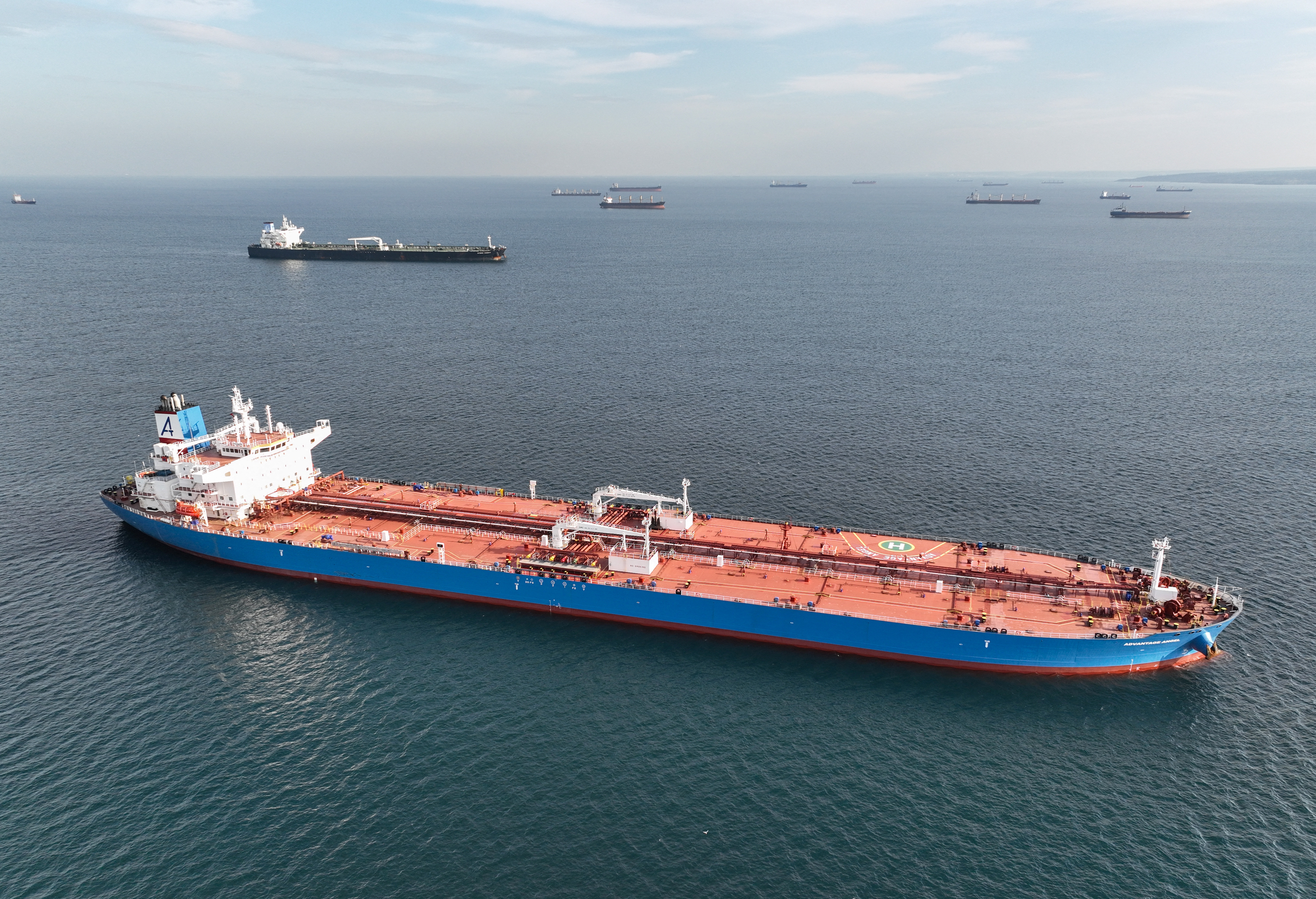
The Strait of Hormuz is a narrow waterway between Iran and the Arabian Peninsula. In peacetime, roughly 20% of the world's daily oil supply passes through it — making it one of the most strategically vital shipping lanes on Earth.
The crisis traces its roots to "Operation Rising Lion" on February 28, 2026, a joint U.S.-Israeli strike that reportedly resulted in the death of Iran's Supreme Leader. In the aftermath, Iran's Islamic Revolutionary Guard Corps executed a long-threatened strategy: the effective closure of the Strait of Hormuz, deploying sea mines, drone swarms, and anti-ship missiles to reduce maritime traffic by over 90%.
Iran's grip on the strait and relentless attacks on Gulf energy infrastructure have sent Brent crude — the international benchmark — up more than 40% since the war began.
Iran has refused to simply back down. Tehran has maintained that the critical waterway would only fully reopen after compensation for war damage is paid, and has threatened to retaliate against regional infrastructure — including desalination facilities — if Trump follows through on his threats.
Oil Jumps, OPEC+ Move Falls Flat
Eight members of the OPEC+ alliance agreed on Sunday to increase production by 206,000 barrels per day for May. But the announcement did little to calm markets. It remains unclear how additional oil would reach global markets with the Strait still effectively closed, and OPEC+ itself warned that repairing energy infrastructure damaged by Iranian attacks is both costly and time-consuming.
Brent crude climbed roughly 2.6% to around $111.65 per barrel in early trading, while U.S. West Texas Intermediate topped $114.
Analysts warn the worst may be yet to come. With oil stockpiles starting to feel pressure, inventories stored on tankers could draw down quickly — and onshore reserves may fall to multi-year lows as early as August, according to TD Securities. Shell's CEO has warned that fuel shortages could ripple globally, starting with jet fuel, followed by diesel, and eventually gasoline.
Mixed Signals From Asian Stock Markets
Japan's Nikkei 225 gained around 0.6% and South Korea's Kospi advanced roughly 1.8%, while many other regional markets remained closed for public holidays — including Australia, New Zealand, and several Southeast Asian nations.
The mixed performance reflects investor uncertainty. Risk markets such as equities have been "not surprisingly disappointed," especially after a brief bout of optimism earlier last week, when Trump had signaled the U.S. might wind down operations in Iran regardless of whether the Strait reopened, according to Nomura equity strategist Chetan Seth.
Japan's Bond Market Flashes a Historic Warning
One of Monday's most significant — and underreported — developments came from Japan's government bond market. Japan's 10-year government bond yield rose to around 2.39%, a level not seen since 1999, as markets priced in a growing likelihood that the Bank of Japan will raise interest rates.
Markets now assign a 71% probability of a Bank of Japan rate hike at its upcoming April 27–28 meeting, driven by concerns over rising inflation fueled by surging oil prices from the Middle East conflict. Japan, a major importer of Middle Eastern oil, has felt the impact sharply, with gasoline prices soaring to record levels in mid-March before easing slightly due to government subsidies.
This matters far beyond Japan. Japan is the largest foreign holder of U.S. Treasuries, with roughly $1.2 trillion in holdings. Rising domestic yields could reduce Japan's appetite for U.S. government bonds, either by slowing new purchases or, in stress scenarios, forcing sales to meet local funding needs.
The Fed's Difficult Balancing Act
The U.S. Federal Reserve faces its own dilemma. The latest American jobs data showed solid labor market conditions — nonfarm payrolls rose by 178,000 in March, the strongest gain in over a year, while the unemployment rate dipped slightly. But surging oil prices are pushing inflation higher at the same time.
The Fed is next scheduled to decide on interest rates at a two-day meeting ending April 29. However, market pricing currently suggests no rate moves are expected until well into 2027 — a sign that traders believe policymakers will stay on hold as they wait for clarity on both the inflation and economic growth outlook.
The U.S. dollar index held relatively steady near 100.23. The 10-year U.S. Treasury yield rose modestly to around 4.36%.
Gold Slips, Bitcoin Climbs
In a somewhat unusual split, gold fell roughly 0.8% to around $4,638 per ounce — a sign that some investors were taking profits in traditional safe-haven assets. Meanwhile, Bitcoin rose nearly 2% to approximately $68,900, and Ethereum gained around 2.4% to $2,117.
What Comes Next
With Trump's Tuesday deadline fast approaching, markets are on high alert for any sign of escalation — or last-minute diplomacy. A UN Security Council draft resolution submitted by Bahrain, which would authorize countries to use "all defensive means necessary" to secure transit passage through the Strait, is under active discussion.
Analysts widely agree that even after the war ends, prices will remain elevated — driven by new demand for stockpiling, higher insurance and freight costs related to the Strait of Hormuz, and a lasting geopolitical risk premium in energy markets.
For now, the world waits.
.
Sources
- CNBC – Asia markets, Japan/South Korea stocks, Hormuz developments (April 6, 2026): https://www.cnbc.com/2026/04/06/asia-markets-nikkei-225-crude-oil-trump-iran-hormuz.html
- CNBC – Oil prices, Trump Iran deadline (April 5, 2026): https://www.cnbc.com/2026/04/05/crude-oil-prices-iran-war-strait-hormuz.html
- CNBC – Trump's Iran war speech and oil markets: https://www.cnbc.com/2026/04/02/trumps-iran-war-speech-oil-price-strait-hormuz.html
- CNBC – Asian stocks react to Trump Iran escalation: https://www.cnbc.com/2026/04/02/trump-iran-escalation-asian-stocks-oil-prices-markets.html
- Fortune – Trump extends Hormuz deadline to April 6: https://fortune.com/2026/03/26/trump-iran-war-oil-strait-april-6-hormuz/
- Fortune – Asia markets drop after Trump speech: https://fortune.com/2026/04/02/asia-markets-react-trump-iran-speech-stone-age-hormuz/
- CNN – Day 34 of Middle East conflict, UN Security Council: https://www.cnn.com/2026/04/02/world/live-news/iran-war-us-trump-oil-intl-hnk
- Wikipedia – 2026 Strait of Hormuz crisis: https://en.wikipedia.org/wiki/2026_Strait_of_Hormuz_crisis
- Trading Economics – Japan 10-year JGB yield: https://tradingeconomics.com/japan/government-bond-yield
.
What's Your Reaction?
 Like
0
Like
0
 Dislike
0
Dislike
0
 Love
0
Love
0
 Funny
0
Funny
0
 Wow
0
Wow
0
 Sad
0
Sad
0
 Angry
0
Angry
0













Comments (0)