

Trump to Slap 15% Tariff and Price Floors on Polysilicon in Bid to Choke Off China's Solar and Chip Supply Chain
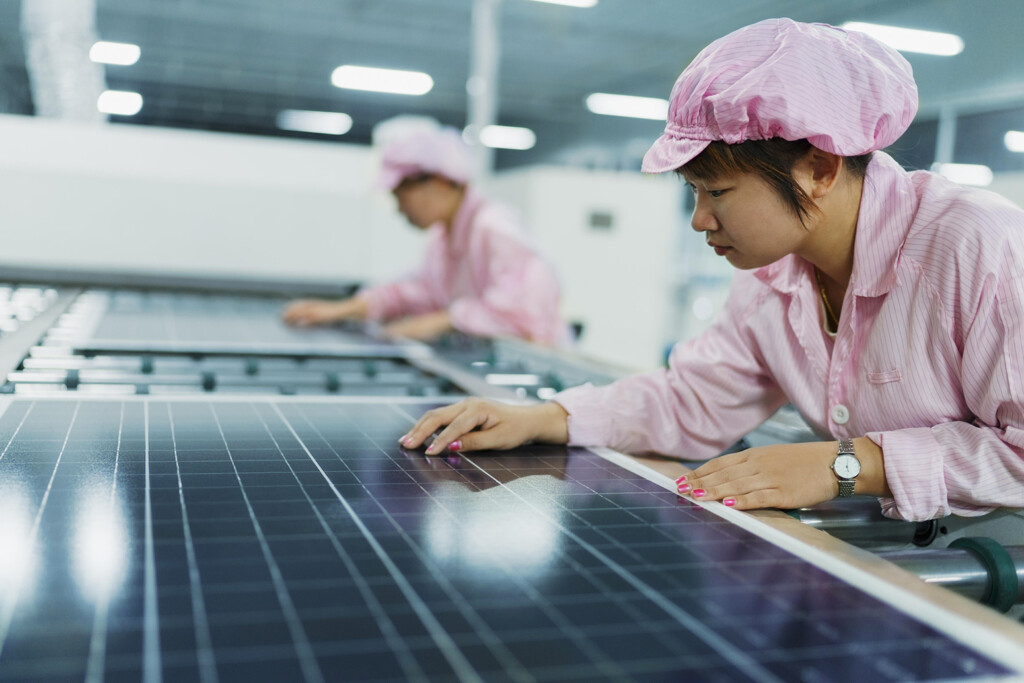
The Trump administration is preparing to announce a 15% tariff on polysilicon derivatives along with minimum import prices for wafers, solar cells and panels, according to multiple reports. The move, expected as early as Thursday, follows a year-long national security investigation into China's near-total dominance of the polysilicon market. Beijing has already criticized the plan, while U.S. lawmakers from both parties have welcomed it as an overdue defense of American manufacturing.

.
A New Front in the Trade War Over Chips and Solar
The Trump administration is set to unveil a sweeping trade action targeting polysilicon, the ultra-pure form of silicon that sits at the base of both the solar panel and semiconductor supply chains. According to multiple people familiar with the plans, the announcement could come as soon as Thursday, August 6.
The centerpiece of the plan is a 15% tariff on polysilicon derivative products, paired with minimum import prices (also called price floors) on polysilicon itself, along with wafers, solar cells and finished modules. Two people familiar with the matter said importers who invest in U.S. wafer and cell production could be allowed to offset some of the added costs.
The action stems from a Section 232 national security investigation, a Cold War-era trade tool that allows the U.S. president to restrict imports found to threaten national security. The Commerce Department opened the probe in July 2025 and has spent roughly a year gathering input from industry, lawmakers and foreign governments.
Why Washington Is Targeting a Raw Material Few Consumers Have Heard Of
Polysilicon may sound obscure, but it is essential. Manufacturers refine it into silicon wafers, which are then processed into solar cells or computer chips. Without a secure domestic supply, the U.S. would remain dependent on foreign — overwhelmingly Chinese — producers for a material that underpins both the energy grid and advanced technology, including artificial intelligence hardware.
China's grip on this market is difficult to overstate. Industry estimates put Beijing's share of global polysilicon production above 90%, built up over two decades through heavy state subsidies. Trade groups and analysts argue this subsidized overcapacity has repeatedly driven global prices below sustainable levels, squeezing out competitors in the United States, Europe and elsewhere.
There is also a human rights dimension that has drawn less attention than the trade numbers. A significant share of Chinese polysilicon production is concentrated in China's Xinjiang region, where the U.S. government has documented forced labor practices affecting the Uyghur population. Washington has already restricted polysilicon imports tied to Xinjiang under the Uyghur Forced Labor Prevention Act, and that concern has featured prominently in the Section 232 investigation's public comment record.
Beijing Pushes Back
China's government has not stayed quiet. Its embassy in Washington criticized the investigation ahead of the announcement, with a spokesperson calling on the United States to halt the Section 232 tariff measures and instead resolve disputes "through equal dialogue." Chinese officials have separately argued in other Section 232 cases that such national-security tariffs have been found to violate World Trade Organization rules — an argument Washington has consistently rejected, given China's own extensive use of state subsidies and non-market practices in the sector.
The dispute fits a broader pattern under the Trump administration, which has used Section 232 investigations — the same legal mechanism used for the 2018 steel and aluminum tariffs — to confront what officials describe as China's strategy of using overcapacity and subsidies to dominate critical supply chains.
Bipartisan Support, Industry Nerves
Unusually for a Trump-era trade measure, the polysilicon investigation has drawn support from both sides of the aisle in Congress. Michigan Representatives John Moolenaar, a Republican, and Debbie Dingell, a Democrat, jointly welcomed the Commerce Department's decision to investigate, arguing that American producers have "faced unfair competition from subsidized Chinese firms linked to forced labor" for years, leading to layoffs and threatening what remains of domestic capacity.
Not everyone in the solar industry is celebrating, however. Executives at U.S. panel makers that still rely on imported components have warned the measures could raise costs sharply — with one industry estimate suggesting the price floor could add roughly ten cents per watt to imported solar cells, translating into hundreds of dollars in added cost per residential installation. Some panel assemblers have described their industry's inclusion in what is fundamentally a chip-focused investigation as unwelcome "collateral damage."
Markets, meanwhile, have already reacted. Shares of U.S.-based solar and materials companies climbed following earlier reporting on the plan, reflecting investor bets that domestic producers stand to benefit from reduced Chinese competition.
What Comes Next
The formal proclamation is expected to lay out the exact tariff structure and minimum price levels, along with any exemptions for companies investing in U.S. manufacturing capacity. The move comes as the Trump administration has simultaneously scaled back federal subsidies for renewable energy projects — creating a tension between propping up domestic solar manufacturing on one hand and reducing broader support for the industry on the other.
For now, the administration's message is consistent with its wider trade posture: reduce American dependence on Chinese-controlled supply chains, even where that means higher short-term costs for parts of the domestic economy. Whether the price floors and tariffs succeed in reviving U.S. polysilicon production — companies like Hemlock Semiconductor and Wacker Chemie stand to benefit most directly — will likely take years, not months, to determine.
.
Sources
- https://www.reuters.com/world/china/trump-administration-impose-15-tariff-polysilicon-sources-say-2026-08-05/
- https://www.reuters.com/world/china/us-weighs-polysilicon-price-floor-tariffs-counter-china-solar-chips-2026-08-04/
- https://www.whitecase.com/insight-alert/trump-administration-initiates-section-232-investigations-polysilicon-and-unmanned
- https://www.fdd.org/analysis/2025/08/06/section-232-national-security-investigation-of-imports-of-polysilicon-and-its-derivatives/
- https://prosperousamerica.org/cpa-submits-section-232-comments-supporting-a-polysilicon-tariff-rate-quota-trq/
- https://chinaselectcommittee.house.gov/media/press-releases/moolenaar-dingell-welcome-review-of-foreign-control-over-critical-mineral
- https://www.federalregister.gov/documents/2025/07/16/2025-13345/notice-of-request-for-public-comments-on-section-232-national-security-investigation-of-imports-of
.
What's Your Reaction?
 Like
0
Like
0
 Dislike
0
Dislike
0
 Love
0
Love
0
 Funny
0
Funny
0
 Wow
0
Wow
0
 Sad
0
Sad
0
 Angry
0
Angry
0











Comments (0)