

New Technology Scans Whole-Body Posture in Seconds


.
Non-radiographic spinal analysis provides rapid assessments of the entire body’s posture—without the potential negative effects of X-rays, MRIs, and CT scans.
New Posture Analysis Technology
The impact of poor posture on health and productivity is of national concern. Recent studies show a continued increase in musculoskeletal problems, mostly in the neck, shoulders, and lower back, related to poor posture, particularly from smartphone use.In January, a new non-radiographic spinal analysis technology was introduced in the United States. Manufactured by Moti Physio, it uses a four-dimensional—red, green, blue, and depth (RGB-D) camera sensor along with interpretation from an AI database of over 370,000 spinal scans.
Julia Worrall, a medical practitioner specializing in craniofacial posture-related issues, is chief executive officer of 360° Health International, the healthcare group promoting this device in the United States. In my interview with her, Ms. Worrall revealed that “this is state-of-the-art non-radiographic technology that provides rapid assessments of the entire body’s posture. By integrating the Moti Physio into regular health assessments, we are not only addressing a prevalent health issue but also mitigating its substantial economic repercussions.”
.
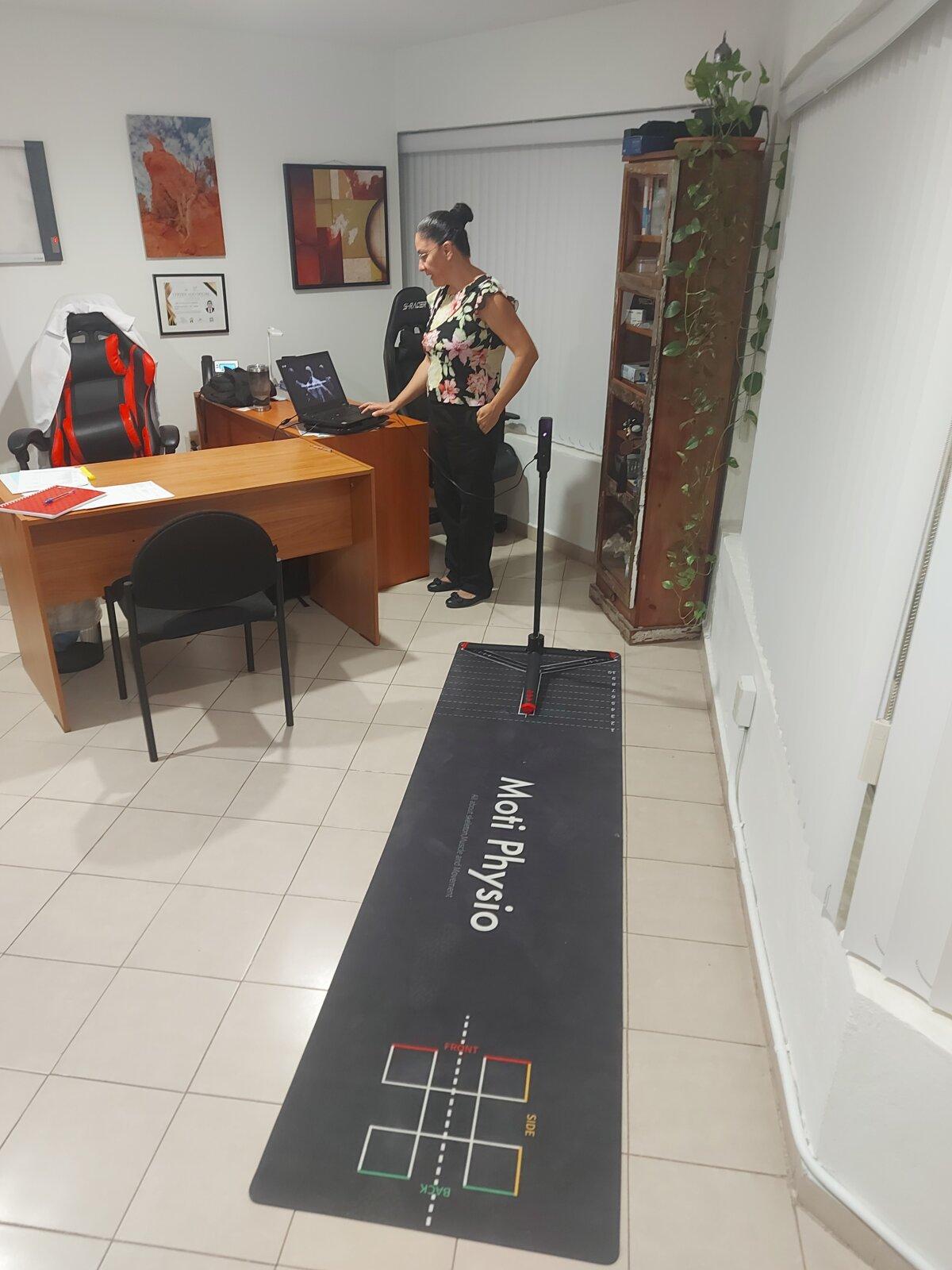
(J Worrall/360⁰ Health International)
.
Benefits of RGB-D Posture Analysis
By focusing on posture and balance as part of routine screenings, practitioners can help decrease the incidence of falls and injury. According to Centers for Disease Control and Prevention records, about 36 million falls are reported among older adults each year, resulting in more than 32,000 deaths. Fear of falling as age and balance issues increase significantly impacts the quality of life. This fear keeps people from going out, participating in activities, and enjoying life with others.- Non-radiographic
- Patient remains clothed
- Immediate understandable results while the patient is with the practitioner
- A treatment plan can be designed on the first visit
- Multiple scans show the effectiveness of treatment over time
- Positive outcomes when a patient understands results and is involved in their treatment plan
- Used by a diverse range of practitioners such as chiropractors, physical therapists, dentists, balance specialists, and fitness coaches
- Excellent correlation with spinal X-ray images
.
Posture Defined
Posturology is the scientific and clinical discipline that studies posture from three perspectives: neurophysiological, biomechanical, and psychosomatic.The purpose of posture is to maintain equilibrium in both static and dynamic conditions while remaining upright against gravity. This is possible due to the interaction between the muscular and skeletal systems. Good posture helps keep bones and joints aligned properly. Correct spinal position decreases muscle fatigue and back pain while minimizing stress and strain on the spinal cord and nervous system, allowing for healthy bodily functions.
Many factors can directly affect an individual’s posture. These include gravity, genetics, occupation, lifestyle habits, activity levels, trauma, and chronic disorders such as scoliosis.
Trauma includes micro-events like repetitive habits, sleep positions, and how we sit at a computer or work on a smartphone. There are also macro events like falls, sports injuries, and accidents. Both types of trauma impact spinal alignment.
Poor posture can cause complications such as back pain, spinal dysfunction, joint degeneration, rounded shoulders, headaches, and a potbelly. The asymmetric imbalance it causes impacts the body’s muscular function and balance.
.
Connection Between Posture and Balance
Posture is the beginning and ending of any bodily movement. Balance is activated when there is a change in standing posture. The two are closely integrated—thus, a change in one affects a change in the other. Balance is necessary to maintain equilibrium during any movement.The cerebellum manages both posture and balance. A weakness in posture indicates a neuromuscular imbalance. Balance is based on information from the central nervous system, which triggers an appropriate motor response aimed at restoring posture.
Balance Defined
Balance is defined as the ability of the body to maintain the line of gravity with minimal postural sway.To maintain balance, the central nervous system must coordinate multiple sensory channels, including vestibular sensations from the inner ear, vision, and tactile sensations, especially from the soles of the feet. Posture, body position, and awareness of the spatial location and movement of leg muscles, as well as the position of the head in relation to the trunk, also help to restore balance.
Balance Disorders
Balance can be affected by multiple factors that decrease strength and mobility or change the ability to walk and stand upright. According to Harvard Health, these factors include:- Low blood pressure
- Medications
- Inner ear infection
- Head injury or other central nervous system issues such as stroke
- Tumors
- Diseases including Alzheimer’s and Parkinson’s
- Muscle weakness
- Knee or other joint problems
- Back pain
- Weight changes
- Gait abnormality
- Nutritional deficiencies
- Lack of sleep
- Dizziness or vertigo
- Unexplained fainting
- Falling or feeling like you are going to fall
- Staggering when trying to walk
- Blurred vision
- Confusion
- Nausea and vomiting
- Heart palpitations
- Emotions such as fear, anxiety, panic
.
Treatments Without Medication
Balance, strength, and endurance are essential for maintaining good posture. Attention to diet and exercise can significantly help.Gentle exercises, such as yoga and Pilates, for 30 minutes a day can help strengthen back, shoulder, and stomach muscles.
Risks and Concerns
There are some drawbacks to the raster stereography method. Studies indicate that further evaluation of reliability is necessary. Standardized reference values are also needed to indicate postural change.Since RGB-D posture analysis is newly available, continuously evaluating posture scans to add to the database will increase the validity and reliability of this new technology.
.
What's Your Reaction?
 Like
0
Like
0
 Dislike
0
Dislike
0
 Love
0
Love
0
 Funny
0
Funny
0
 Wow
0
Wow
0
 Sad
0
Sad
0
 Angry
0
Angry
0

















Comments (0)