

Iran Demands "Fair and Comprehensive" Deal — As Trump Blinks on Hormuz Escort Mission
Iran's top diplomat traveled to Beijing on Wednesday to meet with China's foreign minister — just days before a high-stakes Trump–Xi summit — and declared that Tehran will only accept a deal that fully protects its national interests. Meanwhile, President Trump abruptly paused a U.S. naval escort mission through the Strait of Hormuz, citing progress in peace talks. The diplomatic flurry signals both a fragile opening and a deepening strategic chess match.

.
One Day In, Project Freedom Goes on Hold
It lasted barely 24 hours. On Monday, the United States launched "Project Freedom," a military-escorted convoy operation designed to break Iran's de facto blockade of the Strait of Hormuz and free tens of thousands of stranded sailors. By Tuesday, President Trump announced he was putting the mission on pause.
Trump posted on his Truth Social platform that the decision was driven by "great progress" toward a "Complete and Final Agreement" with Iran, and that Project Freedom would be suspended for a short period to allow time for a deal to be finalized and signed.
The reversal came after just one day of operations — during which the U.S. military destroyed several Iranian fast-attack boats, and Iran launched missile strikes on infrastructure in the United Arab Emirates for the first time since a fragile ceasefire took hold a month ago.
Oil markets responded immediately. Brent crude futures fell over one percent to around $108 a barrel, following a drop of nearly four percent the previous session — a sign that traders are watching every diplomatic signal with acute sensitivity.
Araqchi in Beijing: Strength Through Alignment
Iran's Foreign Minister Abbas Araqchi did not travel to Washington. He flew to Beijing.
On Wednesday morning, China's top diplomat Wang Yi met with Araqchi — Iran's first such high-level visit to Beijing since the war began on February 28. China's state media publicized the visit proactively, noting that Beijing itself initiated the invitation.
The timing is not coincidental. Analysts described the visit as "deeply strategic," with Tehran and Beijing aligning their positions just days ahead of Trump's scheduled summit with Chinese President Xi Jinping on May 14–15.
Following the meeting, Araqchi made Iran's negotiating stance clear: Tehran would only accept what he described as a fair and comprehensive agreement. "We will do our best to protect our legitimate rights and interests in the negotiations," he said, according to Iranian media reports.
He did not directly respond to Trump's announcement of a pause in the Hormuz escort operation.
What Iran Is Actually Asking For
Iran has been gradually outlining its terms over recent weeks. A senior Iranian official described a 14-point proposal that would open the Strait of Hormuz and lift mutual blockades — while deliberately leaving negotiations over Iran's nuclear program for a later stage, in what Tehran described as a move to "create a more conducive atmosphere."
Under the proposed framework, the war would end with guarantees that neither Israel nor the United States would attack again, Iran would reopen the strait, and the United States would lift its counter-blockade of Iranian ports.
The nuclear question — the central issue that triggered the U.S.-Israeli military campaign in February — would be deferred. Washington has consistently said it will not allow Iran to obtain a nuclear weapon, and critics argue that removing military pressure before resolving the nuclear issue would surrender America's strongest point of leverage.
The Human and Economic Cost of the Blockade
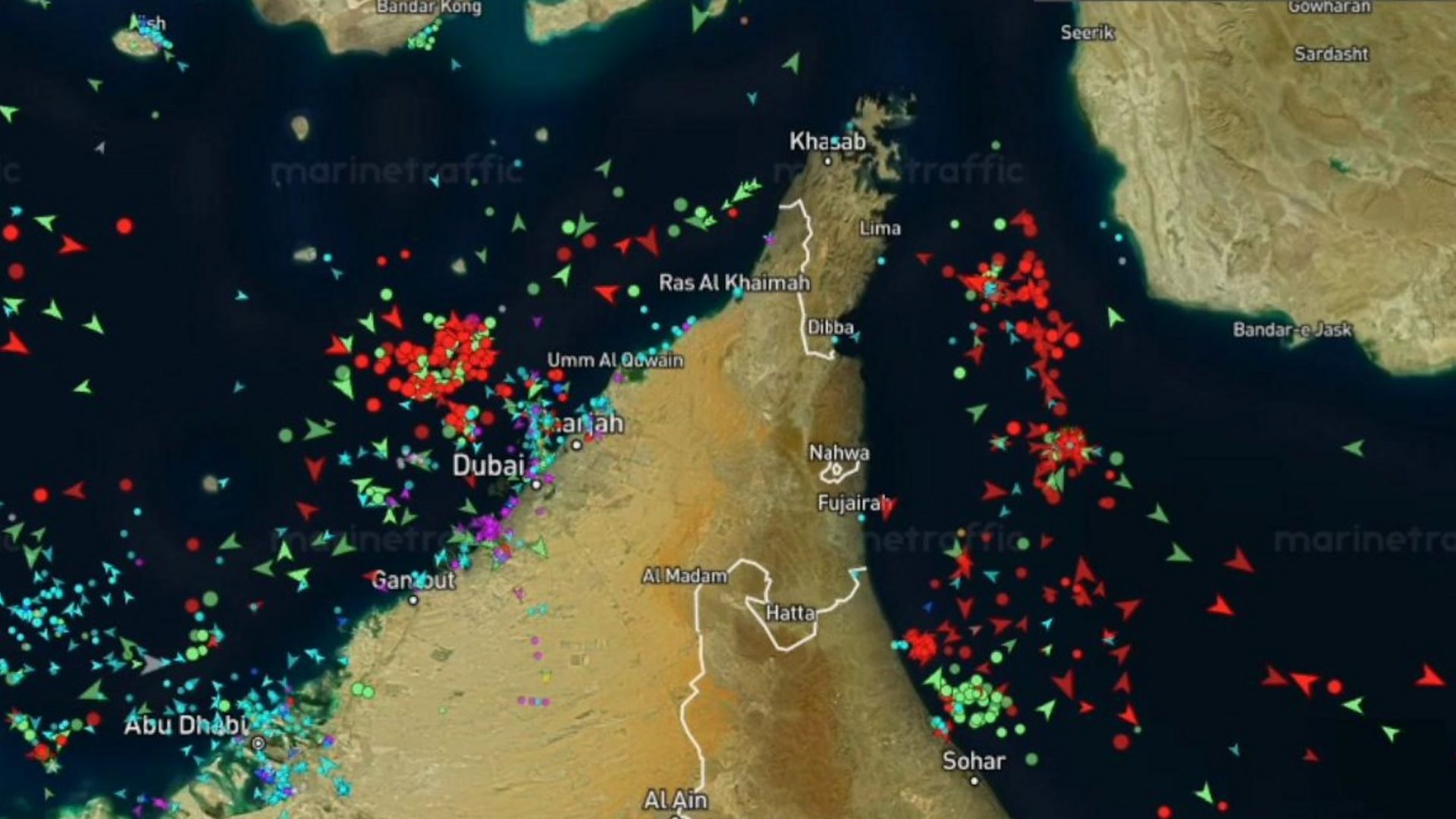
The diplomatic maneuvering is happening against a backdrop of enormous real-world damage. The Trump administration has stated that approximately 23,000 sailors aboard vessels from 87 countries remain stranded in the Persian Gulf due to Iran's effective closure of the strait. Secretary of State Marco Rubio said at least 10 sailors have already died as a direct result of the blockade, calling the stranded crews "sitting ducks."
The economic consequences extend far beyond the region. The Strait of Hormuz normally handles around 20 percent of global oil and liquefied natural gas flows. The International Monetary Fund has warned that even if the conflict ended today, it would take three to four months to fully absorb the damage to global supply chains.
Beijing's Calculated Position — and Its Limits
China's role in this crisis is deeply ambiguous — and deeply consequential. As we analyzed in our earlier report Washington Takes Iran to the UN — With Teeth This Time, the Chinese Communist Party (CCP) sits at the center of this standoff in ways that extend far beyond UN procedure.
China remains a key buyer of Iranian oil, defying U.S. sanctions — and in doing so, provides critical financial oxygen to the government running the blockade. At the same time, Beijing vetoed the April UN Security Council resolution that would have imposed international pressure on Tehran, shielding Iran from accountability on the world stage while publicly calling for peace.
Chinese President Xi Jinping urged "normal passage" through the strait in late April, and Beijing has repeatedly called for a ceasefire and free commercial shipping — positions that conveniently require nothing concrete from China itself.
For Iran, the Beijing visit serves as a signal to Washington: Tehran is not isolated and has powerful friends. For Xi, hosting Araqchi days before Trump's arrival in Beijing offers an opportunity to present China as a responsible mediator — while keeping risks minimal.
U.S. Secretary of State Marco Rubio and national security officials have publicly called on Beijing to use its substantial leverage over Tehran to push for a reopening of the strait. Whether Beijing will actually apply meaningful pressure — rather than simply manage optics — remains the pivotal unknown.
A Pause, Not a Peace
The suspension of Project Freedom is significant, but it is not a ceasefire extension, a withdrawal, or a deal. It is a tactical pause, bought with the currency of uncertainty.
The original decision to launch the escort operation had already sparked an exchange of fire between U.S. and Iranian forces and triggered Iranian missile attacks on the UAE — the first such strikes since the April ceasefire.
Trump's move reflects both a genuine diplomatic opening and domestic political pressure. With U.S. midterm elections approaching in November, rising gasoline prices are already straining Republican support among voters. A deal that reopens the strait — even an imperfect one — would be a significant political win.
Iran, for its part, appears to be using every diplomatic tool available to improve its negotiating position: touring regional capitals, building support in Beijing, and projecting confidence even as its military has sustained significant losses.
The next critical milestone will be the Trump–Xi summit in Beijing. How hard Washington presses Beijing on Iran — and whether Xi responds with anything beyond platitudes — may determine whether this pause becomes a breakthrough or simply a prelude to escalation.
.
Sources:
- Reuters – Iran says it wants a 'comprehensive agreement' with US (May 6, 2026): https://www.reuters.com/world/china/iran-says-it-wants-comprehensive-agreement-with-us-2026-05-06/
- CNBC – Trump pauses U.S. bid to guide ships out of Strait of Hormuz, cites Iran deal progress: https://www.cnbc.com/2026/05/05/trump-iran-deal-project-freedom-hormuz-strait.html
- CNBC – China hosts Iran's top diplomat just days ahead of Trump's high-stakes visit: https://www.cnbc.com/2026/05/06/china-iran-araghchi-wang-yi-trump-beijing-hormuz-talks.html
- CNBC – Trump says he is reviewing a new Iranian proposal to end the war: https://www.cnbc.com/2026/05/02/trump-iran-strait-of-hormuz.html
- Axios – Trump pauses Hormuz Strait ships drive, claims Iran deal progress: https://www.axios.com/2026/05/05/iran-war-trump-hormuz-ships-peace-talks
- Al Jazeera – Iran's Araghchi holds talks with China's Wang Yi in Beijing: https://www.aljazeera.com/news/2026/5/6/irans-araghchi-holds-talks-with-chinas-wang-yi-in-beijing
- Washington Times – Iran's foreign minister to travel to China as Strait of Hormuz tensions simmer: https://www.washingtontimes.com/news/2026/may/5/irans-foreign-minister-travel-china-strait-hormuz-tensions-simmer/
.
What's Your Reaction?
 Like
0
Like
0
 Dislike
0
Dislike
0
 Love
0
Love
0
 Funny
0
Funny
0
 Wow
0
Wow
0
 Sad
0
Sad
0
 Angry
0
Angry
0













Comments (0)