

War Without End? U.S. and Iran Locked in Dangerous Stalemate Over Strait of Hormuz
More than two months after U.S. and Israeli airstrikes plunged the Middle East into open conflict, the United States and Iran remain far from a peace deal. Sporadic fighting continues around the Strait of Hormuz — the world's most critical oil route — while Washington escalates sanctions and waits, so far in vain, for Tehran to respond to its latest diplomatic offer.


.
A Fragile Calm on Dangerous Waters
On Saturday, May 9, a relative quiet settled over the Strait of Hormuz — but it was the kind of calm that fools no one. Days of renewed clashes had rattled the narrow waterway separating Iran from the Arabian Peninsula, and the ceasefire declared on April 7 remains paper-thin.
U.S. Secretary of State Marco Rubio had told reporters on Friday that Washington expected a formal Iranian response to its latest peace proposal "within hours." A full day passed with no answer from Tehran. The proposal, as understood by officials familiar with the discussions, would formally end the fighting before the two sides tackle more divisive issues — above all, Iran's nuclear program.
The silence speaks volumes. Iran and the United States are not simply negotiating. They are sizing each other up.
How the War Began — and Where It Stands
The conflict was triggered by coordinated U.S.-Israeli airstrikes against targets across Iran on February 28, 2026. In response, Tehran moved to choke off one of the arteries of the global economy: the Strait of Hormuz, the narrow passage through which roughly one-fifth of the world's oil supply passes each day.
Since then, Iran has largely blocked non-Iranian vessels from transiting the strait — a move with sweeping consequences for energy markets worldwide. Oil prices have swung wildly, shipping insurers have raised rates to record levels, and governments from Tokyo to Berlin have watched their import bills climb.
On Saturday, a ray of cautious optimism emerged: a Qatari liquefied natural gas (LNG) tanker was tracked heading toward the strait, en route to Pakistan. According to shipping industry sources, Tehran had quietly approved the transit as a goodwill signal to Qatar and Pakistan — both of which are playing mediating roles in the conflict. If the vessel completes the journey, it would mark the first Qatari LNG shipment through the strait since the war began.
Flare-Ups Test the Ceasefire
The last several days have been the most violent since the ceasefire began. On Friday, Iranian forces and U.S. naval assets clashed in the strait. The U.S. military confirmed it had targeted two Iranian-linked vessels attempting to dock at an Iranian port, with a fighter jet disabling the ships' smokestacks and forcing them to retreat.
The United Arab Emirates — which hosts major U.S. military installations — came under renewed attack on the same day. Emirati authorities said their air defenses intercepted two ballistic missiles and three drones launched from Iranian territory. Three people sustained moderate injuries.
Iran had escalated its strikes against Gulf states after President Trump announced "Operation Freedom," a U.S. naval initiative to escort commercial ships through the strait. Trump paused the operation within 48 hours — but the damage to the ceasefire was already done.
On Thursday, Trump insisted the ceasefire was still holding "despite the flare-ups." Iran's Foreign Minister Abbas Araqchi rejected that framing entirely, accusing Washington of repeated violations and saying that the United States reaches for military action every time diplomacy gains traction.
CIA: Iran Can Hold Out for Months
Behind closed doors, U.S. officials are grappling with a sobering strategic reality. A CIA assessment reportedly concluded that the U.S. naval blockade on Iranian ports — imposed last month — will not create severe economic pressure inside Iran for at least another four months. That substantially weakens Washington's hand in any negotiation.
A senior intelligence official disputed the characterization of the assessment. But the question of leverage hangs over every conversation: if sanctions and a blockade are not forcing Tehran to the table, what will?
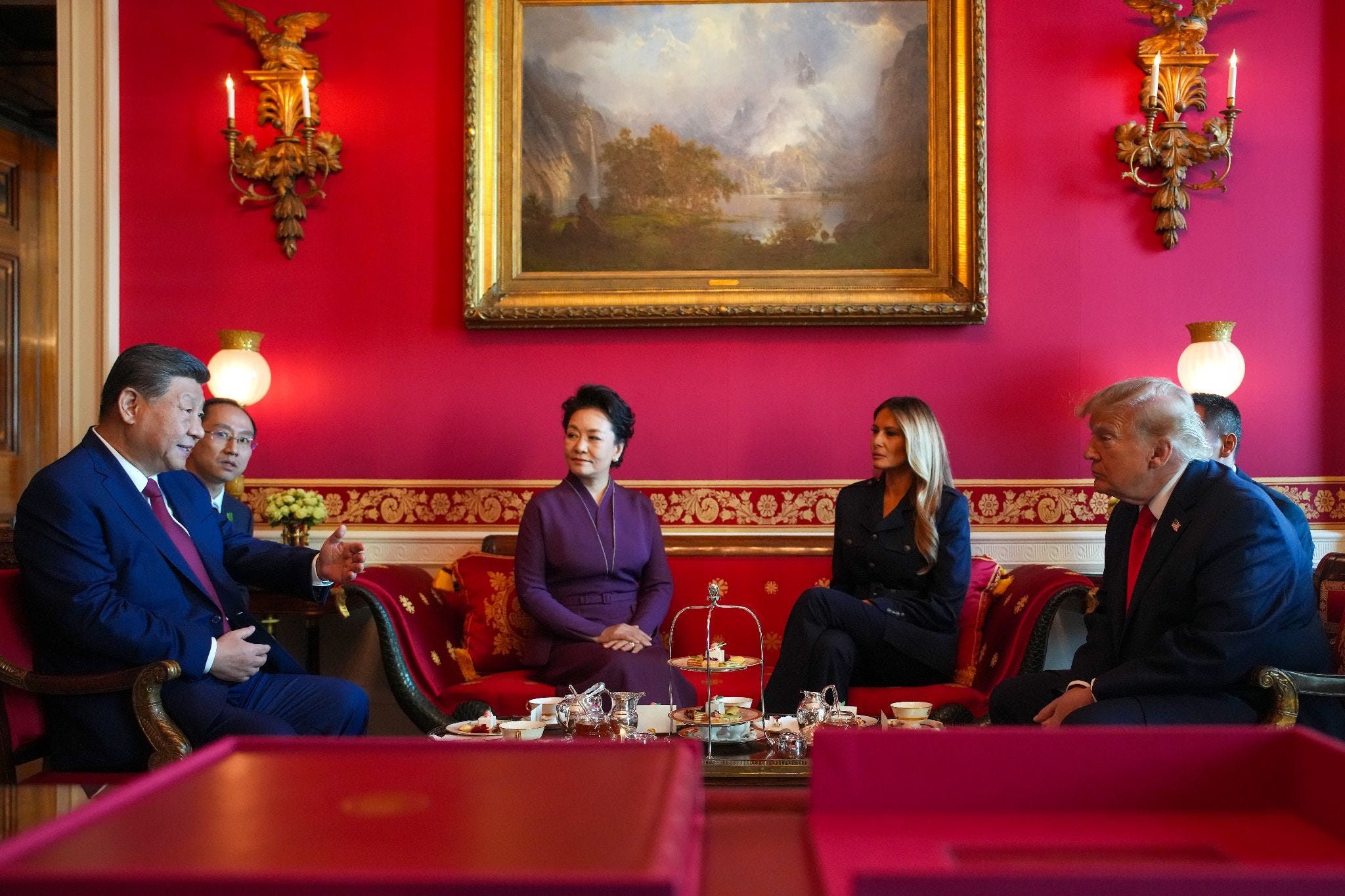
Adding to the pressure, President Trump is scheduled to begin a visit to China next week for a summit with President Xi Jinping. A prolonged, unresolved war in the Gulf is not the backdrop either side wants for those talks.
Washington Presses Allies, Ratchets Up Sanctions
The United States has found itself increasingly isolated on the international stage over the conflict. After meeting with Italian Prime Minister Giorgia Meloni, Secretary Rubio publicly challenged why Italy and other European allies were not lending active support to Washington's efforts to reopen the strait — warning that allowing Iran to dominate an international waterway would set a dangerous precedent for future challengers.
German Chancellor Friedrich Merz, speaking in Stockholm, acknowledged shared Western goals around preventing Iranian nuclear weapons but emphasized that European nations were working to bridge their differences with Washington rather than simply align with U.S. military positions.
Britain announced on Saturday that it is deploying a warship to the Middle East, positioning it for a potential multinational mission to ensure safe transit through the strait once the situation stabilizes. London and Paris have been jointly developing a framework for such a mission.
On the sanctions front, the U.S. Treasury Department moved aggressively on Friday, announcing penalties against ten individuals and entities — including several based in China and Hong Kong — for allegedly helping Iran's military procure weapons and raw materials used to manufacture Shahed attack drones. The announcement came just days before Trump's planned China trip, adding a pointed note of tension to the already complex diplomatic preparations.
The China Factor
The sanctions targeting Chinese entities are unlikely to go unnoticed in Beijing. While China has officially maintained a posture of neutrality in the U.S.-Iran conflict, it has continued to purchase Iranian oil in defiance of U.S. pressure. The Chinese Communist Party (CCP) has consistently resisted Western efforts to isolate Tehran, viewing Iran as both an energy supplier and a geopolitical counterweight to American influence in the region.
Now, with evidence that CCP-linked companies have allegedly helped supply Iran's drone program — the same drones used to strike U.S. allies in the Gulf — Washington is putting Beijing on notice. The timing, just before the Xi-Trump summit, is almost certainly deliberate.
What Comes Next
The coming days may prove decisive. If Iran responds to the U.S. proposal, a formal end to hostilities could follow — and with it, the gradual reopening of a waterway that the global economy desperately needs. If Tehran remains silent, or rejects the terms, the window for diplomacy may narrow further.
For now, ships wait, markets brace, and the world watches a narrow strip of water between two adversaries who are not quite at war — and not quite at peace.
.
Sources:
- AP News – U.S.-Iran Strait of Hormuz conflict updates: https://apnews.com/hub/iran
- BBC News – Middle East conflict and Strait of Hormuz coverage: https://www.bbc.com/news/world/middle_east
- Voice of America – Iran-U.S. diplomacy and Gulf tensions: https://www.voanews.com/middle-east
- Al Jazeera – UAE missile attacks and ceasefire developments: https://www.aljazeera.com/where/united-arab-emirates/
- U.S. Treasury Department – Official sanctions announcement: https://home.treasury.gov/news/press-releases
- Radio Free Asia – Iran-China-Gulf regional analysis: https://www.rfa.org
.
What's Your Reaction?
 Like
0
Like
0
 Dislike
0
Dislike
0
 Love
0
Love
0
 Funny
0
Funny
0
 Wow
0
Wow
0
 Sad
0
Sad
0
 Angry
0
Angry
0












Comments (0)