

How the Fate of Trump’s Tariffs Policy Lies With the Supreme Court


.
The court’s decision, expected sometime later in the Supreme Court’s 2025–2026 term, could reshape U.S. trade law and alter the balance of power between the White House and Congress.
Since its enactment in 1977 under President Jimmy Carter, the IEEPA has been invoked by every U.S. president. Carter used it to freeze Iranian government assets in response to the Iran hostage crisis. President Joe Biden used the law to impose broad sanctions on Russia for its 2022 invasion of Ukraine.
However, Trump became the first U.S. president to use the IEEPA to impose tariffs, by invoking Section 1702, which authorizes the president, during a national emergency, to regulate the import or export of any property in which any foreign country or national has any interest.
Opponents say the IEEPA was never intended as a vehicle to impose tariffs. Enacted in the post-Watergate era to limit presidential overreach, they argue the law was designed mainly to freeze foreign assets and block transactions during crises such as terrorism or war.
Supporters of the tariffs argue that China’s state-led economic practices involving heavy subsidies, market distortions, and industrial espionage fit the type of threat Congress had in mind when it passed the IEEPA in 1977. They contend that the global economy has evolved, and that economic coercion by foreign powers now represents a form of national security challenge that the law encompasses.
For the past 40 years, with few exceptions, the United States has consistently run a trade deficit, meaning total exports have been less than total imports.
.
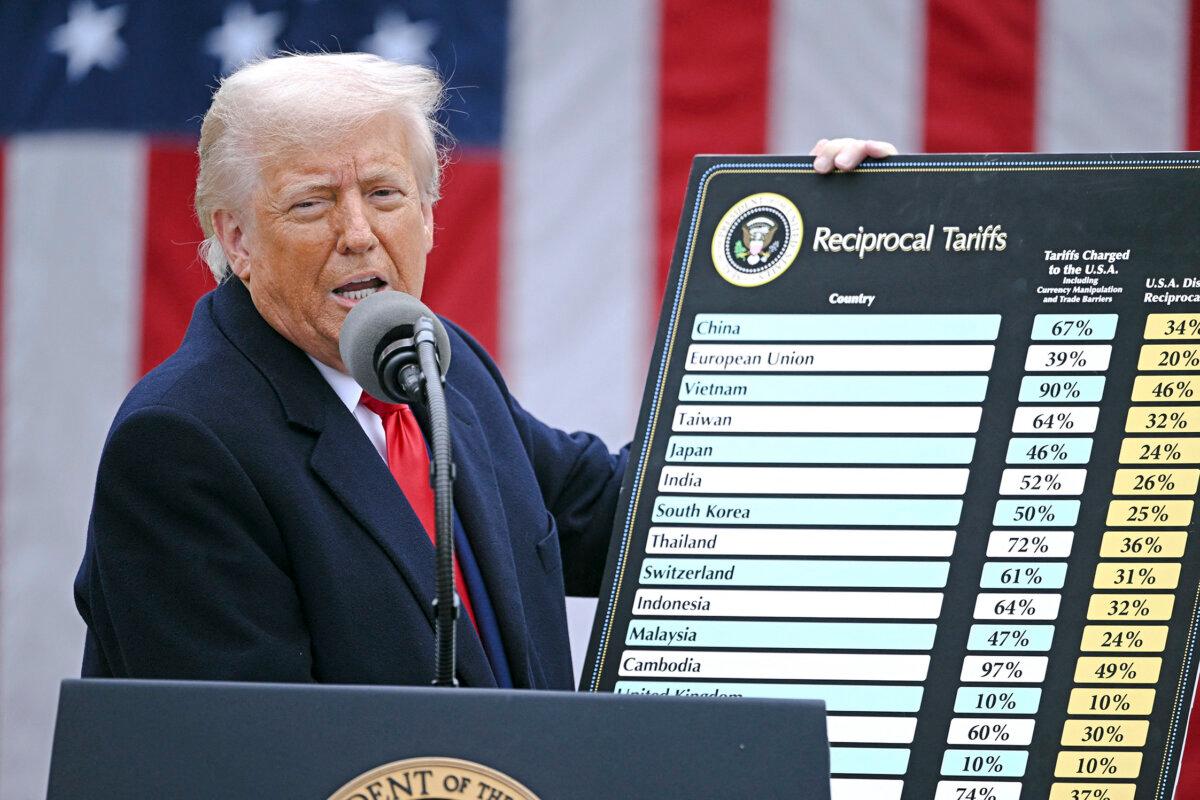
The Trump administration’s lawyer argued in court submissions that the term “regulate ... importation” in the IEEPA grants the president the authority to impose tariffs, and Trump has declared national emergencies regarding fentanyl trafficking, illegal immigration, and the trade deficit.
They argued that the Trump administration’s reasoning of trade deficits with the rest of the world fails to constitute an unusual or extraordinary threat to national security or foreign policy.
Road to Supreme Court
The tariffs prompted immediate legal challenges from a dozen states in the U.S. Court of International Trade. Plaintiffs argued that the Trump administration had misinterpreted the emergency law and expanded executive authority to regulate international economic transactions, usurping congressional power under Article I of the Constitution.Potential Outcomes
The court will hear the case months after it curbed Biden’s student loan forgiveness plan under the major questions doctrine.Somin contends that the IEEPA’s language is too ambiguous to justify trillions of dollars in tariffs, and exempting the President from major questions doctrine scrutiny would undermine the separation of powers and allow major policy decisions without explicit congressional approval.
Sauer countered that the major questions doctrine is designed for specific and recurring issues with far-reaching effects—for example, when an agency exercises power beyond what Congress reasonably granted. The Supreme Court has never applied this principle in the context of foreign affairs, where Congress is presumed to grant the president broad authority to supplement constitutional powers.
.
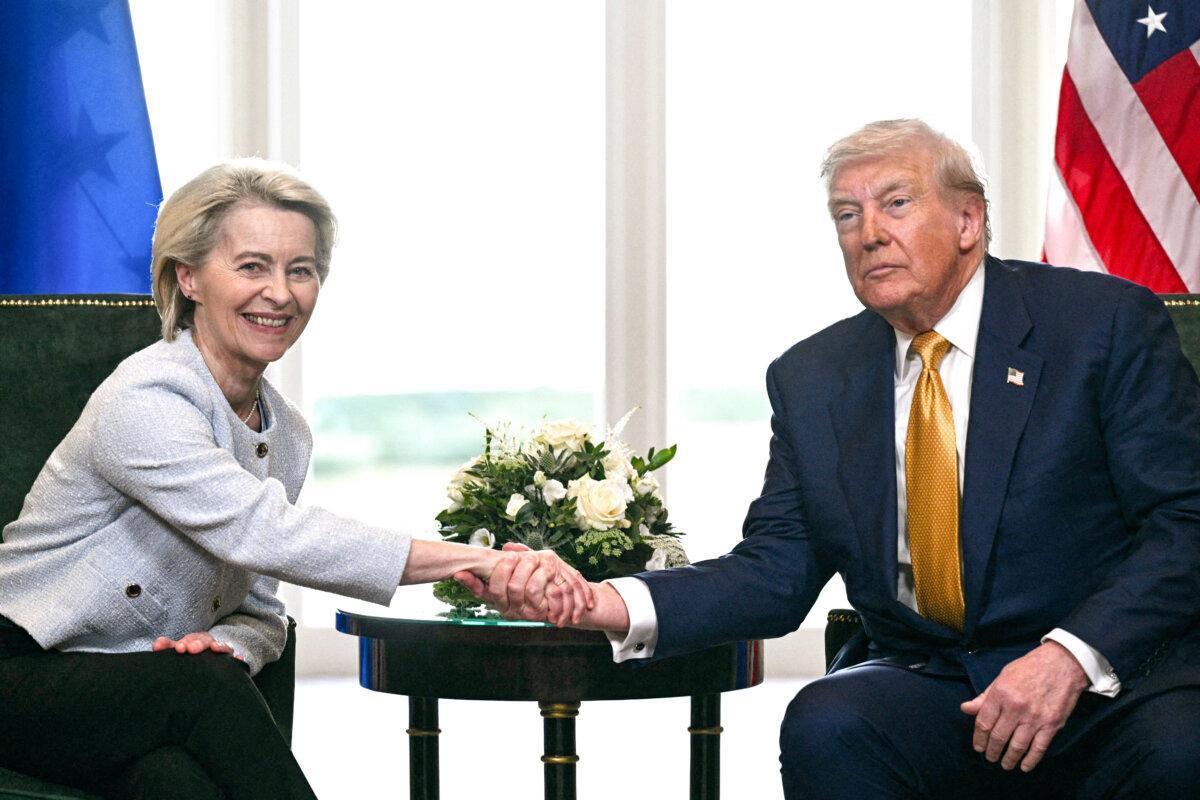
While many critics push for the court to rule against Trump, others think he is likely to prevail, given the Supreme Court’s historic tendency to show greater deference to the president on matters of foreign policy and national security.
According to the institute’s analysis, the justices may view the president’s authority over foreign affairs as legitimately exercised in making agreements with other sovereign nations, and therefore uphold Trump’s tariffs. They could also determine that Trump’s declaration of a trade-deficit emergency satisfies the statutory requirements under the law.
The think tank said that the tariff policy could also be reversed under future administrations.
Potential Impact
Whichever way the Supreme Court rules, it will likely have significant economic consequences. According to data from the Treasury Department, by August, the total U.S. tariff revenue had exceeded $183 billion during fiscal year 2025.The president has warned that if his administration loses this case, the United States would have to overturn existing trade deals, resulting in significant losses.
Yean said striking down the tariffs could cause significant volatility in the stock market, as companies would likely adopt a wait-and-see attitude.
“Companies that were planning to build factories in the U.S. might hold off for now,” he said. “If tariffs can’t be imposed, investing in U.S. manufacturing would be a total waste. Only with tariffs does it make sense for companies to build factories in America.”
As for consumers, Yean said the absence of tariffs would not immediately lead to noticeable price drops on imported goods.
“In the short term, retail will not be significantly affected,” he said. “The main impact will be on the supply side; that is, manufacturers will hesitate to act. This is not conducive to bringing manufacturing back to the U.S.”
.
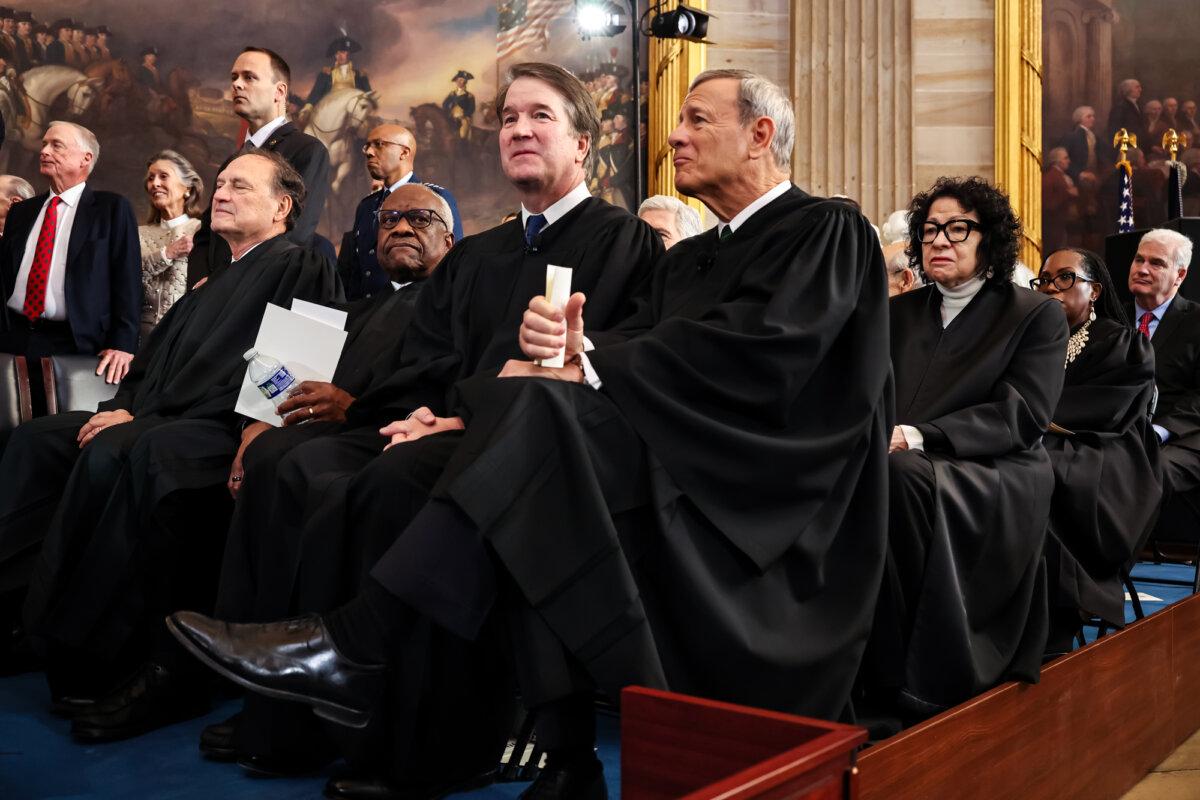
Investment manager and economist Milton Ezrati told The Epoch Times that if the Supreme Court rules against Trump, it would “greatly hamstring the White House’s strategy.”
Ezrati, who currently serves as chief economist at communications firm Vested, noted that Trump is not fixated on tariff structures or specific rates. Rather, he uses tariffs as a tool to reach trade deals that are “fair to the U.S. or favorable to it.”
“His ability to impose, change, and lift tariffs provides that room,” he said. “We’ve seen underlying evidence of this in his deals with Korea, Japan, the EU, and the UK. A contrary Supreme Court decision would not halt the effort, but it would limit it significantly.”
According to Yean, these U.S. allies signed new trade agreements with Trump under tariff pressure because they all rely heavily on the American market.
“If Trump’s tariffs were invalidated, they would gain more leverage in negotiations with the United States, raise their demands, and force the United States to make concessions,” he said. “Without the ability to impose tariffs, America would lose a major bargaining chip.”
Beijing’s Response
Yean said that a major negative consequence of striking down Trump’s tariffs would be allowing the Chinese Communist Party (CCP) to continue using globalization to further erode the power of the United States and upend the current world order.“[The CCP] is already extremely arrogant,” he said, adding that if there are no tariffs, “it will fear you even less. Right now, it still pretends to talk about reforms, but by then it probably won’t even bother to say a word.”
Yean said that the CCP currently runs a trade surplus with about 90 percent of countries worldwide, with an annual surplus of roughly $1 trillion.
“This means China is effectively taking away the livelihoods of people in 90 percent of the world’s countries,” he said. “A long-term trade surplus means you only sell to others without buying from them, which essentially hollows out other nations’ manufacturing, industry, and other sectors.”
Since China formally joined the World Trade Organization in 2001, its trade surplus—exports exceeding imports—has trended upward year after year.
Chinese media reported in 2022 that China only had 21 countries left with which it ran a trade deficit, mainly because it had to import essential commodities from them in bulk, such as chips from Taiwan, iron ore and coal from Australia, oil from Russia, and soybeans and corn from Brazil.
Yean noted that the entire world is aware of how the CCP has hollowed out other countries’ industries.
“No one really sees China as a victim,” he said. “Everyone knows it rose through globalized trade.”
Ezrati said the CCP has been actively working to weaken America’s global influence and dominance, with its Belt and Road Initiative and efforts toward de-dollarization in trade being prominent examples of this strategy.
He noted that the CCP is currently preparing for a potential decoupling from trade with the United States—for instance, by developing domestic engines for economic growth and building technology industries capable of competing with the United States.
Using Other Laws to Impose Tariffs
If the Supreme Court justices curb the president’s powers under the IEEPA, it doesn’t mean the White House is out of options, Ezrati noted. The decision would apply only to the IEEPA and the administration could still rely on other laws to support its tariff policy.He pointed to the 1974 Trade Act, the 1962 Trade Expansion Act, and the 1930 Tariff Act as potential options. These provisions require more complex procedures, including government investigations and specific findings, and are more time-consuming. They do not offer the broad discretionary power that the IEEPA provides the president, Ezrati said.
Yean suggested that Trump might also seek non-tariff measures to continue exerting trade pressure, including the use of certain national security or military agreements as bargaining chips during trade negotiations, or having the Department of Commerce issue new regulations to restrict certain products.
Ezrati said that any alternative measures Trump adopts could also face legal challenges that ultimately end up back in the Supreme Court.
What's Your Reaction?
 Like
0
Like
0
 Dislike
0
Dislike
0
 Love
0
Love
0
 Funny
0
Funny
0
 Wow
0
Wow
0
 Sad
0
Sad
0
 Angry
0
Angry
0
















Comments (0)