

The Village Is Gone — And American Mothers Are Paying the Price
Modern American mothers have access to more parenting advice than any generation before them — yet they are raising children in unprecedented isolation. The collapse of multigenerational support networks has quietly fueled a mental health crisis, and a growing movement of women is trying to rebuild what was lost.


.
More Information, Less Support
There has never been more content available about parenting. Apps, podcasts, books, online forums, pediatrician hotlines — the information is endless. Yet postpartum depression rates in the United States have more than doubled over the past decade, according to data published by the CDC and leading maternal health researchers. Something is clearly missing that no algorithm can replace.
What is missing is the village.
For most of human history, new mothers were never alone with a newborn. Grandmothers, aunts, sisters, and neighbors formed an informal but highly effective web of shared knowledge and daily support. Breastfeeding techniques, infant soothing, household management — these were not things women had to research. They absorbed them simply by growing up surrounded by other mothers doing exactly that.
How the Village Actually Worked
The concept of a "village" gets invoked frequently in parenting discussions, often as a vague metaphor. But historically, it was something far more concrete and functional.
In extended family households, older children helped carry and soothe babies. Aunts stepped in so exhausted new mothers could sleep. Grandmothers provided the kind of emotional grounding that only comes from having navigated the same challenges multiple times. Neighbors noticed, checked in, and contributed in small ways that added up to something substantial.
The critical feature of this system was distribution. No single person carried the full weight. The labor of raising children — feeding, soothing, cleaning, managing — moved across many hands, often invisibly, but always dependably.
That system no longer exists for most American families.
Isolation as the New Normal
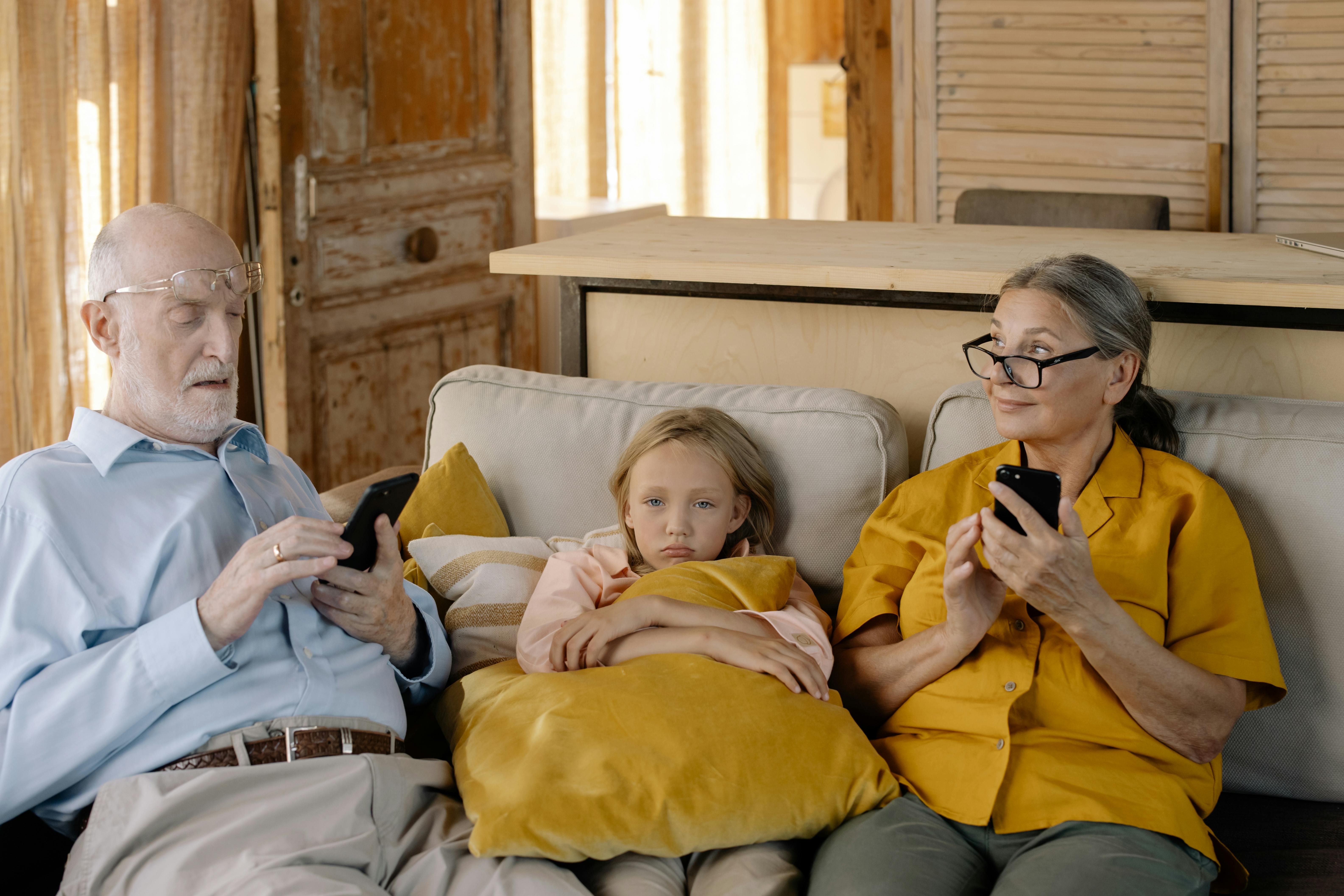
Today, American families are geographically scattered across cities and states. Many women begin motherhood far from where they grew up, far from the people who knew them before they became mothers. The postpartum period — already one of the most physically and emotionally demanding transitions a human body can undergo — is increasingly navigated alone.
The biological reality of new motherhood is unrelenting. A newborn requires attention every few hours around the clock. Sleep deprivation accumulates rapidly. Hormonal shifts affect mood and cognition. The body is still recovering from birth while simultaneously sustaining another life.
Research published in journals including JAMA Psychiatry and The Lancet has consistently shown that social isolation during the postpartum period significantly increases the risk of depression and anxiety. A 2023 systematic review found that mothers with strong, consistent social support experienced measurably lower rates of postpartum depression — regardless of income level or access to professional healthcare.
When that support is absent, many women stay silent about how they feel. Presenting a composed, capable appearance while quietly struggling is a pattern reported across demographics and income brackets.
The Generational Knowledge Gap
The disappearance of the village has also created a knowledge gap that is harder to quantify but equally significant.
Previous generations of women learned motherhood through immersion — years of watching, helping, and participating in the care of babies and children within their own families and communities. This informal apprenticeship meant that by the time many women had their first child, they already had hands-on experience. The learning curve was gentler because it had already begun long before birth.
That process has largely broken down. Smaller family sizes, urban mobility, and the privatization of domestic life mean many women hold their first baby for the first time when it is their own. The information they turn to — online guides, parenting books, pediatric apps — is generic by design and cannot replicate the responsive, relationship-based guidance that once came from people who actually knew the mother and child involved.
Women Rebuilding Their Own Villages
Faced with this reality, a growing number of women are creating new forms of community from the ground up.
Peer-led mothers' groups have emerged across the country, ranging from church-based gatherings and neighborhood playgroups to more structured organizations. These groups function as partial replacements for what the traditional village once provided — real-time conversation between women in the same circumstances, shared problem-solving, and the simple but powerful experience of being heard.
Research supports their effectiveness. A 2022 study published in BMC Pregnancy and Childbirth found that peer support programs during the perinatal period — the period just before and after birth — reduced symptoms of postpartum depression and improved maternal confidence, particularly when participation was consistent over several months.
The emphasis on consistency matters. Mental health professionals working in maternal care note that intermittent connection does not carry the same protective effect as reliable, ongoing support. Knowing that a specific person will be there next week — someone who remembers what you said last time — is qualitatively different from scrolling through advice in an online forum.
For many mothers, formal groups are only one piece of the puzzle. Small informal arrangements — a regular walking partner, a group text with a few trusted friends, a standing weekly phone call — can serve a similar function when sustained over time.
The Limits of What Community Groups Can Offer
Peer support groups are valuable, but they have real constraints.
Participation requires effort during a period when time and energy are already depleted. Support must be sought out, scheduled, and maintained — tasks that do not happen automatically the way they once did within intact multigenerational households.
There is also the matter of depth. A mothers' group can offer solidarity, practical tips, and genuine friendship. It cannot fully replicate decades of accumulated wisdom passed down from someone who raised five children and watched their own children do the same. That generational dimension — slow, embodied, deeply contextual — is not easily rebuilt.
Maternal health researchers have begun calling for systemic responses alongside individual efforts: better-funded postpartum support programs, expanded paid parental leave, and community infrastructure that reduces the structural isolation many new parents experience. Several European countries have invested significantly in community midwifery and home-visiting programs for new mothers, with measurable improvements in maternal mental health outcomes.
What Comes Next
American mothers are not simply nostalgic for a romanticized past. They are responding to a measurable deficit — in support, in knowledge transmission, in the basic sense that raising a child should not fall entirely on one or two people.
The village is not coming back in its original form. But the instinct behind it — that new mothers need consistent, reliable, relationship-based support — is finding new expressions. Slowly, in small networks and informal arrangements, something is beginning to take shape again.
It is not automatic, and it is not effortless. But it is happening.
.
Sources
- Centers for Disease Control and Prevention – Postpartum Depression data and surveillance: https://www.cdc.gov/reproductivehealth/depression/index.htm
- JAMA Psychiatry – Social support and postpartum mental health outcomes: https://jamanetwork.com/journals/jamapsychiatry
- The Lancet – Maternal mental health and isolation research: https://www.thelancet.com/journals/lancet/article/PIIS0140-6736(21)00676-8/fulltext
- BMC Pregnancy and Childbirth – Peer support and postpartum depression (2022): https://bmcpregnancychildbirth.biomedcentral.com/articles/10.1186/s12884-022-04548-2
- World Health Organization – Maternal mental health overview: https://www.who.int/news-room/fact-sheets/detail/maternal-mental-health
- Reuters – Global postpartum depression trends and awareness: https://www.reuters.com/business/healthcare-pharmaceuticals/
.
What's Your Reaction?
 Like
0
Like
0
 Dislike
0
Dislike
0
 Love
0
Love
0
 Funny
0
Funny
0
 Wow
0
Wow
0
 Sad
0
Sad
0
 Angry
0
Angry
0











Comments (0)