

Trump in Beijing: The High-Stakes Summit That Could Reshape the World
U.S. President Donald Trump arrives in Beijing this week for a critical summit with Chinese President Xi Jinping on May 14–15. The meeting comes at a pivotal moment: a fragile Iran ceasefire is on the verge of collapse, the global energy market is under severe strain, and Trump is seeking economic and diplomatic wins ahead of November's midterm elections. From Taiwan to trade, from Boeing jets to soybeans, the agenda is vast — and the pressure on Washington is immense.


.
A President in Need of Wins
When Donald Trump lands in Beijing on Wednesday, he will arrive not as a president riding high — but as a leader who urgently needs results.
His approval ratings have been battered by an unpopular war with Iran. More than 60 percent of Americans oppose the conflict, according to a Reuters/Ipsos survey. Oil prices have surged past $104 a barrel. And Trump's ambitious trade tariff strategy — once heralded as a tool to force China to its knees — has been repeatedly challenged in U.S. courts.
"Trump kind of needs China more than China needs him," said Alejandro Reyes, a professor specializing in Chinese foreign policy at the University of Hong Kong. "He needs a foreign policy victory — something that shows he is looking to ensure stability in the world."
The summit at the Great Hall of the People on May 14 and 15 will be grand in setting: state banquets, a tour of the UNESCO-heritage Temple of Heaven, tea and lunch between the two leaders. But whether the substance matches the ceremony remains the central question.
Iran: A Ceasefire on Life Support
The most urgent crisis heading into the summit is the war with Iran.
Trump himself described the ceasefire — in effect since April 7 — as "on life support" after Tehran rejected a U.S. proposal to end hostilities. Iran's counteroffer included a demand for an end to fighting on all fronts, including Lebanon, where U.S. ally Israel is battling Iran-backed Hezbollah. Tehran also insisted on sovereignty over the Strait of Hormuz, compensation for war damage, and an end to the U.S. naval blockade.
Trump's reaction was blunt. "I would call it the weakest right now, after reading that piece of garbage they sent us. I didn't even finish reading it," he told reporters.
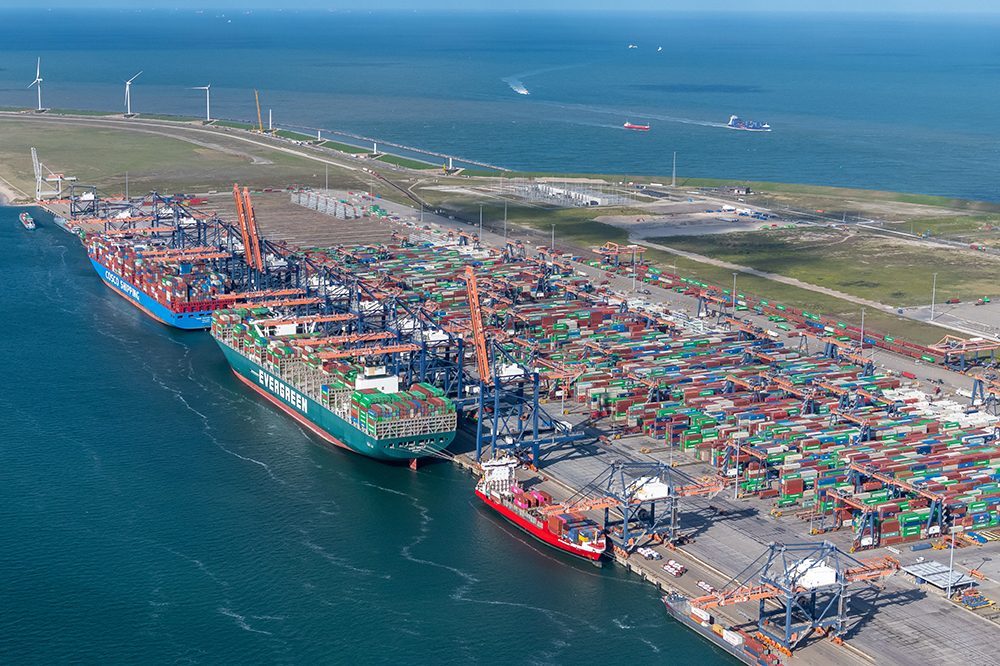
The stakes could not be higher. Before the conflict began on February 28, the Strait of Hormuz — a narrow waterway at the mouth of the Persian Gulf — carried roughly one-fifth of the world's oil and liquefied natural gas shipments. Since then, it has been nearly shut. Shipping trackers show only a trickle of tankers transiting the strait, with vessel tracking systems switched off to avoid Iranian attack.
OPEC's total oil output fell in April to its lowest level in over two decades, according to a Reuters survey. The economic pain is global — and growing.
Now Trump wants Xi's help. China maintains close ties with Tehran and is one of Iran's largest oil customers, giving Beijing genuine leverage. Whether Xi is willing to use it — and at what price — is one of the summit's defining questions.
The Taiwan Question: A Fault Line That Won't Go Away
Taiwan will be at the center of Xi's demands. China claims the self-governing island as part of its territory — a position Taiwan firmly rejects.
The United States follows a "one China policy," formally acknowledging Beijing's position while declining to take sides on Taiwan's sovereignty. Washington is nonetheless legally obligated to help Taiwan defend itself.
Trump confirmed he will raise the issue of U.S. arms sales to Taiwan directly with Xi. "President Xi would like us not to," Trump said. "I'll have that discussion."
In December 2025, the Trump administration approved the largest-ever U.S. weapons package for Taiwan — more than $11 billion. The announcement triggered China's most extensive military exercises around the island to date, a show of force clearly designed to signal Beijing's displeasure and its capability to blockade Taiwan in a potential conflict.
Chinese academic Wu Xinbo, who advises China's foreign ministry, said Trump should make clear he will not support Taiwanese independence. Meanwhile, U.S. analysts warn that even subtle shifts in Washington's language on Taiwan could send shockwaves across American allies throughout Asia.
The history between the two sides is long and tense — from the artillery crises of the 1950s, to the Third Taiwan Strait Crisis in 1996, to Pelosi's controversial 2022 visit to Taipei. (A detailed timeline appears in the sources below.) Every U.S. president has walked this tightrope. Trump now walks it at what may be one of its most precarious moments.
Human Rights on the Agenda: Jimmy Lai and Pastor Jin Mingri
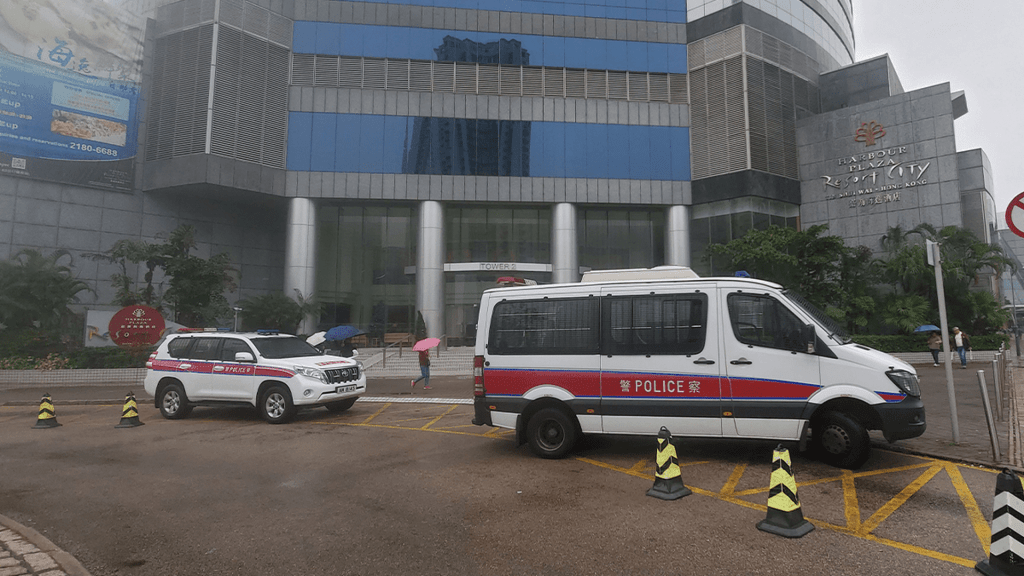
Trump said he will also raise the case of Jimmy Lai, the veteran pro-democracy media entrepreneur and founder of the now-shuttered Apple Daily newspaper, who was sentenced to 20 years in prison in February on charges of colluding with foreign forces and publishing seditious materials.
"He tried to do the right thing. He wasn't successful, went to jail, and people would like him out — and I'd like to see him get out too," Trump said.
Lai's prosecution under Hong Kong's national security law drew sharp international criticism and is widely seen as emblematic of Beijing's dismantling of the freedoms once guaranteed to Hong Kong under the "one country, two systems" framework.
Trump will also raise the case of Pastor Jin Mingri, founder of Beijing's Zion Church, who was arrested late last year after authorities issued new regulations banning unauthorized online religious preaching and what Beijing described as "foreign collusion" by clergy.
Business Deals: Boeing, Musk, and the Trade Truce
Trump's delegation includes some of the most powerful names in American business: Tesla's Elon Musk, Apple's Tim Cook, Boeing CEO Kelly Ortberg, GE Aerospace's Larry Culp, BlackRock's Larry Fink, Blackstone's Stephen Schwarzman, and executives from Mastercard, Visa, Qualcomm, and others — 16 CEOs in total.
The headline economic prize is a potential Boeing aircraft deal that industry sources say could include up to 500 Boeing 737 MAX jets plus dozens of widebody aircraft. Such a deal would be China's first major Boeing order since 2017 and could represent the single largest airplane purchase in aviation history.
Also on the table: an extension of the rare earth minerals truce, under which China has continued to supply critical materials — used in everything from electric vehicles to weapons — to the United States. Beijing had threatened to cut off these supplies during the trade war, a move that exposed dramatic Western dependency on Chinese supply chains.
Nvidia CEO Jensen Huang was not invited to join the delegation. The White House confirmed this, noting that the focus of this trip is on agriculture and commercial aviation rather than semiconductor technology. Nvidia's advanced AI chips have been approved for export to China but have not yet been sold, amid complications with Chinese government procurement approvals.
Energy: A Deal That Could Benefit Both Sides
One significant area of potential agreement is energy trade, a sector that has been badly disrupted by tariffs and geopolitical tension.
Before Trump's second term, China imported around 4.15 million tons of U.S. liquefied natural gas (LNG) annually. That collapsed to just 26,000 tons in 2025 after China imposed a 25-percent tariff on U.S. LNG as part of the trade war. Analysts note that if Beijing removed this tariff, U.S. LNG would be competitively priced against Asian alternatives — particularly given current energy market disruptions caused by the Iran war.
U.S. crude oil exports to China have also ground to a halt. China imported no U.S. oil after May 2025 due to import tariffs, redirecting purchases to Canada, Brazil, and elsewhere.
One area of resilience: ethane and propane. The U.S. remains China's sole ethane supplier — a key ingredient in plastics manufacturing — and China's ethane imports from the U.S. rose 50 percent year-on-year in early 2026. Beijing even waived tariffs on ethane last year, illustrating how critical this supply chain has become.
Any easing of LNG and oil tariffs as part of a summit deal could generate mutual economic benefit — and help alleviate the global energy pressure caused by the near-closure of the Strait of Hormuz.
Farm Deals: Soybeans, Corn, and the Art of the Agricultural Deal
Agriculture is another area where both sides see room for agreement, though analysts urge caution about expectations.
China and the U.S. may announce new purchasing commitments for corn, sorghum, milling wheat, beef, and poultry. However, analysts say major new soybean deals are unlikely beyond the 25-million-metric-ton annual commitment China made last October — a target China has not officially confirmed in detail.
China has dramatically reduced its reliance on American soybeans since Trump's first term, sourcing just 15 percent of its soybean imports from the U.S. in 2025, down from 41 percent in 2016. Brazil has stepped into the gap. Weak domestic demand makes large new purchases politically awkward for Beijing.
Still, for Trump, any agricultural deal serves a domestic political purpose: reassuring American farmers ahead of November's elections.
What Beijing Wants in Return
China is not entering this summit empty-handed. Since last October, Beijing has been quietly expanding its own economic leverage — enacting laws to penalize foreign companies that shift supply chains away from China, and tightening control over its rare earth export licensing.
Xi's primary demand is Taiwan. But Beijing also wants commitments that Washington will not impose future technology export controls and will roll back existing restrictions on chipmaking equipment and advanced memory chips — tools that the U.S. has used to slow China's semiconductor ambitions.
Analysts are skeptical that Trump will deliver on the big-ticket items. The most likely outcome, according to Scott Kennedy of the Center for Strategic and International Studies, is "a superficial ceasefire that is largely to China's advantage."
A majority of Americans — 53 percent — now favor cooperative engagement with China, up from 40 percent in 2024. That public mood may give Trump just enough room to claim a diplomatic win, even if the concrete results fall short of a transformative breakthrough.
A World Watching
For all the pomp of the Beijing summit — the banquets, the temple tours, the photo opportunities at the Great Hall of the People — the stakes could hardly be more concrete.
Oil prices are at record highs. A war is raging in the Middle East. Taiwan's security hangs in the balance. Pro-democracy advocates are in prison. And the world's two largest economies are locked in a rivalry that touches every corner of the global order.
Trump enters Beijing needing wins. Xi enters knowing it. What comes out of the next 48 hours may define the geopolitical landscape for years to come.
.
Sources:
- Reuters – "Stung by Iran war, Trump heads to China in need of wins" (May 12, 2026): https://www.reuters.com/business/aerospace-defense/stung-by-iran-war-trump-heads-china-need-wins-2026-05-12/
- Reuters – "Peace deal hopes fade after Trump rejects 'garbage' Iran proposal" (May 12, 2026): https://www.reuters.com/world/china/peace-deal-hopes-fade-after-trump-rejects-garbage-iran-proposal-2026-05-12/
- Reuters – "Trump says he will discuss arms sales to Taiwan with China's Xi" (May 11, 2026): https://www.reuters.com/world/asia-pacific/trump-says-he-will-discuss-arms-sales-taiwan-with-chinas-xi-2026-05-11/
- Reuters – "Elon Musk, Apple's Cook and Boeing CEO going to China with Trump" (May 11, 2026): https://www.reuters.com/world/asia-pacific/nvidia-ceo-huang-not-going-to-china-during-trump-visit-source-says-2026-05-11/
- Reuters – "A Trump-Xi deal could revive US energy exports to China" (May 12, 2026): https://www.reuters.com/business/energy/trump-xi-deal-could-revive-us-energy-exports-china-2026-05-12/
- Reuters – "Xi-Trump summit may yield farm deal, but China has limited soybean appetite" (May 12, 2026): https://www.reuters.com/world/china/xi-trump-summit-may-yield-farm-deal-china-has-limited-soybean-appetite-2026-05-12/
- Reuters – "Key events in ties between the United States, China and Taiwan" (May 12, 2026): https://www.reuters.com/world/china/key-events-ties-between-united-states-china-taiwan-2026-05-12/
.
What's Your Reaction?
 Like
2
Like
2
 Dislike
0
Dislike
0
 Love
2
Love
2
 Funny
0
Funny
0
 Wow
2
Wow
2
 Sad
0
Sad
0
 Angry
0
Angry
0











Comments (0)