

Communist China’s Ports of Influence and Exploitation


.
On a gray September morning in Mombasa, a harbor pilot climbs the ladder of a Chinese-built container ship, boots slick with spray, as the vessel noses toward a berth that did not exist 20 years ago. The cranes, the dredged channel, and even parts of the road that will carry the cargo inland all tie back to Chinese state banks and state-owned firms.
That same week in Beijing, officials were opening the 12th Beijing Xiangshan Forum, a defense conference they billed as a place to “safeguard the international order and promote peaceful development together.” Chinese state media celebrated the presence of more than 1,800 participants from over 100 countries, framing the event as proof that Beijing is a responsible security provider in a dangerous world. The messaging was calm and inclusive.
From Xiangshan to the Waterfront
Over the course of roughly 20 years, Chinese state-owned enterprises and policy banks have assembled a dense web of port stakes and operating roles stretching from the Mediterranean to the South Pacific.An interactive tracker provided by the Council on Foreign Relations (CFR) shows Chinese companies present in dozens of overseas ports, often serving as builders, financiers, and terminal operators simultaneously, and scores each site by its potential value to the People’s Liberation Army (PLA) Navy.
AidData’s “Harboring Global Ambitions” report identifies 123 seaport projects at 78 ports in 46 countries, totaling nearly $30 billion, many of which exhibit clear dual-use characteristics. Most of this sits under the broader Beijing’s Belt and Road Initiative.
Griffith University’s 2024 investment report, along with the Green Finance and Development Center, estimates that Belt and Road engagement has surpassed $1.1 trillion since 2013, with transport and logistics dominating the portfolio.
A separate analysis by the Mercator Institute for China Studies notes that, even after some setbacks, China’s global port network remains “well entrenched” and is further enhanced by a high degree of coordination from Beijing.
Ports That Look Commercial but Behave Strategically
On paper, almost all of these developments are billed as commercial projects. They move containers, not frigates. Contracts outline throughput, not war plans. But the pattern is hard to ignore. Chinese state banks provide financing. Chinese construction giants build the terminals and access roads. Chinese shipping and logistics companies take long concessions to operate the berths, often with bundled control over pilotage, towage, and repair. The approach allows for touchpoints in every aspect of the port program.Those layers matter. When the Chinese Communist Party (CCP) ultimately influences the banker, the builder, and the operator, it acquires quiet but real leverage over how a port actually functions day to day. The CFR tracker makes clear that in many locations, Chinese companies hold the key operating roles at container terminals and logistics hubs that would matter enormously in a contingency.
Routine PLA Navy port calls and COSCO ship movements are not just courtesy visits; they are opportunities to gather practical knowledge about berthing, local regulations, and political decision chains.
None of that requires a formal “base.” It just requires being in the room when a harbor master has to decide which vessel gets the last deep-water berth or whether a “technical issue” justifies a delay. It also amplifies a global presence, which is often coercive at its core.
.
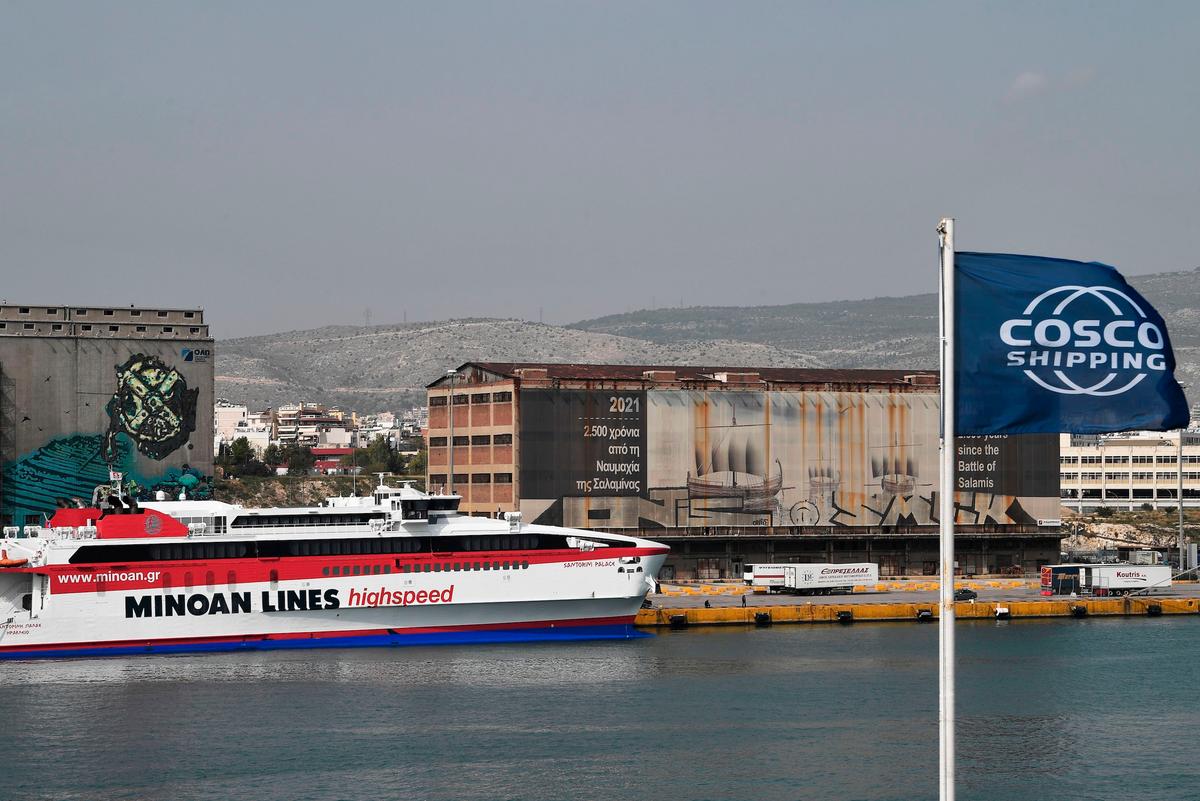
Piraeus, Mombasa, Djibouti, Ream
Recent events have given us several small but telling examples of how this system is evolving.In Greece, the new U.S. ambassador floated the idea that Chinese control of Piraeus might someday be diluted. The CCP’s response was blunt. The Chinese Embassy in Athens insisted that COSCO’s 67 percent stake in the port is “not for sale” and accused Washington of a Cold War mentality. That is not the language of a disinterested foreign investor. It is the language of a state that sees strategic value in hanging on to a European gateway it effectively controls.
In Kenya, the government has turned to Chinese companies again for a $1.5 billion toll-road expansion that will link the port of Mombasa more tightly to the interior. The deal gives a consortium led by China Communications Construction Company a 28-year concession to collect tolls, blending debt and equity in ways that tie a critical corridor to Chinese balance sheets for a generation. It replaces an earlier U.S.- and French-backed expressway concept that never got off the ground.
Along the Horn of Africa, local reporting describes a tightening “Djibouti–Mogadishu corridor,” with Chinese-backed dry-dock and repair facilities in Djibouti helping anchor a wider chain of logistics and security ties. Djibouti’s own ship repair yard, supported by European development finance, is being promoted as a regional node; Chinese-built port infrastructure and the PLA Navy’s first overseas base sit alongside it. Their presence creates both collection and disruption opportunities, which the United States and its partners must mitigate.
And in Southeast Asia, Washington has just lifted its arms embargo on Cambodia and agreed to resume exercises, even as U.S. officials continue to signal concern about Chinese-funded upgrades at Ream Naval Base. Satellite imagery and analysis from the Center for Strategic and International Studies’ (CSIS) Asia Maritime Transparency Initiative show a new deep-water pier, expanded support facilities, and a nearby air-defense site built with Chinese money, even as Phnom Penh insists that the base is open to all “friendly navies.”
Different regions, different politics, same underlying story: commercial infrastructure that can be nudged toward strategic purposes when the moment is right.
.
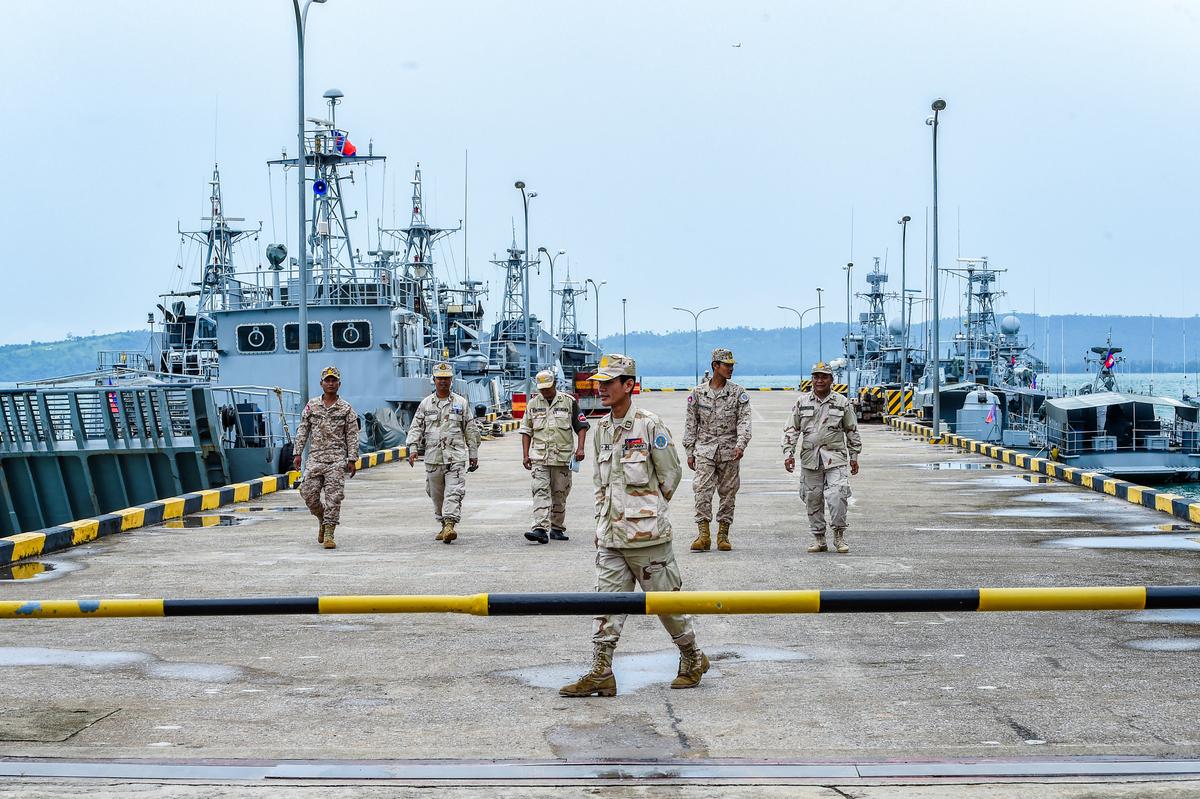
Where the Leverage Really Comes From
It is easy to caricature this as a single, coherent “string of pearls.” The reality is messier. Some port deals underperform. Some concessions are renegotiated. Local politics sometimes push back. But when you look across the cases, the leverage tends to come from the same place: the intersection of opaque debt, long concessions, and political dependency. The CCP’s open hand often encircles the throat.AidData’s broader work on Chinese lending suggests Beijing has become the world’s largest official creditor, with around $2.2 trillion in loans and grants to more than 200 countries between 2000 and 2023. The Lowy Institute has warned that the 75 poorest nations alone face about $22 billion in repayments to China in 2025, much of it linked to Belt and Road projects.
What INDOPACOM Should Be Asking at Every Port
For the Indo-Pacific Command (INDOPACOM) and its partners, the first step is to treat legal and financial detail as operational intelligence, not background reading. A practical port-risk matrix would ask a few simple questions for every significant node in the theater. How long is the concession, and who controls it? Who runs key services like pilotage, towage, bunkering, and repair? How much of the associated debt sits on Chinese books, when does it mature, and what happens if it is restructured on short notice?The building blocks for that analysis already exist. The CFR tracker and AidData’s “Harboring Global Ambitions” dataset together offer a baseline picture of where Chinese stakes sit and how large they are. CSIS’s work at Ream shows how open-source imagery can fill in details about pier dimensions, fuel storage, and ammunition bunkers. The missing ingredient is often the connective tissue inside our own system: getting contract lawyers, financial analysts, and planners to see the threat, then encourage them to look at the same map.
Once that picture is in hand, plans can change. Pre-positioning and exercise design can lean toward ports with transparent ownership and governance, and away from nodes where Chinese operators hold long-term concessions tied to heavy state-backed debt.
Contingency plans can account not just for complete port closure, but also for gray-zone disruptions: unexplained delays for certain flags, “mechanical” issues affecting some berths but not others, and sudden rule changes on hazardous cargo. These are all tactics China uses in its lawfare and economic coercion campaigns.
Act Before the Concrete Hardens
Xiangshan’s carefully crafted talking points are not meaningless; they tell us how Beijing wants to be seen. But the concrete, steel, and contracts around ports from Piraeus to Mombasa, Djibouti, and Ream tell us how the CCP is actually positioning itself.The choice for Washington and its partners is whether to treat those ports as peripheral points of interest or as live instruments of influence that must be understood and, where possible, balanced in the interest of free trade and global security. That means building port-risk overlays into real plans, backing diplomats with rapid legal and financial support, and offering governments something better than a take-it-or-leave-it deal when they sit down to negotiate the next terminal or toll road.
If we wait to care about these facilities until communist China’s flag is permanently raised over them, we will have waited far too long. The contest over who gets to move what, where, and when is already underway—quietly, in concession amendments, refinancing talks, and seemingly routine infrastructure upgrades. Xiangshan’s mask slipped a long time ago. It is time to remove it and expose it for what it is.
What's Your Reaction?
 Like
0
Like
0
 Dislike
0
Dislike
0
 Love
0
Love
0
 Funny
0
Funny
0
 Wow
0
Wow
0
 Sad
0
Sad
0
 Angry
0
Angry
0















Comments (0)