

Chinese Coast Guard Fires Water Cannons at Philippine Ships in South China Sea


.
China’s coast guard vessels fired water cannons against Philippine coast guard ships on Sept. 16 near a disputed shoal in the South China Sea, in the latest flare-up between Beijing and Manila in an increasingly tense territorial conflict.
The Chinese regime’s coast guard said in a statement on Sept. 16 that it has taken “control measures” against several Philippine government vessels it accused of “illegally operating” near Huangyan Island.
Huangyan is the Chinese name for Scarborough Shoal, a triangle-shaped coral reef in the South China Sea. Located approximately 120 nautical miles west of Luzon, the Philippines’ main island, the feature falls within Manila’s 200-nautical-mile exclusive economic zone, according to international law.
In a separate statement on Sept. 16, China’s coast guard accused Manila of dispatching more than 10 government ships to intrude into its territorial waters near Huangyan Island from different directions.
Gan Yu, spokesperson for the regime’s coast guard, said the Philippine coast guard vessel 3014 ignored repeated warnings from the Chinese side, and “deliberately rammed” a Chinese vessel.
One Chinese coast guard vessel deployed water cannons for nearly half an hour, resulting in “significant damage” to a Philippine ship, including to its bridge and the captain’s cabin, Tarriela said.
An individual aboard the Philippine fisheries vessel was injured by shattered glass caused by the water cannon, he added.
.
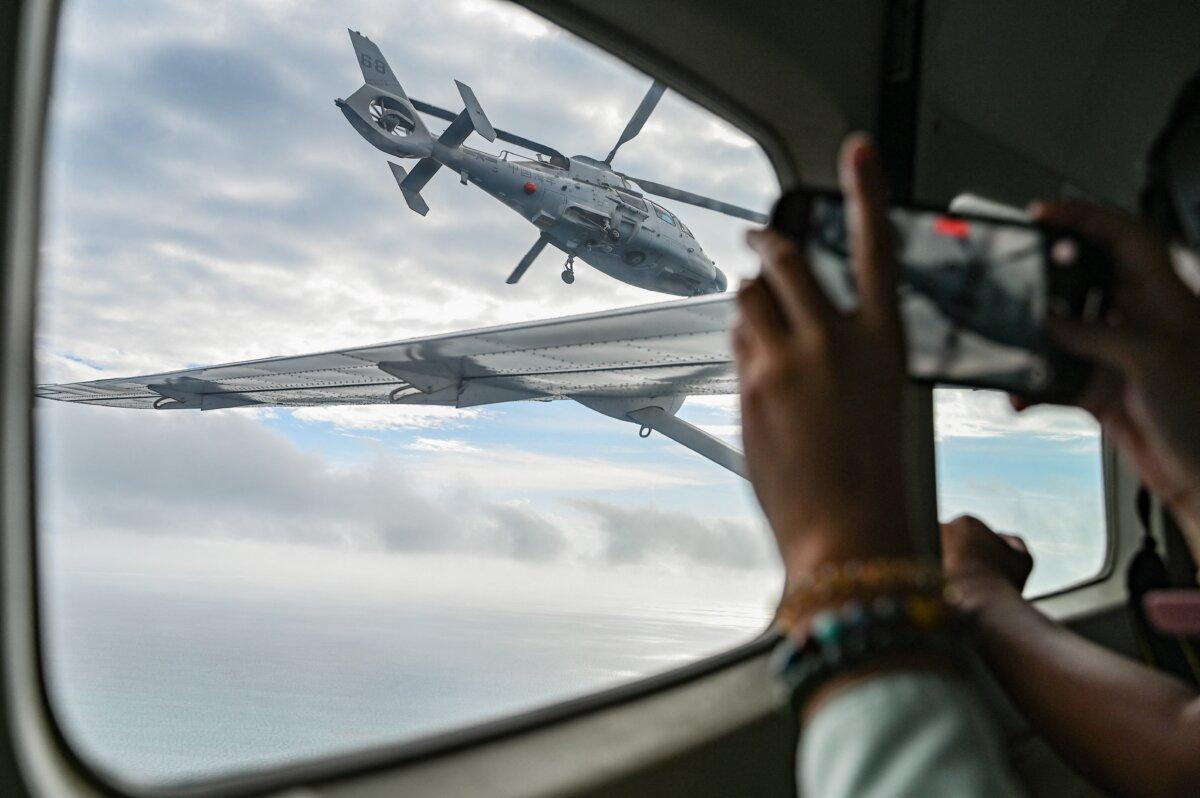
The incident is the latest flare-up in a longstanding territorial dispute between the two countries over Scarborough Shoal.
The United States, which has no sovereign claims in the sea, backed the Philippines in rejecting what it called the CCP’s “destabilizing plans” of setting up a natural reserve there.
The CCP’s actions continued to undermine regional stability, Rubio said. He called on Beijing to abide by the Arbitral Tribunal’s 2016 decision, under the U.N. Convention on the Law of the Sea, that China had unlawfully prevented Filipino fishermen from engaging in traditional fishing at Scarborough Reef.
Australia, Japan, Canada, and the UK also raised concerns over the CCP’s designation of a national reserve there.
What's Your Reaction?
 Like
0
Like
0
 Dislike
0
Dislike
0
 Love
0
Love
0
 Funny
0
Funny
0
 Wow
0
Wow
0
 Sad
0
Sad
0
 Angry
0
Angry
0












Comments (0)