

China’s Trojan Horse: A ‘Fish Farm’ Fortress


.
On a clear morning in the Yellow Sea, South Korean captains navigate around something that did not exist a few years ago. Rising out of the water is a hulking, oil-rig-style platform, flanked by bright yellow steel cages the size of apartment blocks.
Beijing refers to the complex as a deep-sea fish farm, and state-controlled media have showcased the octagonal Shenlan cages as evidence that China can industrialize offshore aquaculture.
South Korean crews and officials see a steel citadel planted astride their routes, complete with a marked helipad, three connecting bridges, and multiple decks that look far more like a logistics hub than a floating pen. A detailed report by The Chosun Ilbo’s English-language edition describes the main platform as roughly 100 by 80 meters, with potential housing for dozens of naval and intelligence personnel.
A Provisional Zone China Is Hardening in Steel
The backdrop is a legal compromise that was never meant to be permanent. Under a 2001 fisheries agreement, South Korea and China drew a provisional measures zone (PMZ) across the middle of the Yellow Sea, placing their overlapping exclusive economic zone (EEZ) claims in a holding pattern while they negotiated a final maritime boundary. The agreement allowed both sides to fish, but neither could alter the status quo through new permanent structures or dramatic enforcement moves.Over the past decade, that agreement has been eroding. Chinese authorities first laid down buoys, then, in 2018, deployed the Shenlan-1 deep-sea cage, followed by Shenlan-2 in 2024. Additionally, in 2022, a massive repurposed platform popped up and now serves as an OPS center for the complex. Reporting in the Financial Times and local outlets traces how these structures appeared in the PMZ despite repeated South Korean complaints.
Why Seoul Is Furious
South Korea’s first concern is basic seamanship. The foreign ministry has warned that the Chinese platforms “physically obstruct” the navigation of Korean fishing vessels and navy ships in the PMZ, some of the country’s most important fishing grounds. Navigators once ran straight tracks, but now plan dog-legs around a fixed obstacle guarded by Chinese Coast Guard vessels.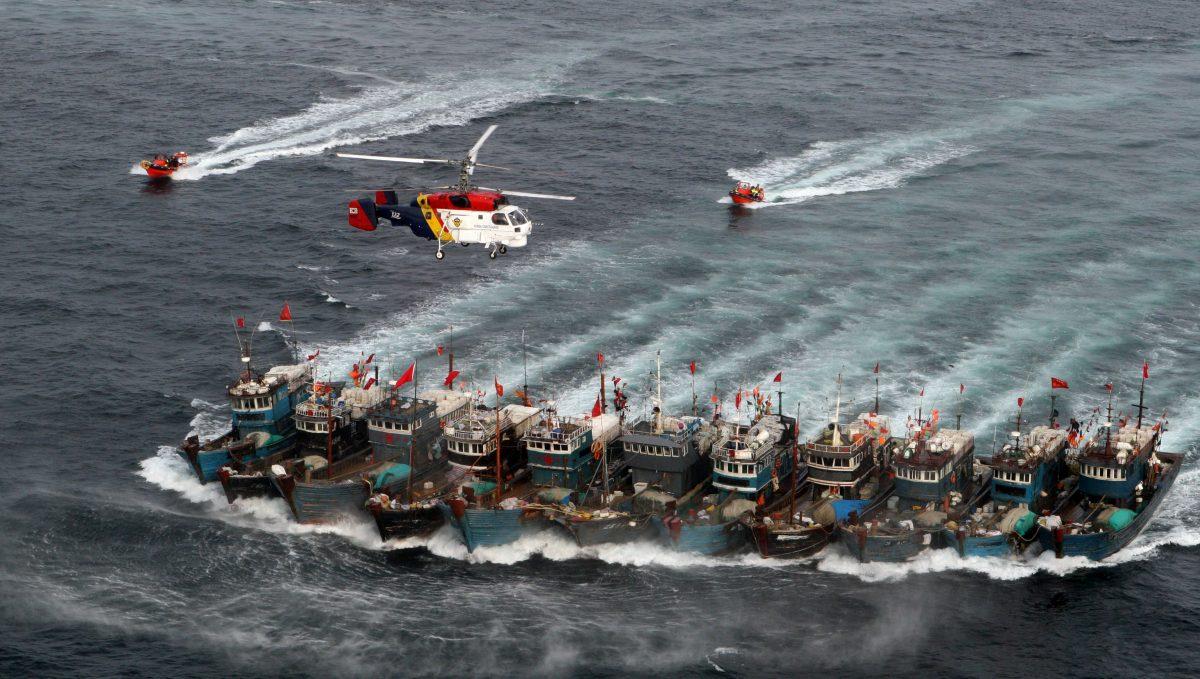
There is also the precedent. South Korean lawmakers from both the governing and opposition parties have held bipartisan hearings on the Yellow Sea structures and adopted a parliamentary resolution condemning them as a threat to maritime safety and to the spirit of the 2001 agreement.
If China can plant a quasi-permanent platform in a jointly managed zone today, lawmakers ask, what prevents larger, more heavily equipped structures tomorrow—especially in areas Seoul regards as falling within its future EEZ?
The move lands in the middle of South Korea’s broader dilemma about China. Seoul is trying, yet again, to stabilize relations with Beijing after years of friction over missile defense and economic coercion. At the same time, it is tightening security ties with Washington and Tokyo to deter North Korea and manage crises around Taiwan. A South China Morning Post report has already warned that the fish-farm row risks derailing efforts to improve China–South Korea ties.
In that context, the Yellow Sea platforms feel uncomfortably familiar. The Times reports that Korean politicians have started to use the phrase “gangster tactics” — language reflective of China’s militarized islands in the South China Sea.
The sense in Seoul is that a pattern is repeating itself: A seemingly civilian project appears in disputed waters, hardens over time, and then becomes the new baseline from which Beijing manipulates boundaries.
Beijing, for its part, has tried shape a narrative about fish. Chinese officials insist the installations are commercial aquaculture facilities operated by companies such as Wanzefeng Group and a joint venture with the state-owned Shandong Marine Group, and that they comply with international law. At one point, China even invited South Korean officials to inspect the structures, while rejecting any suggestion that they be relocated outside the PMZ.
Beijing’s Gray-Zone Playbook, Now in the Yellow Sea
However, as the technical arguments unfold, South Korean officials and Western analysts increasingly characterize the Yellow Sea platforms as instances of gray-zone coercion. That term, now common in allied doctrine, covers the use of civilian or paramilitary tools—coast guards, fishing fleets, survey ships, “private” infrastructure—to change realities on the water while staying just below the threshold that would trigger a military response.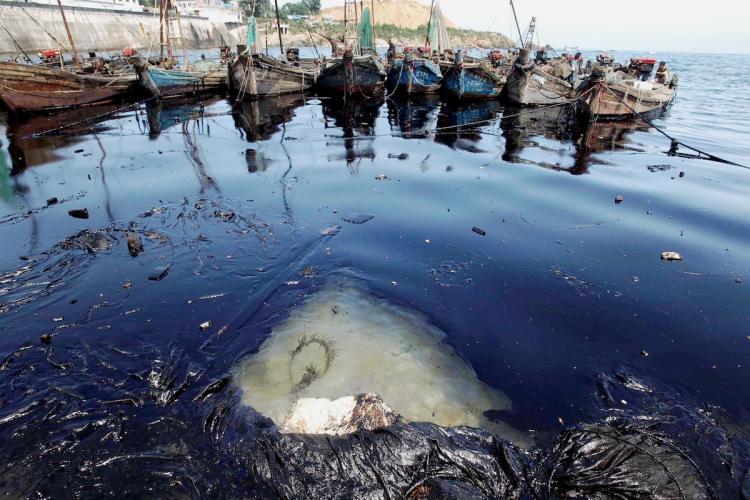
The Chinese regime has honed this tactic in the South China Sea, where nominally civilian dredgers and construction crews helped turn disputed reefs into outposts with runways, radars, and missile batteries. It has done something similar with its maritime militia—fishing vessels that answer to local military commands and swarm disputed features under the cover of commercial activity. Investigations by The Guardian and regional think tanks have documented how those units help Beijing pressure the Philippines and Vietnam over contested reefs.
In the Yellow Sea, the ingredients differ slightly, but the method remains the same. The platform and its cages are formally commercial, tied to fisheries companies and provincial state-owned enterprises. They are strategically located in a zone where the boundary is unresolved but vital to South Korea’s food security and naval posture.
Why the Yellow Sea Matters Beyond Korea
It would be easy for outside observers to file this away as a technical spat over aquaculture in a crowded corner of Northeast Asia. That would be a mistake. The PMZ platforms sit astride key fishing grounds and potential naval routes, in waters any future South Korean government will have to defend under mounting climate and food pressures and against a belligerent China.That report ranges far beyond the Yellow Sea; it catalogs abuses and coercion from West Africa to Latin America. But it should sharpen how the United States and its allies read the steel silhouette on Korea’s western horizon. The platforms are, unmistakably, a billboard for a different vision of how the oceans should be governed—one in which so-called civilian structures and fleets can be dropped into contested waters, treated as fait accompli, and then leveraged for advantage in the next political crisis.
For everyone watching China’s rise at sea, the Yellow Sea dispute is a preview, not a sideshow. The Chinese communist regime remains a threat to stability for many countries within its sphere of influence.
What's Your Reaction?
 Like
0
Like
0
 Dislike
0
Dislike
0
 Love
0
Love
0
 Funny
0
Funny
0
 Wow
0
Wow
0
 Sad
0
Sad
0
 Angry
0
Angry
0












Comments (0)