

China’s National People’s Congress Annual Meeting

.
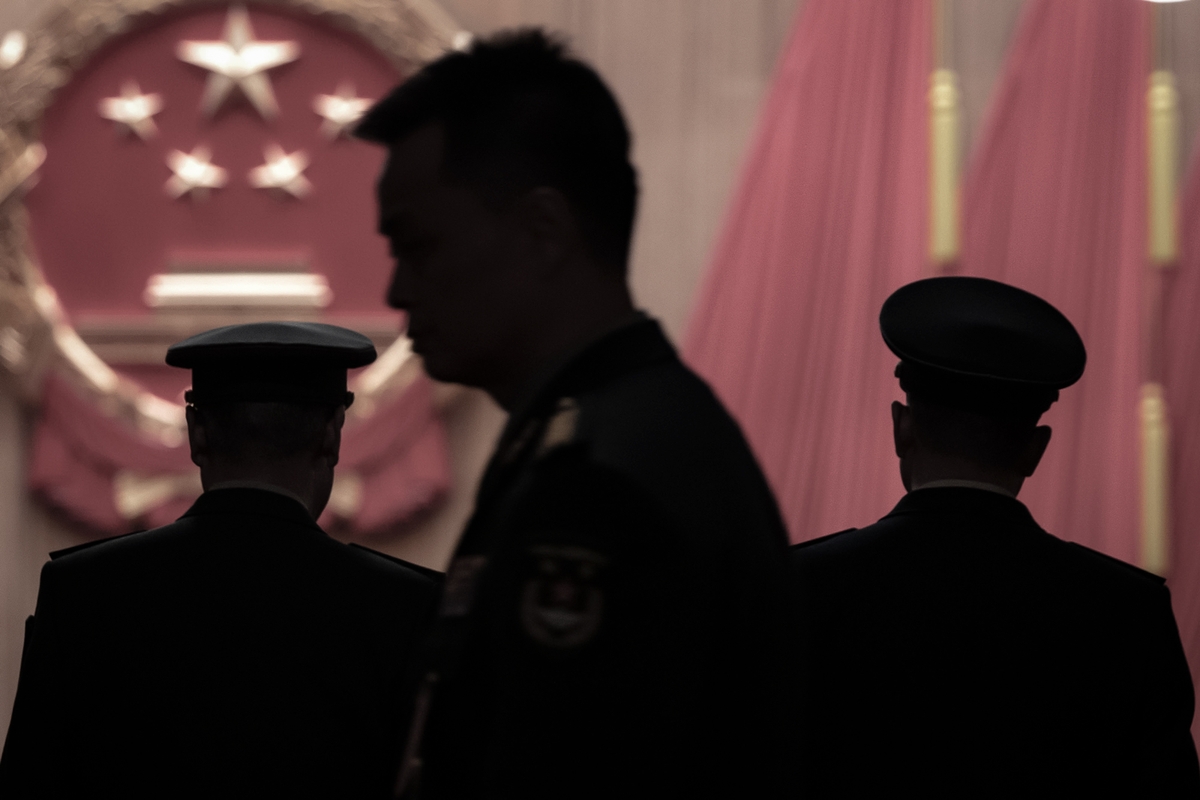
Virtually obscured by international media interest in the Israeli–American attack on Iran that had begun a few days before, the annual meeting of China’s National People’s Congress (NPC) convened. Within the foreign China-watching community, by contrast, there was intense scrutiny of the proceedings.
China’s 14th Five-Year Plan had just concluded, with many questions about what the 15th would be like. The country’s economic juggernaut appeared to be losing steam. Questions had been raised about the loyalty of the country’s military. And measures that would force the further assimilation of the country’s ethnic minorities were rumored.
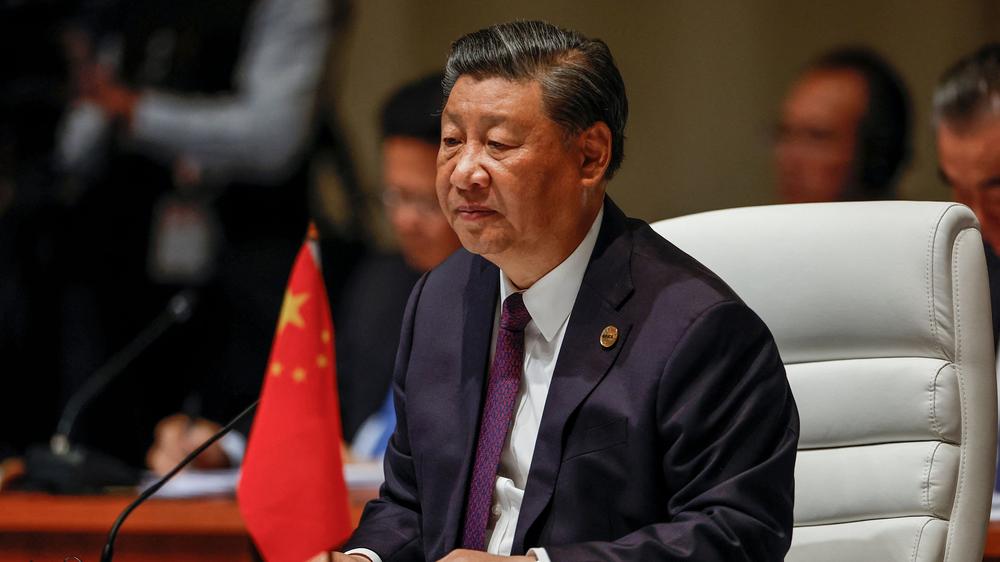
Hence, all eyes were on the report delivered by Premier Li Qiang. As expected, Li was upbeat, emphasizing the economic positives: there had been numerous advances in artificial intelligence and robotics, poverty alleviation gains had been consolidated and expanded, grain output was up, and a drop in energy consumption per unit of GDP was contributing to environmental improvements.
He posited an economic growth rate of between 4.5 and 5 percent for 2026. Given the Chinese regime’s ability to massage statistics, there can be little doubt that the target will be reached; yet its modesty indicated a sober view of the future.
The real estate sector, amounting to nearly a quarter of China’s GDP, remained shaky, with defaults among the country’s largest developers a constant concern. Domestic consumption was sluggish despite efforts to stimulate it, indicating citizens’ uncertainty about the economic future. This suppresses spending and fuels deflationary pressures. There is worrisome overcapacity in production, with Chinese companies engaged in fratricidal pricing in an attempt to offload excess inventory. Local government debt remains a problem.
The military was also a concern. Since mid-2023, at least 75 senior People’s Liberation Army (PLA) commanders and defense-industry executives have been removed and/or placed under investigation, including five of the six members of the country’s highest military body, the Central Military Commission.
The purges also had an effect on military representation at the NPC, affecting nearly 13 percent of its representation on that body. Since those appointed to such positions are carefully vetted before their elevation is announced, and since Chinese Communist Party (CCP) leader Xi Jinping has been in office since 2012, all these men were appointed under his aegis and could be presumed to be loyal to him.
But could differences of opinion between military men and Xi have arisen?
Xi had previously told the PLA to prepare to be able to attack Taiwan by 2027, the 100th anniversary of the founding of the Chinese military, now only a year away. Many commanders are thought to have voiced doubts about the PLA’s readiness for such a risky endeavor, thereby calling their loyalty into question.
Mysteriously, about two weeks before the NPC was to meet, the daily patrols of Chinese air force planes into Taiwan’s air defense identification zone ceased. Rumors circulated that perhaps Xi suspected a coup d’etat and had moved to preclude it.
Li said little about the military in his report, though emphasizing the need for absolute Party leadership over it, which could be taken to indicate misgivings about the PLA’s loyalty, and speeding up its combat capabilities. There would be a 7 percent increase in the defense budget, slightly below last year’s 7.2 percent but well in excess of the projected 4.5 to 5 percent rise in GDP. In other words, military preparedness takes precedence over domestic issues. And flights into Taiwan’s airspace have resumed.
For ethnic minorities, the outcome was foreordained. A day after Li’s report, the NPC ratified revisions to the Law on the Standard Spoken and Written Chinese Language, removing a provision that allowed speakers of non-Han languages to use them as a medium of instruction in schools on the grounds that the provision was no longer necessary.
This clear violation of the Chinese constitution was explained as taken to create a “shared spiritual home” for all. Schools are to promote the official narrative in history, ethnicity, and religion. Those suspected of instigating ethnic discord or advocating “separatism” face legal penalties, as will officials and institutions that fail to enforce the new law. Additionally, parents and guardians must teach children to love the Party and the motherland.
The law is actually the latest step in the CCP’s ongoing efforts at assimilation. For example, for at least a decade, Tibetan children have been taken from their homes to be educated in boarding schools in Han areas, and in Xinjiang, Uyghurs have been incarcerated in concentration-camp-like “vocational schools” to promote patriotism.
In a seeming contravention to this desire to promote a homogeneous culture, NPC delegates of ethnic minority origin were easily identifiable by their elaborate national costumes, with some admitting that they seldom wore them otherwise. It would seem that the Party wants minorities to be seen but not heard.
For religious believers, the news was no better, with Li saying that the regime would ensure that religions were Chinese in orientation and would strengthen law-based governance of religious affairs. In other words, the Party rather than clerics would supervise what people were allowed to believe.
As for Hong Kong and Macao, Li pledged to continue the policy of “one country, two systems” that allows “a high degree of autonomy.” Apparently, he saw no irony in his next sentence: “We will see that Hong Kong and Macao are administered by patriots,” with the definition of patriot meaning candidates for office who had received prior approval from Beijing.
Li also addressed measures to stem a decline in population that began in 2016. So far, such measures have failed, with only 7.93 million births recorded in 2025, the lowest level since the founding of the People’s Republic of China in 1949.
Those of childbearing age point out that cash subsidies do not compensate for the costs of raising children, not to mention the inconvenience of crying babies, changing diapers, and dealing with the pressures of educating offspring for an uncertain future. Young people are choosing to remain single or, if married, to have at most one child. They would prefer to use discretionary income for travel or personal betterment.
This year’s package of incentives—including promising to foster positive attitudes toward marriage and childbearing, providing housing support for those with their first child, and improving nursery and childcare services—is likely to fare no better.
Li conceded that “only rarely in many years had such a grave and complex landscape been encountered, with external shocks intertwined with domestic difficulties and tough policy choices,” yet ended his address on a positive note by urging the deputies to rally more closely around the Party’s Central Committee with comrade Xi at its core, hold high the great banner of socialism with Chinese characteristics, and follow the guidance of Xi Jinping Thought on Socialism with Chinese Characteristics for a New Era. Whether this will be enough remains to be seen. The Chinese population remains resilient, but also less receptive to hortatory slogans back in the day of Mao Zedong, whose name, interestingly, was notably absent from any mention in Li’s address.
What's Your Reaction?
 Like
0
Like
0
 Dislike
0
Dislike
0
 Love
0
Love
0
 Funny
0
Funny
0
 Wow
0
Wow
0
 Sad
0
Sad
0
 Angry
0
Angry
0














Comments (0)