

Trump Administration Targets Forced Labor: New Tariffs of Up to 12.5% Proposed for Dozens of Countries
The Trump administration is pushing for new additional tariffs on imports from more than 60 countries, citing their failure to stop goods made with forced labor from entering the U.S. market. The move is based on a formal trade investigation and could affect major partners including China, Canada, Japan, and the European Union.


.
A New Wave of Tariffs — With a Moral Argument
The United States is preparing another round of import tariffs, this time framing the move not just as economic policy, but as a stand against one of the world's most serious human rights violations: forced labor.
The U.S. Trade Representative (USTR) released a report on Wednesday proposing additional tariffs on goods from over 60 trading partners. The central accusation: these countries have failed to prevent the import of products made through forced labor — a practice that puts American workers at a competitive disadvantage.
"The failure of our most important trading partners to address the importation of goods made with forced labor is unacceptable," said USTR Ambassador Jamieson Greer. He added that every trading partner must do more to ensure that international trade does not encourage or entrench forced labor worldwide.
Who Gets Hit — and How Much?
The proposed tariff rates differ by country:
10% additional tariff would apply to Canada, Mexico, Taiwan, the United Kingdom, and several other nations.
12.5% additional tariff is proposed for China, Japan, India, South Korea, Brazil, Switzerland, and dozens of other countries.
These rates would come on top of any existing tariffs already in place — meaning the cumulative burden on importers could be substantial.
Some product categories would be exempt or subject to lower rates, including certain textiles, bananas, tomatoes, coffee, and some metals.
What Is Forced Labor?
The USTR report defines forced labor as work demanded from a person under threat of punishment, where the worker does not participate voluntarily. According to the UN's International Labor Organization, approximately 27.6 million people worldwide were engaged in forced labor as of 2021.
The report identifies specific high-risk goods: rice from Myanmar, tobacco from Malawi, beef from Brazil, and — notably — cotton and polysilicon from China's Xinjiang region.
China and Xinjiang in the Crosshairs
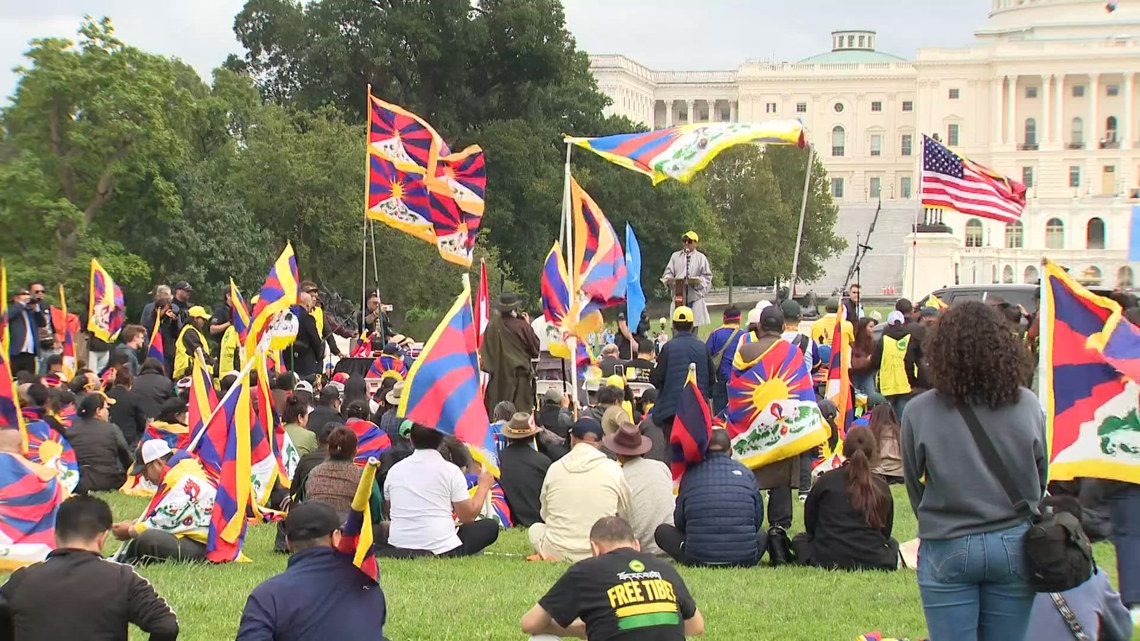
The United States has long maintained that goods produced in Xinjiang, a region in western China with a majority Muslim population, are highly likely to involve forced labor. The U.S. government has repeatedly accused Beijing of running mass detention and coercive labor programs targeting Uyghurs and other ethnic minorities in the region.
Beijing denies these allegations entirely.
Polysilicon — a key raw material in solar panels — and cotton are among Xinjiang's most significant exports, and both have previously faced U.S. import restrictions under the Uyghur Forced Labor Prevention Act.
Legal Foundation: Sidestepping the Supreme Court
The investigation was conducted under Section 301 of the Trade Act of 1974, a law that gives the executive branch broad authority to respond to unfair trade practices. This legal basis is significant.
In February, the U.S. Supreme Court ruled that the Trump administration had overstepped its authority when it previously used the International Emergency Economic Powers Act (IEEPA) of 1977 to impose sweeping tariffs. By shifting to Section 301, the administration is pursuing a route that may be less vulnerable to legal challenge.
The administration has also said it will appeal a court order that made companies eligible for refunds on tariffs paid under the earlier, IEEPA-based tariff regime.
Context: Trade Tensions on Multiple Fronts
These new proposals come at a turbulent time in global trade relations.
Just two weeks ago, the European Union finalized a deal with Washington capping tariffs on most EU exports at 15% — a compromise reached after weeks of difficult negotiations and internal EU debate.
President Trump recently visited China, where he and President Xi Jinping discussed opening Chinese markets to more American businesses and increasing Chinese investment in U.S. industries. The two sides agreed to establish joint boards on trade and investment, though specific details remain sparse.
Separately, the administration this week proposed 25% tariffs on imports from Brazil, citing what it described as unfair trade practices and weak anti-corruption enforcement.
What Happens Next?
The proposed tariffs are not yet in effect. They are subject to a public comment period and formal review. Public hearings on the proposed duties are scheduled to begin on July 7.
The outcome could significantly reshape trade flows — and once again put Washington at odds with many of its closest economic partners.
.
Sources
- AP News – "US says it plans extra tariffs of 10% or more for most trading partners after forced labor probe": https://apnews.com/article/trade-tariffs-labor-trump-ustr-4dce10ec32bbbcf3bfdfddb2ec660d65
- Reuters – Uyghur Forced Labor Prevention Act and Xinjiang trade restrictions: https://www.reuters.com/world/china/us-adds-more-chinese-companies-uyghur-forced-labour-list-2023-06-09/
- ILO – Global Estimates of Modern Slavery (2022 Report): https://www.ilo.org/wcmsp5/groups/public/---ed_norm/---ipec/documents/publication/wcms_854733.pdf
- U.S. Customs and Border Protection – Withhold Release Orders (WRO) & Forced Labor Enforcement: https://www.cbp.gov/trade/forced-labor
- BBC News – Xinjiang and the Uyghurs: https://www.bbc.com/news/world-asia-china-22278037
.
What's Your Reaction?
 Like
0
Like
0
 Dislike
0
Dislike
0
 Love
0
Love
0
 Funny
0
Funny
0
 Wow
0
Wow
0
 Sad
0
Sad
0
 Angry
0
Angry
0











Comments (0)