

China’s Militarization of BRICS Risks US Sanctions: Analysts


.
Beijing is exploiting recent joint naval maneuvers by BRICS nations to transform the bloc into a military one, a provocative shift that signals a direct challenge to Washington and could trigger punitive tariffs against member states, experts warn.
Navies from China, Russia, and other BRICS nations launched the “Will for Peace 2026” drills at the Simon’s Town naval base in South Africa on Jan. 9, initiating a joint operation that continues through Jan. 16.
This latest military display marks a distinct shift in tone compared to the inaugural “Mosi” exercises held by South Africa, China, and Russia in 2019, which were conducted in a much more subdued manner.
China’s Ploy
However, Cheng Chin-mo, an associate professor at the Department of Diplomacy and International Relations at Tamkang University in Taiwan, pointed out that the group is moving beyond that original economic design, having gradually expanded into military cooperation under the leadership of communist China.“With Russia continuing its war against Ukraine and Iran remaining a key adversary of the United States and Israel in the Middle East, the drills send a clear signal of China’s support for both Russia and Iran and reflect trilateral strategic coordination,” Cheng told The Epoch Times.
Cheng noted that the drills were staged off the coast of Cape Town because the region straddles the strategic junction of the Atlantic and Indian Oceans, allowing Beijing to project influence over vital shipping lanes as part of its broader global expansion strategy.
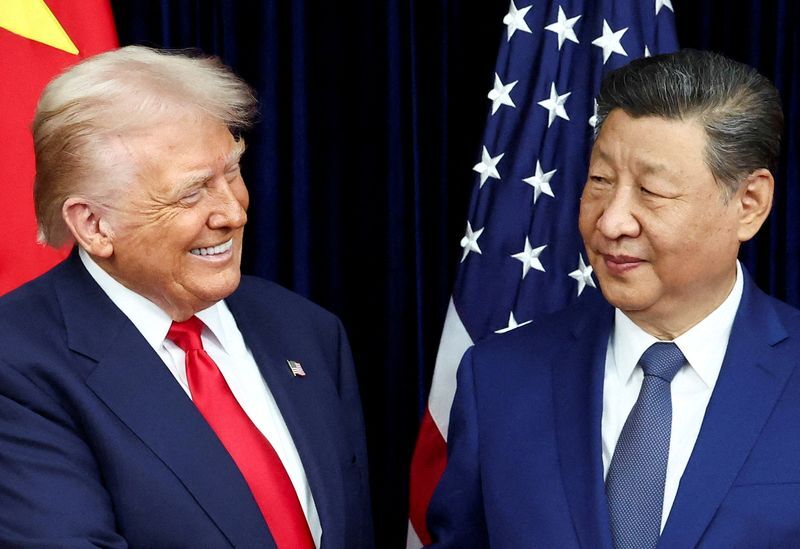
“As U.S. President Donald Trump moves to tighten control over the Panama Canal and curb Chinese influence, Beijing is seeking to open another front in South Africa to divert U.S. attention and compete with Washington geopolitically,” said Cheng.
Reflecting a similar stance of diplomatic caution, reports from Chinese state media regarding the exercises also conspicuously omitted any mention of Iran.
Cheng observed that this approach reveals Beijing’s reluctance to face a direct confrontation with Washington, leading it to instead provide support to Iran in a low-profile manner.
“Especially while the trade war with the U.S. remains unresolved, China must maintain its relationships with the rest of the world, which is why it deliberately downplayed Iran’s role in the drills and concealed it in state media,” Cheng stated.
Limited Capabilities
According to a Facebook post by the South African National Defence Force, the exercises featured the Chinese Navy’s guided-missile destroyer Tangshan and supply ship Taihu, alongside the South African Navy frigate Amatola and a frigate and supply ship from Russia’s Baltic Fleet.Nevertheless, Richard Chou Yu-ping, a member of the Evaluation Center Committee at Taiwan’s National Defense Industrial Development Foundation, dismissed the maneuvers as largely performative.
“China’s Tangshan and Taihu are not its most advanced vessels, and while the Taiwanese Navy previously deployed two warships paired with one supply vessel for training missions in South Africa, China’s configuration for this exercise is clearly simpler, meaning the drills carry more declarative significance than substantive military value,” Chou told The Epoch Times.
Su Tzu-yun, a senior analyst from Taiwan’s Institute for National Defense and Security Research in Taipei, stated that the Tangshan appears to be the most combat-capable vessel in the group, signaling Beijing’s intent to lead the BRICS nations, but its naval force still cannot rival the U.S.-led NATO fleet.
Threatening US Security
Tsai Ming-fang, a professor at the Department of Industrial Economics at Tamkang University in Taiwan, emphasized that as many BRICS nations currently face economic instability or require Chinese support, they may utilize these military exercises to pursue deeper economic integration with Beijing, a move that will likely draw closer attention from the United States and potentially prompt further countermeasures.“Deepening economic ties with China after these drills will inevitably pull these nations into a tighter political orbit with Beijing, inviting U.S. backlash and potential sanctions if Washington’s national security interests are threatened,” Tsai told The Epoch Times.
Cheng stated that Beijing is utilizing these drills to elevate BRICS from an economic bloc to a security alliance, a shift that has forced the group back onto Trump’s radar and will inevitably lead Washington to view the organization through a national security lens.
“India sought to preserve its U.S. ties by dispatching only low-level personnel, while South Africa risks sanctions as the host,” Cheng said. “However, Washington may soon target the entire bloc with tariffs now that any collaboration with China, Iran, and Russia raises immediate red flags.”
.
What's Your Reaction?
 Like
0
Like
0
 Dislike
0
Dislike
0
 Love
0
Love
0
 Funny
0
Funny
0
 Wow
0
Wow
0
 Sad
0
Sad
0
 Angry
0
Angry
0













Comments (0)