

China's Lobbying Machine Puts a Price Tag on Europe's Huawei Ban: $430 Billion
As the EU moves to phase out Chinese tech from critical infrastructure, Beijing's business lobby has released a sweeping cost estimate — over $430 billion — designed to give European governments pause. But critics note the study comes directly from China's own trade chamber, raising questions about its objectivity.

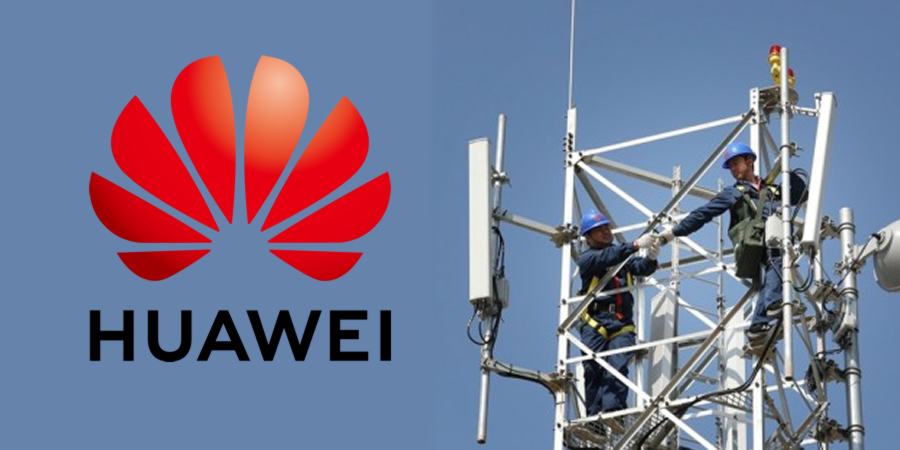
.
A Number Designed to Shock
The number is eye-catching: $432 billion. That is the price tag China's Chamber of Commerce to the EU (CCCEU) has put on the European Union's proposed cybersecurity overhaul — a plan that would force the removal of Chinese equipment from 18 critical sectors across the bloc over the next five years.
The figure comes from a study commissioned by the CCCEU and carried out by consulting firm KPMG. According to the report, replacing Chinese suppliers between 2026 and 2030 would cost EU member states a combined 367.8 billion euros. The costs cited include hardware replacement, asset write-downs, reduced operational efficiency, and delays in the bloc's broader digital transformation agenda.
Germany in the Crosshairs
The study singles out Germany as the country facing the steepest bill — an estimated 170.8 billion euros, roughly half of the total projected cost for the entire EU. Five other countries are identified as facing losses exceeding 10 billion euros each: France, Italy, Spain, Poland, and the Netherlands.
The two sectors expected to absorb the heaviest impact are energy and telecommunications — both of which sit at the heart of the EU's twin ambitions of digital modernization and the green transition. The EU Commission has separately recommended restricting EU funding for projects using power inverters from "high-risk suppliers," warning that such devices could potentially allow remote shutdown of a member state's electricity networks.
Context: A Lobbying Document, Not a Neutral Analysis
The study's origins deserve scrutiny. The CCCEU is not an independent research body — it is China's official business lobby within the European Union, tasked with representing and advancing Chinese commercial interests in Brussels. The fact that KPMG was commissioned by this organization, rather than by an independent or European institution, is relevant context that any reader should weigh carefully.
Beijing has made no secret of its strategy. As reported previously on Udumbara.net, China's Ministry of Commerce submitted a 30-page lobbying document to the European Commission last week, explicitly threatening countermeasures if the proposed cybersecurity rules are not substantially revised. Chinese diplomats have been actively lobbying both Brussels and individual EU capitals to water down or kill the legislation entirely.
The KPMG cost study fits neatly into that pressure campaign — releasing an alarming financial headline just as EU governments and the European Parliament are entering the early stages of the legislative process.
What the EU Rules Actually Propose
The proposed EU Cybersecurity Act would, for the first time, create a legally binding framework for removing so-called "high-risk suppliers" from critical infrastructure. Member states would have three years from the law's adoption to comply. The legislation would also empower the EU to formally designate entire countries as cybersecurity threats — a clause Beijing is particularly keen to see removed.
Chinese telecom giants Huawei and ZTE are widely expected to be among the primary targets. Together, the two companies control an estimated 33 to 40 percent of Europe's 5G infrastructure, according to research firm Strand Consult. Huawei has already criticized the proposed rules publicly.
The European Commission first raised concerns about Huawei and ZTE as security risks back in 2019 and has been recommending their removal from 5G networks since 2020. Progress has been slow: only 13 of 27 member states had acted on those earlier, non-binding recommendations.
The Price of Doing Nothing
European officials and independent security analysts counter that the cost of inaction — leaving critical infrastructure dependent on suppliers from a geopolitical rival — carries its own, harder-to-quantify risks.
The EU's cybersecurity framework already designates telecom and energy as critical sectors where external interference could have severe national security consequences. The Commission's additional warning about power inverters — devices capable of remotely disrupting electricity networks — underlines how broadly Brussels now defines the threat surface.
Vendors like Nokia and Ericsson stand to benefit significantly from a full Chinese phase-out. EU officials argue that redirecting market share toward European suppliers strengthens both security and industrial resilience.
The Road Ahead
The proposed legislation still faces a long and uncertain path. Both EU governments and the European Parliament must negotiate the final text — a process that historically yields significant amendments. Countries with deep economic exposure to China, Germany chief among them, will face intense pressure from Beijing to soften the rules.
Whether the $430 billion figure reshapes that debate or is recognized as the lobbying tool it arguably is may define the next phase of Europe's technology standoff with China.
.
Sources:
- Reuters – "EU plan to phase out Chinese tech could cost bloc over $400 billion, Chinese study says" (May 6, 2026): https://www.reuters.com/world/china/eu-plan-phase-out-chinese-tech-could-cost-bloc-over-400-billion-chinese-study-2026-05-06/
- Reuters – "China threatens action if EU does not revise new industry/tech rules" (April 29, 2026): https://www.reuters.com/world/china/china-threatens-action-if-eu-does-not-revise-new-industry-tech-rules-2026-04-29/
- Reuters – "EU to phase out high-risk tech, targets Huawei, Chinese companies" (January 20, 2026): https://www.reuters.com/business/media-telecom/eu-phase-out-high-risk-tech-targets-huawei-chinese-companies-2026-01-20/
- Udumbara.net – "Europe Moves to Lock Out Huawei and ZTE — Beijing Fires Back" (Vorherige Berichterstattung, interner Querverweis): https://udumbara.net/europe-moves-to-lock-out-huawei-and-zte-beijing-fires-back
.
What's Your Reaction?
 Like
1
Like
1
 Dislike
0
Dislike
0
 Love
0
Love
0
 Funny
0
Funny
0
 Wow
1
Wow
1
 Sad
0
Sad
0
 Angry
0
Angry
0













Comments (0)