

China’s Espionage Offensive Against the US in 2025


.
In 2025, U.S. authorities uncovered unprecedented levels of espionage carried out by the Chinese Communist Party (CCP) against the United States.
The largest Chinese cyberattack on record occurred in 2025. Salt Typhoon, a Ministry of State Security–linked hacking group, infiltrated more than 600 targets—including AT&T and Verizon—across over 80 countries. The breach exposed communications of millions of users, including more than 1 million people in the Washington, D.C., area, and accessed the personal communications of President Donald Trump, Vice President JD Vance, and other senior officials, as well as law enforcement wiretapping systems and congressional data.
The operation was especially damaging because it penetrated secure wiretap portals used by both law enforcement and U.S. intelligence. Although the 2015 Office of Personnel Management breach exposed more records, Salt Typhoon’s global reach, access to live communications, and deep penetration of telecommunications infrastructure make it more operationally dangerous.
In parallel, the Justice Department dismantled a China-based hacker-for-hire network used to mask CCP cyber espionage. In March 2025, federal prosecutors unsealed indictments against two Chinese nationals for a long-running campaign targeting U.S. defense contractors, technology companies, and government agencies from 2011 to 2024.
The indictments linked them to the APT27 hacking group, also known as Threat Group 3390, Bronze Union, Emissary Panda, Lucky Mouse, Iron Tiger, UTA0178, UNC 5221, and Silk Typhoon.
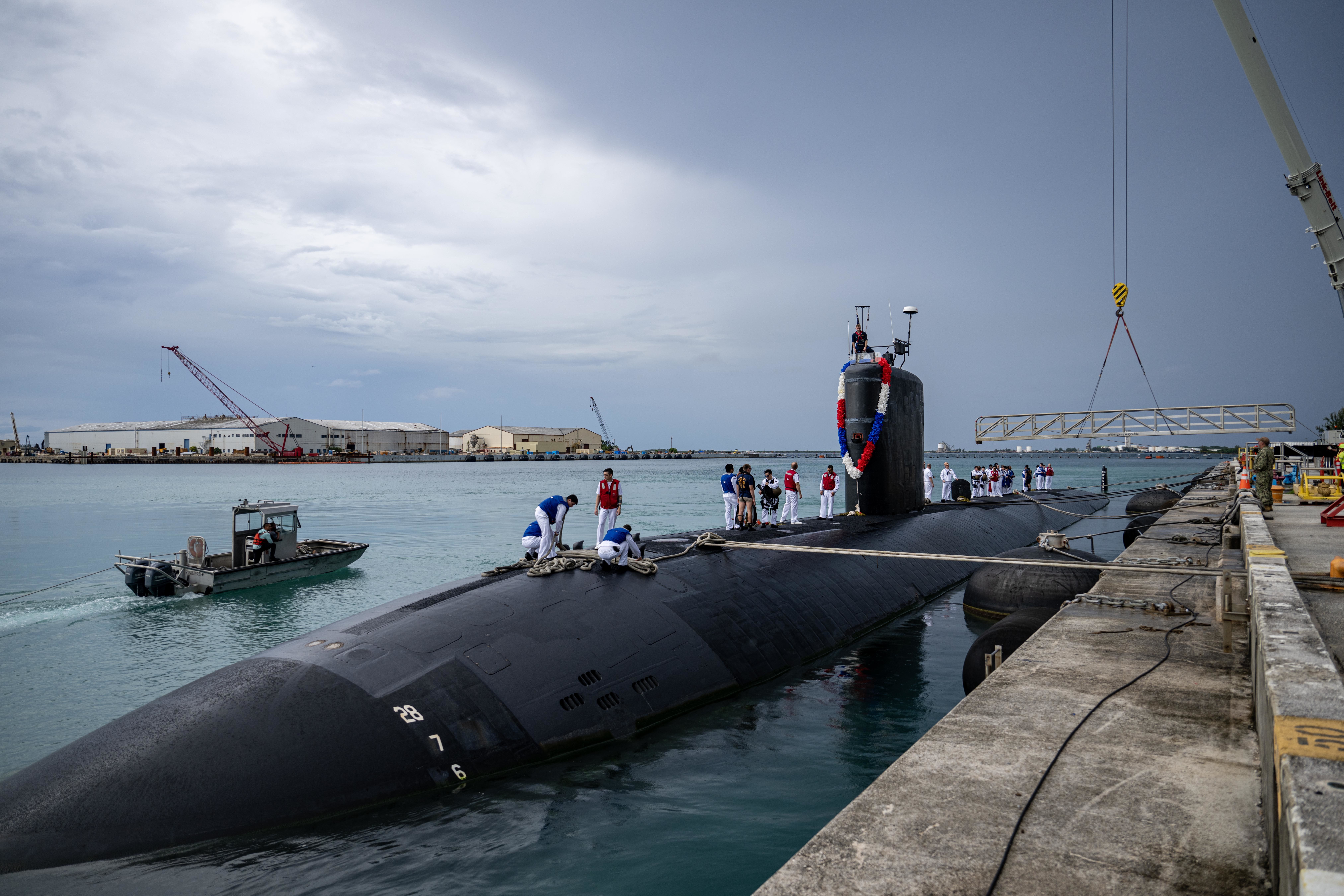
Prosecutors accused Chen of gathering personal data from Navy recruits, touring the USS Abraham Lincoln, and coordinating cash “dead drops” of at least $10,000 while traveling to China for tasking and payment. Lai, who entered the U.S. on a tourist visa, was accused of lying about his travel activities. Both face up to 10 years in prison and fines of up to $250,000 for acting as unregistered foreign agents.
These cases were part of a broader pattern of espionage targeting the U.S. military in 2025. Former Navy sailor Wei Jinchao, also known as Patrick Wei, was convicted in August on six counts, including espionage and export-control violations, for attempting to sell military secrets to Chinese intelligence for more than $12,000.
Stationed at Naval Base San Diego, Wei provided sensitive information about U.S. warship capabilities, including photographs, videos, weapons details, ship movements, and restricted technical manuals. He was sentenced on Dec. 1.
In a separate case, active-duty U.S. Army soldiers Zhao Jian and Tian Li, along with former soldier Duan Ruoyu, were arrested in March and charged with conspiring to transmit national defense information to China and stealing government property.
Even the U.S. State Department was compromised by the CCP. Michael Charles Schena, an employee with a Top Secret security clearance, was arrested on March 7 for conspiring to transmit national defense information to China and was sentenced to four years in prison in September. Beginning in 2022, Schena communicated online with individuals posing as international consultants but acting on behalf of the Chinese regime, providing classified information for money.
In August 2024, Schena met a handler in Peru, received $10,000 and a dedicated cellphone, and used it to photograph and transmit multiple SECRET-level documents in October 2024 and February 2025. FBI surveillance captured the activity before agents seized the phone and arrested him, preventing further transmission.
The CCP has been particularly active in economic espionage. John Harold Rogers, a former senior adviser to the Federal Reserve Board of Governors, was indicted and arrested in January 2025 for allegedly conspiring to steal Federal Reserve trade secrets for the Chinese regime.
In a separate case, a federal grand jury issued a superseding indictment in February against Ding Linwei, charging him with seven counts of economic espionage and seven counts of trade secret theft for allegedly transferring sensitive Google AI trade secrets while secretly affiliating with China-based artificial intelligence companies.
Academia remains one of the major weak points enabling CCP espionage. Chinese researcher Jian Yunqing, who received Chinese state funding, pleaded guilty after her boyfriend smuggled a biological pathogen through Detroit Metropolitan Airport for research at the University of Michigan. The pathogen, Fusarium graminearum, causes severe crop diseases and produces toxins harmful to humans and livestock.
Jian admitted to lying to federal investigators and was sentenced to time served before being deported to China. Her co-defendant and boyfriend, Liu Zunyong, initially denied smuggling the fungus but later confessed. Court records showed Jian’s electronic devices contained evidence of loyalty to the CCP.
In a separate case, the FBI recently accused Indiana University postdoctoral researcher Xiang Youhuang of attempting to smuggle E. coli into the United States while making false statements to investigators.
These cases represent only a fraction of the CCP’s intelligence and influence operations against the United States. In response, President Trump initially said he would block all Chinese student visas, but later reversed course, citing the economic dependence of U.S. universities on Chinese students who pay higher tuition rates.
The Stop CCP VISAs Act (H.R. 2147 in the House and S. 1086 in the Senate) was introduced on March 14 and would sharply restrict Chinese visas to the United States. However, according to GovTrack analysis, the legislation has only a 4 percent chance of advancing out of committee and a 2 percent chance of becoming law.
Currently, while the Department of Homeland Security and the Intelligence Community are aware of and investigating threats from China, Chinese nationals continue to obtain temporary residency in the United States in large numbers.
What's Your Reaction?
 Like
0
Like
0
 Dislike
0
Dislike
0
 Love
0
Love
0
 Funny
0
Funny
0
 Wow
0
Wow
0
 Sad
0
Sad
0
 Angry
0
Angry
0
















Comments (0)