

China's Coal Mine Purge Widens: Top Safety Official Targeted After Deadly Blast
China's anti-corruption watchdog has placed the top mine-safety official of Shanxi province under investigation, two months after a gas explosion killed 82 workers. The case is the highest-profile move yet in a broadening probe into the region's coal industry — and comes as Beijing separately expelled a former Politburo member on corruption charges.

.
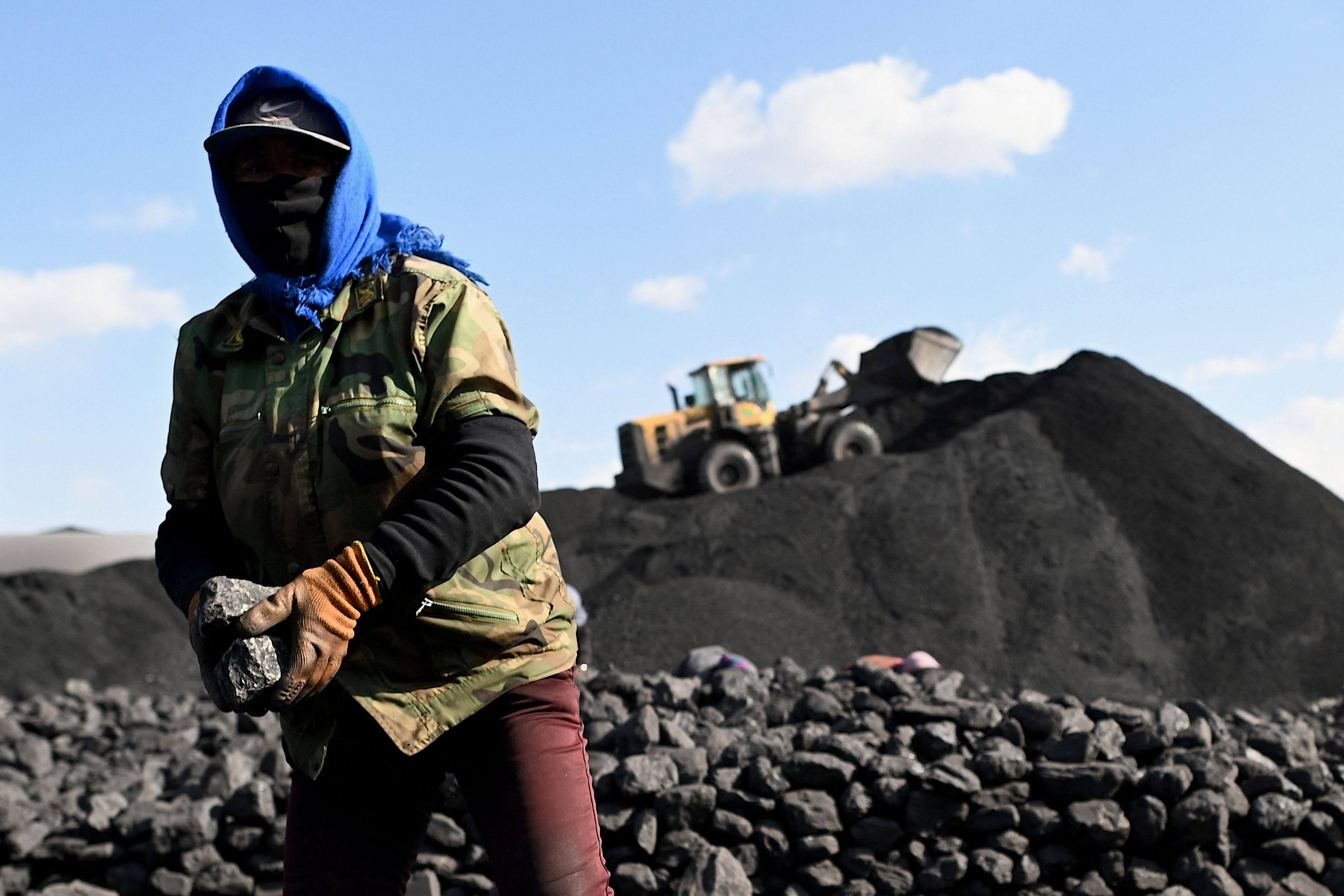
China's top mine-safety official in Shanxi province, one of the country's largest coal-producing regions, is now under formal investigation for corruption. The case follows a gas explosion that killed 82 workers in May.
Hu Haijun, who heads the Shanxi Bureau of the National Mine Safety Administration, is accused of serious breaches of party discipline and the law, according to the government's Central Commission for Discipline Inspection, which announced the probe on Monday evening. The watchdog's notice gave no further details on the specific allegations against him.
Hu also serves as the Communist Party chief within his own bureau. He is now the highest-ranking official swept up so far in a widening investigation into Shanxi's coal-mining sector, according to the Chinese business outlet Caixin.
That such a senior safety regulator is now a suspect himself raises an uncomfortable question for Beijing: who was overseeing the overseers?
.
A Widening Net
Hu is not the first official to be caught up in the fallout. In June, Shanxi's own anti-corruption authorities placed Zhang Heping, deputy head of the province's emergency management department, under investigation. Provincial investigators explicitly linked Zhang to the Liushenyu mine explosion, saying he too was suspected of serious violations of discipline and law.
Zhang previously ran the Changzhi Coal Industry Bureau and served as a vice-mayor of Changzhi, the city that oversees Qinyuan county, where the mine is located.
The pattern is familiar in China's coal sector: regulators, local party officials, and mine operators often sit in overlapping, mutually dependent roles. Critics argue this structure — common under one-party rule — makes independent safety oversight nearly impossible, since the people meant to police an industry can also profit from looking the other way.
.
What Happened in May
As udumbara.net reported at the time, the Liushenyu coal mine disaster initially saw death-toll figures spike as high as 90 amid chaotic and contradictory reporting from local officials. Authorities later blamed the confusion on chaotic scenes at the site and inaccurate information supplied by the mine operator itself.
The final, confirmed figures: 82 miners dead, two still missing, and 128 injured. The blast occurred underground at the Liushenyu mine in Qinyuan county, part of Changzhi city in Shanxi province. It is considered China's deadliest mining accident in more than a decade.
Chinese leader Xi Jinping publicly called for a thorough investigation and full accountability in the aftermath of the disaster. Two months on, that promise is now visibly playing out — at least on paper.
.
A Mine Flagged Years in Advance
Perhaps the most damning detail is one that has changed little since May: the Liushenyu mine, run by the Shanxi Tongzhou Coal & Coke Group, had already been placed on a national list of disaster-prone coal mines by regulators back in 2024.
In other words, the danger was documented and known — officially — two years before 82 people died. That a mine already flagged as high-risk was allowed to keep operating is precisely the kind of institutional failure that fuels public distrust in party-run regulatory bodies.
Following the blast, local authorities ordered a blanket safety inspection across the region's mines. Mine safety in China has improved gradually in recent years, but it remains a persistent weak point — as does industrial safety more broadly.
.
Why Coal Still Matters in Shanxi
Despite Beijing's heavy investment in wind and solar power, coal remains a dominant energy source in China. Shanxi alone employs roughly 800,000 mine workers and produced 1.3 billion tons of coal last year — nearly a third of the country's entire output.
That scale explains why safety failures here carry national weight, and why Beijing has a strong incentive to be seen taking action, regardless of how much genuine reform follows.
.
Part of a Bigger Anti-Corruption Push
The Hu Haijun case has emerged in the same week as another, unrelated but symbolically significant purge. China expelled former Politburo member Ma Xingrui from the Communist Party, state media reported Tuesday. Ma, previously the party secretary of Xinjiang, becomes the third sitting Politburo member purged since 2025 as Xi Jinping's anti-corruption campaign reaches further into the party's top ranks.
According to Reuters, investigators accused Ma of steering official appointments and jobs to favored individuals, accepting improper gifts, helping relatives buy property below market value, and trading political favors for sex. His case follows earlier corruption investigations into two of China's most senior military generals.
Taken together, the two stories reveal the same underlying dynamic: an anti-corruption campaign that is simultaneously a genuine anti-graft effort and a tool for consolidating political control — with ordinary citizens, like the miners in Qinyuan county, bearing the human cost of a system that too often polices itself only after tragedy forces its hand.
.
Outlook
The investigation into Hu Haijun is unlikely to be the last. With Caixin already describing him as the most senior figure implicated so far, further arrests among Shanxi's coal officials appear likely as the province-wide inspection continues.
Whether this translates into lasting safety reform — rather than a temporary political cleanup — remains an open question. For the families of the 82 miners who died in May, accountability for individual officials offers little comfort if the deeper structural failures that let a known disaster-prone mine keep operating are never addressed.
.
Sources
- AP News — https://apnews.com/article/china-shanxi-coal-mine-explosion-corruption-investigation-f58ff3e2482fcc753a9069f2f1c5bc88
- South China Morning Post — https://www.scmp.com/news/china/politics/article/3356725/chinese-safety-official-investigated-over-liushenyu-coal-mine-blast-killed-82
- NBC News — https://www.nbcnews.com/world/china/china-coal-mine-blast-investigation-rcna346704
- Reuters (via AOL syndication) — https://www.aol.com/articles/china-purges-third-politburo-member-041835000.html
- Washington Post (Ma Xingrui expulsion, background) — https://www.washingtonpost.com/world/2026/07/14/china-ma-xingrui-politburo-xinjiang-corruption/1797a0e0-7f5d-11f1-8a16-393bd03340b0_story.html
- Vorheriger udumbara.net-Artikel (Querverweis) — https://udumbara.net/death-toll-surges-to-90-chinas-coal-mine-disaster-becomes-deadliest-in-over-16-years
.
What's Your Reaction?
 Like
0
Like
0
 Dislike
0
Dislike
0
 Love
0
Love
0
 Funny
0
Funny
0
 Wow
0
Wow
0
 Sad
0
Sad
0
 Angry
0
Angry
0













Comments (0)