

Why Trump Is Playing Down Russian and Chinese Help for Iran
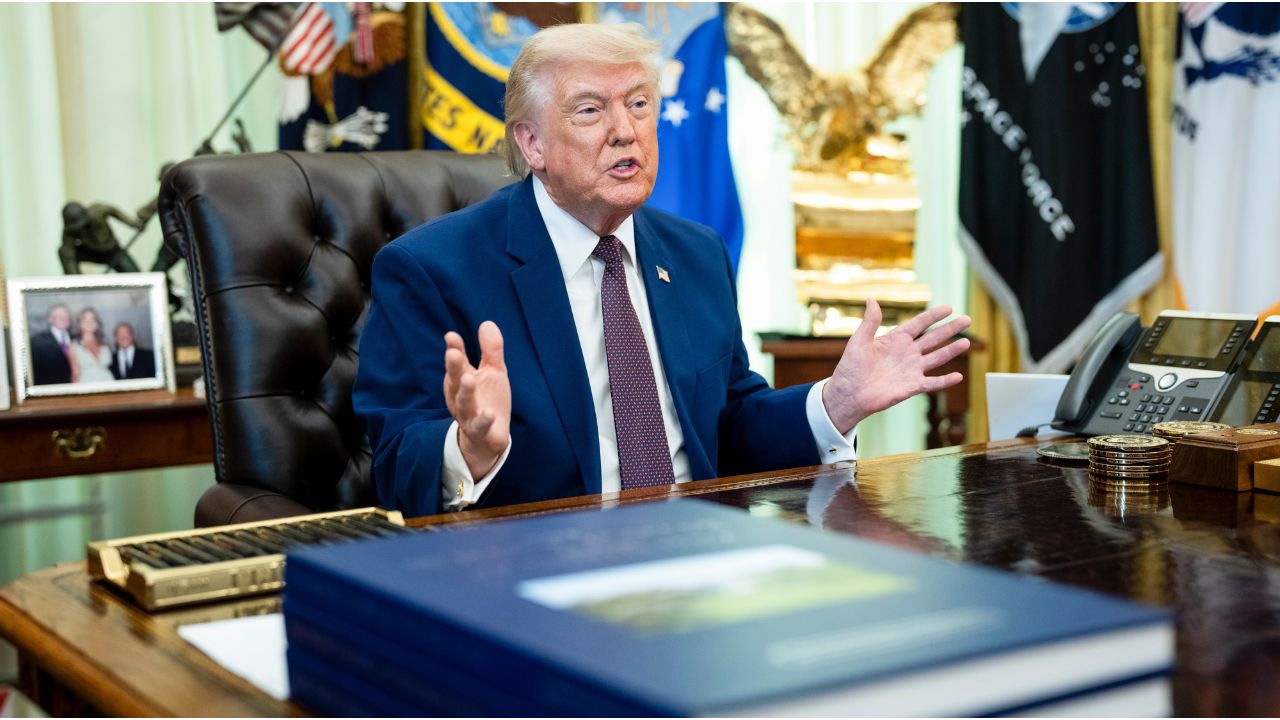
President Donald Trump has brushed aside warnings that Russia and China are quietly assisting Iran, even as his own Pentagon chief and fresh intelligence reports point the other way. The disagreement highlights a familiar pattern: authoritarian powers in Moscow and Beijing offering deniable support to a hostile regime while publicly claiming neutrality.

.
Trump Waves Off the Allegations
President Trump has repeatedly downplayed claims that Russia and China are helping Iran during its ongoing war with the United States. Speaking to reporters at the end of July, he said any Russian assistance would have been "very unimpactful," pointing to the heavy damage Iran's military has already suffered.
Trump said he trusts assurances from both Russian President Vladimir Putin and Chinese President Xi Jinping that neither country would arm Tehran. He noted that Xi is expected to visit the United States around September 24 and suggested the Chinese leader knows Trump "would be quite disappointed" if that trust were broken.
The president's comments came in direct response to two separate reports: a Ukrainian claim that Russia is feeding Iran satellite intelligence, and a Reuters investigation describing a Chinese arms shipment moving toward Iran through Pakistan.
.
Zelenskyy's Satellite Claim
Ukrainian President Volodymyr Zelenskyy said on July 25 that Ukraine had tracked Russian reconnaissance satellites repeatedly photographing U.S. and allied military sites in the Gulf since early July, with the images appearing in Iran shortly afterward. Zelenskyy described a clear correlation between the Russian satellite passes and Iranian strikes, saying the imagery was gathered both before attacks to help with targeting and afterward to assess damage.
According to Zelenskyy, four air bases fell within the focus of Russian satellites on July 19 and 20 alone — two in Bahrain and one each in Jordan and Kuwait. He said Ukrainian intelligence services would share the evidence with international partners.
Zelenskyy's warning was not an isolated claim. He had made similar allegations earlier in the year involving other Gulf sites, arguing that Russia's space-reconnaissance capabilities give Moscow a way to help Tehran without ever putting Russian soldiers in the fight.
Moscow flatly rejects the accusation. Russian Foreign Minister Sergey Lavrov has argued that the locations of U.S. bases are public knowledge, and the Kremlin has dismissed earlier reporting on the same topic as false.
.
A Chinese Arms Deal Through Pakistan
Days after Zelenskyy's statement, Reuters reported that Iran is expected to receive, within weeks, the first shipment of up to 400 Chinese-made shoulder-fired air-defense missiles. The deal, worth an estimated $60 million to $70 million, is one of Tehran's largest known efforts to rebuild its short-range air defenses since the war with the U.S. and Israel exposed serious gaps in protecting its military sites.
The contract reportedly covers 300 to 400 man-portable air-defense systems, including Chinese QW-12 and FN-16 missiles, arranged through a Hong Kong-based intermediary acting as a go-between for the Chinese supplier. The weapons are said to be routed by air from western China to Pakistan before crossing overland into Iran — a corridor that would be difficult for Western naval forces to intercept.
Beijing denied the report outright, calling it "completely groundless" and insisting China has only worked to promote peace in the region. Pakistan's military also rejected any involvement, describing the claims as "absolutely concocted and false." Both denials echo a pattern long familiar to observers of Chinese Communist Party diplomacy: public statements of neutrality paired with quiet material support for regimes hostile to the West.
.
The Pentagon Sees It Differently
The denials sit awkwardly next to testimony from Trump's own Defense Secretary. Speaking to the Senate in July, Pete Hegseth acknowledged "definitely adversary alignment" between Iran, Russia and China, though he said the specifics of how the U.S. deters that support should remain classified. Hegseth told lawmakers that both countries were, at different levels, "enabling some of the things Iran is doing."
That assessment stands in contrast to Trump's public position that Xi and Putin have kept their word. When a reporter pressed the president on the gap between his comments and Hegseth's, Trump said he trusts both leaders based on his personal relationships with them, while acknowledging "there could be some things they do."
Foreign policy analysts see a possible strategic logic behind Trump's calm public tone. Some argue that keeping the rhetoric measured in public allows the administration to deliver firmer warnings to Moscow and Beijing through private channels, rather than escalating tensions through television statements — a more disciplined approach than openly confronting two nuclear powers on camera.
.
A Familiar Playbook From Beijing and Moscow
None of this happens in a vacuum. Iran has supplied Russia with attack drones since 2022, and Moscow later began building its own improved versions with Iranian assistance — a partnership that has become a mainstay of Russian strikes on Ukraine. Analysts say that history makes it plausible Russia would now return the favor in a different form.
China, for its part, has cultivated Iran as a junior partner for years. Beijing buys the vast majority of Iran's oil exports and signed a 25-year strategic partnership with Tehran in 2021 that included defense cooperation — a relationship consistent with the Chinese Communist Party's broader pattern of backing authoritarian regimes while publicly claiming a neutral, peace-seeking posture.
.
Outlook
Whether Trump's calm public messaging reflects genuine confidence in Xi and Putin's assurances, or a deliberate strategy of applying pressure behind closed doors, remains to be seen. What is clear is that the war has pulled Russia and China further into Iran's orbit, testing how far Washington's rivals are willing to go to complicate an American military campaign — and how long Trump can maintain public trust in adversaries his own defense secretary says are already involved.
.
Sources
- Reuters (via Defense News): https://www.defensenews.com/industry/techwatch/2026/07/30/iran-to-get-chinese-shoulder-launched-missile-systems-in-weeks-sources-say/
- CBS News: https://www.cbsnews.com/news/zelenskyy-russia-iran-satellite-imagery-us-bases/
- The Hill: https://thehill.com/policy/defense/5982033-emergency-funding-military-leaders-iran-war-senate-hearing/
.
What's Your Reaction?
 Like
0
Like
0
 Dislike
0
Dislike
0
 Love
0
Love
0
 Funny
0
Funny
0
 Wow
0
Wow
0
 Sad
0
Sad
0
 Angry
0
Angry
0












Comments (0)