

China’s Aggression Aims to Isolate Australia, Undermine Regional Security: Analysts
China’s Aggression Aims to Isolate Australia, Undermine Regional Security: Analysts - Beijing’s military build-up and naval harassment are seen as a direct threat to vital Indo-Pacific trade routes, forcing Canberra to bolster its AUKUS pact.


.
China’s increasing military pressure is compelling Australia to expand joint defense exercises with its allies, while also pushing Canberra to reduce its economic ties with Beijing, experts say.
He emphasized that Australia’s core national interest is its secure sea routes and that the Navy’s work to protect them in places like the South China Sea and East China Sea is “becoming increasingly risky.”
Series of Aggressive Actions
Analyzing the caution from the high-ranking Australian official, Lin Ting-hui, deputy secretary-general at the Taiwanese Society of International Law, said that it shows Canberra is intimidated by Beijing’s military assertiveness, a concern highlighted by a recent incident between the two nations.“When a Chinese fighter jet released flares close to an Australian surveillance plane in the South China Sea, it made them feel that China’s expansion is very aggressive,” Lin told The Epoch Times.
Lin added that China’s expansionist ambitions are not limited to the South China Sea, noting its reach into the South Pacific is viewed as a profound threat by Australia, which is the key security partner for many Pacific Island states.
“Especially in places like Papua New Guinea, the Solomon Islands, and Fiji, China is using ’security cooperation' as a pretext to engage with these nations. This makes Australia feel a clear danger to its national defense,” Lin stated.
“China has developed over the last couple of decades a blue-water navy that goes everywhere, so clearly the reach of its power makes people refocus on what their security interests are,” Herr said to The Epoch Times.
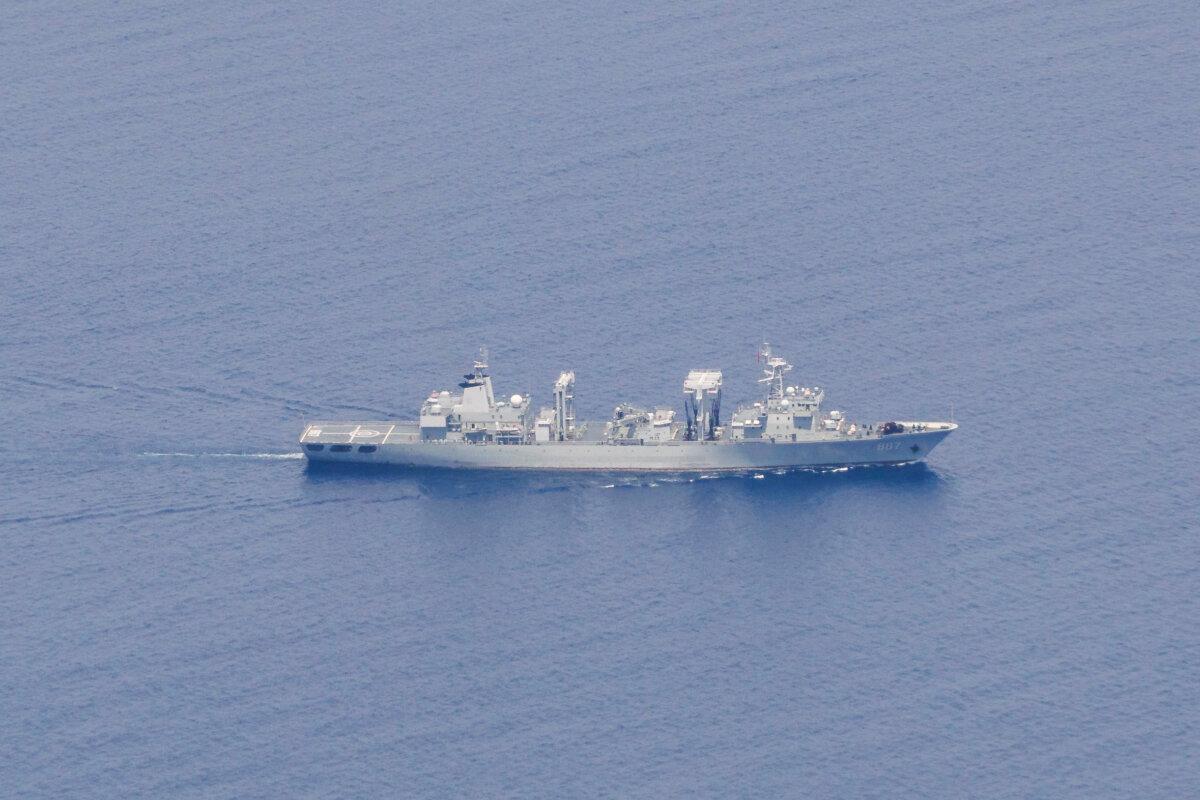
Herr pointed to China’s far-seas deployment in February and March saying it underscores why Canberra feels compelled to strengthen its response to Beijing’s expanding reach. In February and March, the People’s Liberation Army (PLA) Navy conducted live-fire drills across the Indo-Pacific, including in waters between Australia and New Zealand, and completed its first-ever circumnavigation of Australia.
“It looked as if it was intended to be aggressive. It wasn’t just a test of the capacity of the ships to sail, but it was ‘we’re going to do it, and we’re not going to let you know about it, and that should worry you,’” Herr said.
.
How Will Canberra React?
At the conference, Marles stressed that the Australian Defence Force needs “impactful projection,” achieved through “a long-range, highly capable navy, both in terms of our surface fleet and our submarines.”Herr viewed this as a necessary action against China’s “muscular approach” of intimidating others, noting that Canberra is responding by enhancing the AUKUS agreement—a trilateral security pact with the United Kingdom and the United States aimed at safeguarding security in the Indo-Pacific.
“[This means] we’re not just engaged in coastal defense for Australia, but part of a larger capacity to present force if necessary, closer to China if China makes that necessary itself,” Herr said.
In addition to AUKUS, Herr added that Australia has developed closer security ties and military relationships with neighboring states like Japan, India, and Indonesia, intended to curb Chinese porting deals in Southeast Asia.
“The arrangements need to be there to prevent any of us, including ourselves, but other states in our neighborhood from being bullied and monstered, as it were, by that Chinese capacity,” he said.
In a similar vein, Lin stated that Canberra will strengthen relationships with like-minded countries and enhance allied defense capabilities by increasing joint military exercises.
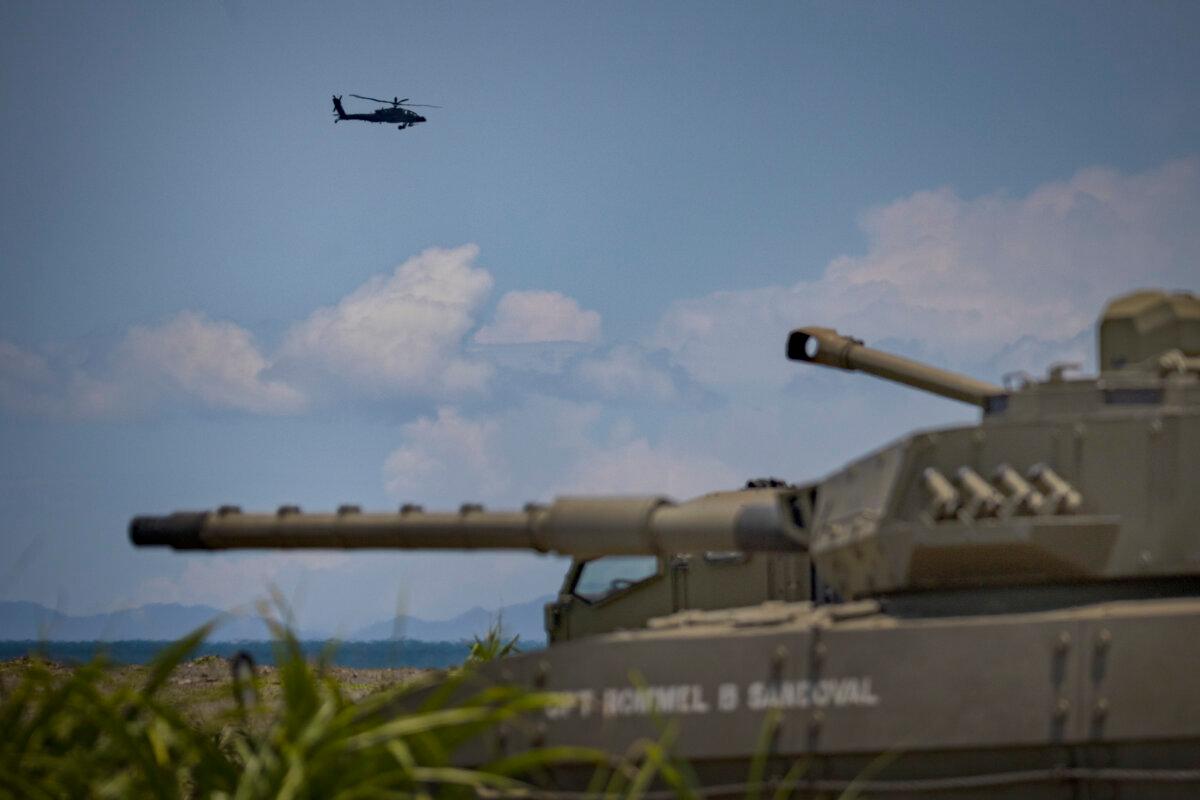
“Because there are already organizations like the Indo-Pacific Quadrilateral partnership (Quad), the Malabar navy exercise, and ’shoulder-to-shoulder' U.S.–Philippines joint military exercises, Australia will expand its relationships with other allies to strengthen alliances in response to China’s military pressure,” Lin predicted.
.
Harassment Could Strain Ties
But all of these combative actions by Beijing, Lin said, are designed to isolate Australia—one of America’s most important Indo-Pacific allies—and constrain Canberra if a conflict erupts in the Taiwan Strait or South China Sea.“If Australia expands its capabilities, it might break through China’s disruptive strategies, but if China’s capabilities continue to grow while Australia lags behind, it will be disrupted when trying to assist U.S. or Japanese forces,” Lin said.
However, Herr said China’s ongoing military harassment and its history of economic coercion create fears of new sanctions, which might push Canberra to further reduce its economic ties—a move that would place new strains on the bilateral relationship.
“The trading relationship with China isn’t a strictly commercial and friendly relationship, and that is certainly something we have to take into account,” Herr said.
“We’re trying to diversify our security and economic relationships to be less dependent on China. Hence, the closer relationship with East Asian democracies like Japan, Korea, and the Philippines, to make sure that close to home, we have friends we can work with.”
.
What's Your Reaction?
 Like
0
Like
0
 Dislike
0
Dislike
0
 Love
0
Love
0
 Funny
0
Funny
0
 Wow
0
Wow
0
 Sad
0
Sad
0
 Angry
0
Angry
0














Comments (0)