

China Exaggerates Taiwan Independence Claims to Justify Aggression, Lawmaker Says


.
“I don’t see the evidence that Taiwan is looking to be an independent nation and directly challenge China. I think China sort of plays that up as a justification for their more aggressive behavior,” Smith said.
He elaborated on Beijing’s stance, saying that “[China talks] about the fact that Taiwan is part of China. Independence [of Taiwan] would be horrible for them. I don’t really agree with that.”
China’s communist regime has intensified diplomatic, economic, and military pressure on Taiwan since the Democratic Progressive Party (DPP) came to power in 2016 with the election of Tsai Ing-wen, who served two four-year terms. Beijing regards Tsai and her successor, current President Lai Ching-te, as “separatists” for their outspoken defense of Taiwan’s sovereignty.
In June, Lai reaffirmed his position during a speech to a Taiwan branch of Rotary International, declaring, “Taiwan is undoubtedly a country.” He criticized Beijing for lacking historical evidence and legal proof to support its sovereignty claims over the self-governing island.
RIMPAC
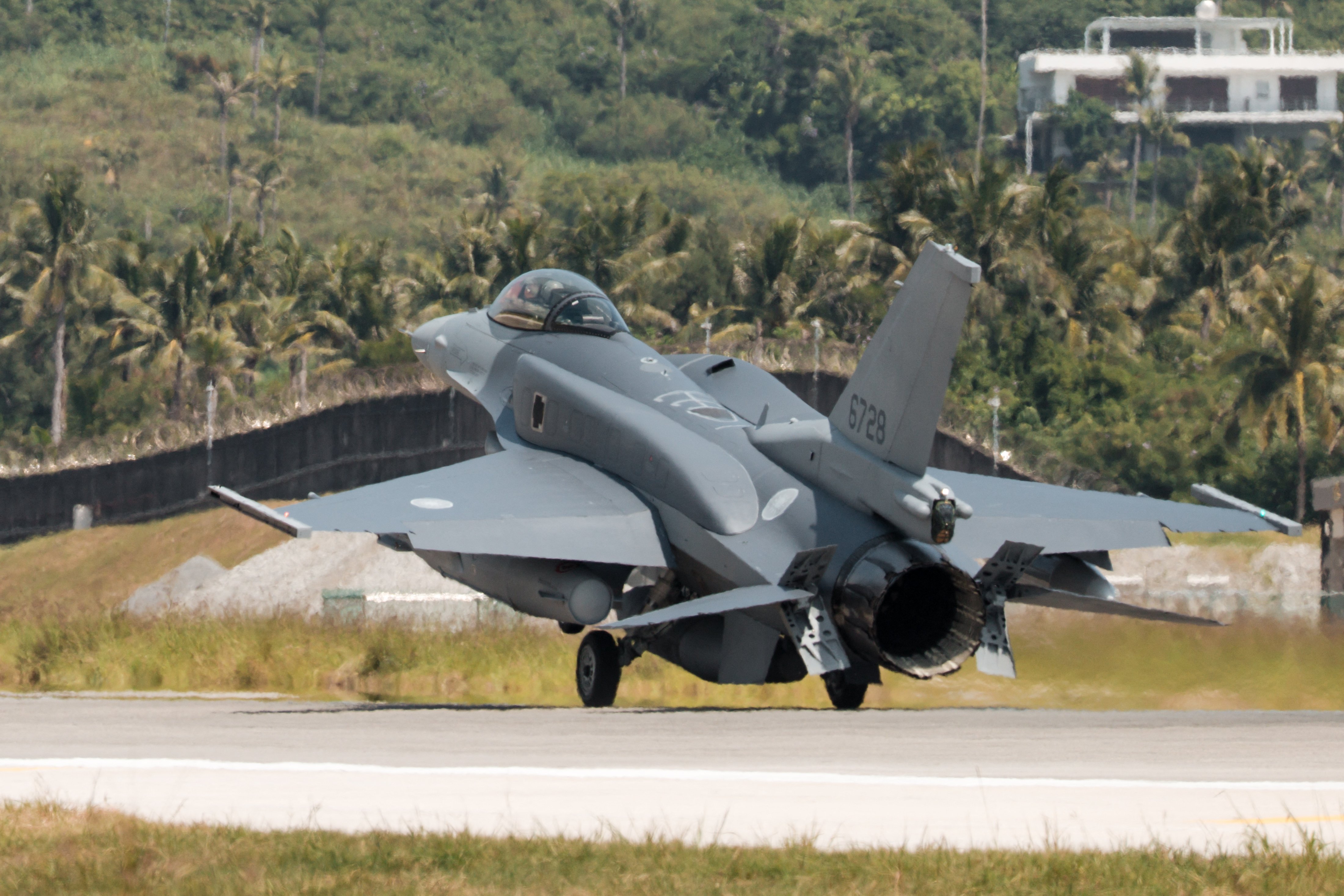
China is “very focused” on U.S. sales of weapons to Taiwan, Smith said.“I did point out to them, if you would stop surrounding them periodically, looking like you’re going to invade them, then maybe we could have a conversation about that,” Smith said. “But part of our policy on Taiwan is to make sure that Taiwan can defend itself against a potential Chinese invasion.”
The United States and Taiwan are currently not diplomatic allies, since Washington severed diplomatic ties with Taipei in favor of Beijing in 1979. That year, Congress enacted the Taiwan Relations Act, which is the basis of the bilateral relationship that includes the U.S. arms sales to help Taiwan maintain its self-defense.
Additionally, the United States has long upheld a “one-China policy,” which acknowledges that there is only one sovereign state called “China.” However, this policy differs from the “one-China principle,” under which the Chinese regime claims sovereignty over Taiwan.
The possible invitation to Taiwan can be seen as a signal of international support and deterrence against China, Smith said.
“I certainly think that a part of it is to try to build an alliance and to show China that it’s not just Taiwan, it’s not just the U.S., but there are other nations that are also going to be there to help Taiwan defend itself,” Smith said. “So don’t attack.”
As for Beijing’s view toward Washington, Smith believes there is a bit of a divide within the Chinese regime, with some driven by “a genuine desire to calm tensions.”
.
What's Your Reaction?
 Like
0
Like
0
 Dislike
0
Dislike
0
 Love
0
Love
0
 Funny
0
Funny
0
 Wow
0
Wow
0
 Sad
0
Sad
0
 Angry
0
Angry
0













Comments (0)