

China Condemns US Venezuela Operation as Beijing’s Influence Collapses


.
China condemned the U.S. extraction of Venezuelan leader Nicolás Maduro from his residence in Caracas as illegal and hegemonic, but the operation exposes the limits of Beijing’s influence in the Western Hemisphere.
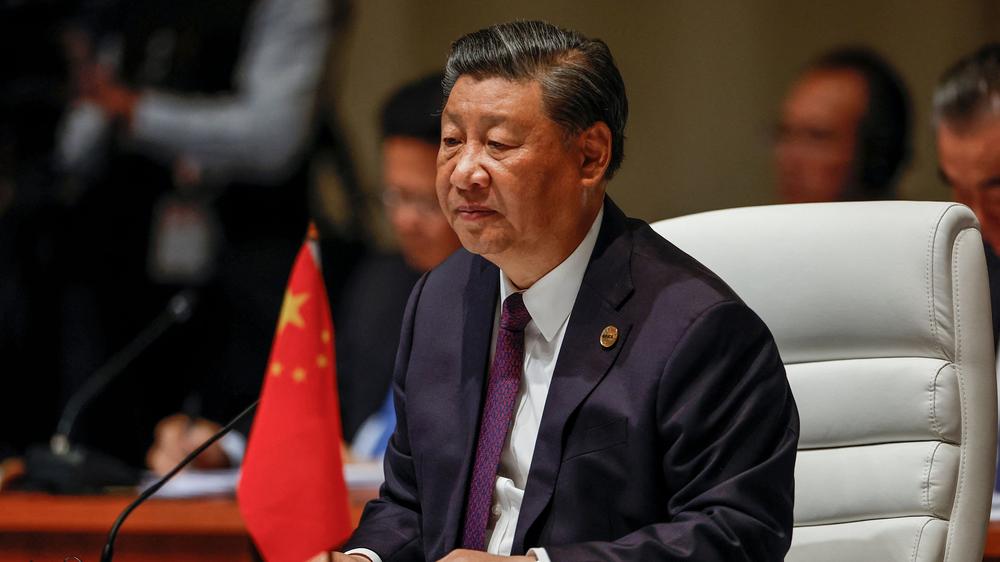
The Chinese Communist Party (CCP) denounced the U.S. military operation that captured Maduro and his wife on Jan. 3–4 and transported them to New York to face narco-terrorism charges. Beijing described the action as a violation of international law, the United Nations Charter, and established norms of international relations, characterizing it as hegemonic and a brazen use of force against a sovereign state.
The Chinese foreign ministry urged Washington to ensure Maduro’s safety, release him and his wife, and cease efforts to subvert Venezuela’s government. The criticism followed remarks by President Donald Trump that the United States would temporarily administer Venezuela during a transition period.
Beijing’s objections ring hollow given its own foreign policy record, which has drawn sustained international criticism for violations of international law and national sovereignty. These actions span multiple regions and policy areas and have been widely condemned by governments, international bodies, and human rights organizations.
They include the annexation and long-term occupation of Tibet; mass detention and repression in Xinjiang targeting Uyghurs and other ethnic minorities, widely characterized as genocide or crimes against humanity; construction of artificial islands and military installations in the South China Sea in defiance of the 2016 Hague Tribunal ruling; and repeated military exercises aimed at Taiwan, including blockade and invasion simulations.
China has also used Belt and Road lending to gain leverage over strategic infrastructure; supported authoritarian governments accused of human rights abuses in Burma, North Korea, Iran, and Russia; and applied economic coercion through trade restrictions against countries such as Australia, Lithuania, South Korea, and the Philippines.
Despite strong diplomatic condemnations, the Chinese regime is unlikely to respond with military or economic retaliation, even though the U.S. operation in Venezuela carries significant economic and strategic implications for Beijing. China remains Venezuela’s largest oil buyer and has developed extensive trade and investment ties with the country.
China’s total economic exposure in Venezuela is difficult to quantify due to opaque loan structures and commodity-backed agreements. However, Beijing is estimated to have lent $60 billion or more to Venezuela between 2007 and 2015, with additional loans extending from the start of the Hugo Chávez regime in 1999 through the end of the Maduro regime. Current outstanding debt is estimated at approximately $10 billion.
These oil-backed loans were structured as commodity-for-credit arrangements, with repayment secured through daily shipments of crude oil to Chinese state-owned companies. Recovery prospects were already constrained by Venezuela’s weak economic fundamentals and aging oil infrastructure, which kept production far below historical levels. While Trump has encouraged American oil companies to invest in Venezuela’s oil sector and help restore production, timelines and investment details remain unclear, leaving debt resolution uncertain.
An increased U.S. presence in Venezuela, combined with American investment, is likely to curb Beijing’s political and economic influence. The Orinoco Mining Arc contains strategic minerals, including gold, coltan, lithium, rare earth elements, and thorium, and limiting Chinese control over these resources strengthens U.S. supply chain security.
The U.S. military operation also signals that Chinese debt-trap diplomacy and political co-option through the Belt and Road Initiative and other CCP-led initiatives can be reversed.
The timing was particularly significant. Chinese diplomat Qiu Xiaoqi met with Maduro only hours before U.S. forces seized him, underscoring that Beijing’s diplomatic engagement carried no apparent deterrent effect.
The disregard for Chinese intervention reflects the operationalization of the Trump Corollary to the Monroe Doctrine, signaling that the Western Hemisphere is not China’s sphere of influence. This directly challenges Beijing’s strategy of expanding influence through partnerships across Latin America and the Caribbean to constrain U.S. power.
.

Over the past decade, Venezuela purchased hundreds of millions of dollars’ worth of Chinese military equipment, including JY-27A air defense radars, K-8 trainer aircraft, Y-8 transport aircraft, VN-4 armored vehicles, and riot control gear.
By removing a CCP-aligned military partner in the Western Hemisphere, the United States reduces potential security threats near its borders. The operation also demonstrates U.S. capability and willingness to pursue regime change despite Chinese opposition, sending a clear signal to Beijing regarding Taiwan, the South China Sea, and other potential flashpoints.
What's Your Reaction?
 Like
0
Like
0
 Dislike
0
Dislike
0
 Love
0
Love
0
 Funny
0
Funny
0
 Wow
0
Wow
0
 Sad
0
Sad
0
 Angry
0
Angry
0














Comments (0)