

Chinese Coast Guard Vessel Withdraws After Tense Standoff Near Taiwan's Remote Pratas Islands
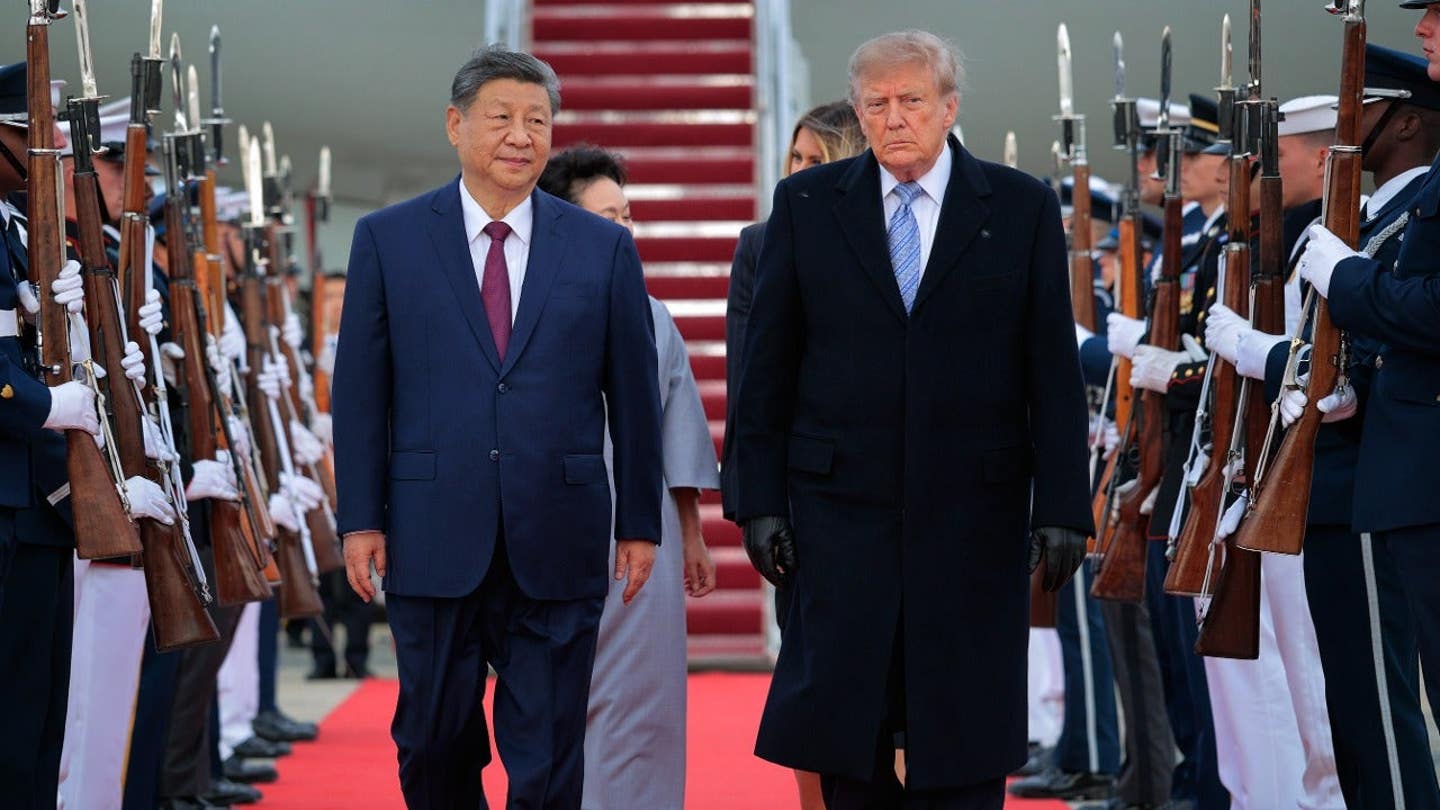
A Chinese coast guard ship has withdrawn from waters near Taiwan's Pratas Islands in the South China Sea following a multi-day confrontation with Taiwanese vessels. The incident — marked by an extraordinary exchange of words over sovereignty — is part of a sharply escalating pattern of Chinese pressure against Taiwan's outlying territories, and comes days after U.S. President Donald Trump and China's Xi Jinping met in Beijing and discussed the Taiwan question.


.
Taiwan Holds Firm, Chinese Ship Retreats
A Chinese coast guard vessel has pulled back from the waters near Taiwan's Pratas Islands in the northern South China Sea, Taiwan's Coast Guard Administration (CGA) confirmed on Sunday, May 24. The ship had been holding position close to the remote atoll since Saturday, triggering a two-day standoff that included an unusually direct verbal clash over sovereignty.
The confrontation ended late Sunday afternoon when the Chinese vessel began sailing away from the area — but not before an exchange that captured international attention.
Words That Went Beyond Protocol
The incident began on Saturday when Taiwanese coast guard lookouts spotted a Chinese Coast Guard ship approaching the Pratas. Taiwan immediately dispatched its own vessel and broadcast radio warnings. What followed was, by all accounts, anything but routine.
The Chinese ship declared it was conducting a standard patrol mission and asserted that China holds full sovereignty and jurisdiction over the Pratas. Taiwan's crew responded with a message that went well beyond standard maritime language: "Please do not destroy peace. You should return and strive for democracy. That is the correct way to serve your country."
Taiwan's coast guard released video footage of the exchange. China's Taiwan Affairs Office did not respond to a request for comment.
A Taiwanese coast guard official told reporters that both the explicit sovereignty language used by Beijing and the duration of the Chinese vessel's presence so close to the atoll were unusual — representing a clear departure from previous behavior in the area.
A Vulnerable Outpost Far From Home
The Pratas Islands — known in Chinese as Dongsha — lie roughly midway between southern Taiwan and Hong Kong, more than 400 kilometers (250 miles) from Taiwan's main island. Security analysts have long identified that distance as a strategic liability.
The atoll is administered by Taiwan and protected as a national park. Unlike Taiwan's main island or the frontline Kinmen Islands, the Pratas are not garrisoned by the military. Taiwan's coast guard bears sole responsibility for their defense — with comparatively limited resources.
The weekend's standoff was not an isolated event. Just this month, Taiwan's coast guard had already twice driven away the Chinese research vessel "Tongji" from waters close to the island, most recently on Friday night. In January, a Chinese military reconnaissance drone briefly entered Pratas airspace — a move Taiwan's Defense Ministry condemned at the time as provocative.
100 Chinese Ships — and a Warning From Taipei
As the standoff unfolded Saturday, Taiwan's National Security Council Secretary-General Joseph Wu took to his account on X (formerly Twitter) to post a stark warning. He said that 100 Chinese ships were currently operating within the so-called first island chain — the strategic arc running from Japan through Taiwan and down into the Philippines.
The sheer scale of that presence underlines what Taipei has been saying for months: China is not conducting isolated incidents, but running a coordinated, large-scale pressure campaign across the entire region.
The Trump-Xi Shadow Over the Taiwan Strait
The timing of the Pratas standoff adds a further layer of significance. Earlier in May, U.S. President Donald Trump met with Chinese President Xi Jinping in Beijing — and Taiwan was on the agenda. The Trump administration has publicly reaffirmed its commitment to arms sales to Taiwan, which Taipei has called a "cornerstone of regional peace."
Beijing has interpreted any U.S. support for Taiwan as interference in what it considers an internal matter. China claims Taiwan as part of its territory, a position Taipei firmly rejects. Taiwan governs itself as a fully functioning democracy with its own elected government, military, and national institutions.
A Pattern of Escalation: The Gray Zone in Numbers
The Pratas incidents reflect a broader and well-documented Chinese strategy that analysts call "gray zone" pressure — using coast guard ships, research vessels, and drones rather than military force to assert claims and test responses, while staying just below the threshold of open conflict.
According to the Asia Maritime Transparency Initiative (AMTI), a research body affiliated with the Center for Strategic and International Studies (CSIS), Chinese coast guard ships patrolled near the Pratas for 60 days in 2025 alone — up from 25 days in 2024 and virtually no recorded activity in 2021. During China's "Strait Thunder" military exercises in April 2025, at least one Chinese Coast Guard vessel was observed operating inside the atoll's territorial waters.
China's Coast Guard Law, which took effect in 2021, gave Beijing's maritime enforcement agencies sweeping authority to operate in waters China claims — providing the legal framework that drives these operations.
Taiwan's Ocean Affairs Council Minister Kuan Bi-ling stated in April 2026 that China is systematically widening the maritime areas where such operations are being conducted. The ministry has since announced plans to strengthen defenses at the Pratas.
For Now, the Ship Has Left — But the Pressure Remains
Sunday's withdrawal of the Chinese vessel is, at best, a temporary de-escalation. With Chinese coast guard activity around the Pratas growing year by year — and 100 Chinese ships now reported in the broader first island chain — analysts warn that the quiet atoll at the top of the South China Sea is fast becoming one of Asia's most closely watched potential flashpoints.
Taiwan has made clear it will not yield on sovereignty — not in its waters, not over its airspace, and not in the words it broadcasts to those who approach uninvited.
.
Sources:
- Reuters – "Chinese ship leaves after tense standoff near Taiwan-controlled islands," May 24, 2026: https://www.reuters.com/world/china/taiwan-china-coast-guards-standoff-top-south-china-sea-2026-05-24/
- Asia Maritime Transparency Initiative (AMTI/CSIS) – "Patrolling Pratas: From Peripheral Concern to a New Normal," March 30, 2026: https://amti.csis.org/patrolling-pratas-from-peripheral-concern-to-a-new-normal/
- Taipei Times – "Taiwan to boost Pratas islands' defenses as China steps up pressure," April 3, 2026: https://www.taipeitimes.com/News/taiwan/archives/2026/04/03/2003854953
- American Enterprise Institute (AEI) – "China & Taiwan Update, May 1, 2026": https://www.aei.org/articles/china-taiwan-update-may-1-2026/
.
What's Your Reaction?
 Like
0
Like
0
 Dislike
0
Dislike
0
 Love
0
Love
0
 Funny
0
Funny
0
 Wow
0
Wow
0
 Sad
0
Sad
0
 Angry
0
Angry
0














Comments (0)