

China Accuses Japanese Self‑Defense Forces Member of Breaking Into Its Embassy in Tokyo
China Accuses Japanese Self‑Defense Forces Member of Breaking Into Its Embassy in Tokyo - Beijing has lodged a strong diplomatic protest with Tokyo after a Japanese man — who claimed to be an active‑duty member of Japan’s Self‑Defense Forces (JSDF) — allegedly scaled a wall and forcibly entered the Chinese Embassy in Tokyo, threatening to kill diplomatic staff. Japanese authorities have not yet issued a detailed public statement, and the incident has intensified tensions between the two countries.

.
Lede
Beijing has lodged a strong diplomatic protest with Tokyo after a Japanese man — who claimed to be an active‑duty member of Japan’s Self‑Defense Forces (JSDF) — allegedly scaled a wall and forcibly entered the Chinese Embassy in Tokyo, threatening to kill diplomatic staff. Japanese authorities have not yet issued a detailed public statement, and the incident has intensified tensions between the two countries.
What Beijing Says Happened
According to China’s Ministry of Foreign Affairs, the man:
- Scaled the embassy wall and entered the compound without authorization
- Claimed to be an active JSDF officer
- Threatened to kill Chinese diplomatic personnel, reportedly invoking a “deity”
- Admitted the act was illegal, according to Chinese officials
Beijing described the incident as:
- “Extremely egregious”
- A “serious violation” of diplomatic protections
- A breach of the Vienna Convention on Diplomatic Relations
China has demanded:
- A full investigation
- Severe punishment for the perpetrator
- Guarantees for the safety of Chinese diplomatic staff in Japan
What Japan Has Said So Far
As of the latest reporting:
- Japanese authorities have not issued a detailed public statement about the suspect or his motives.
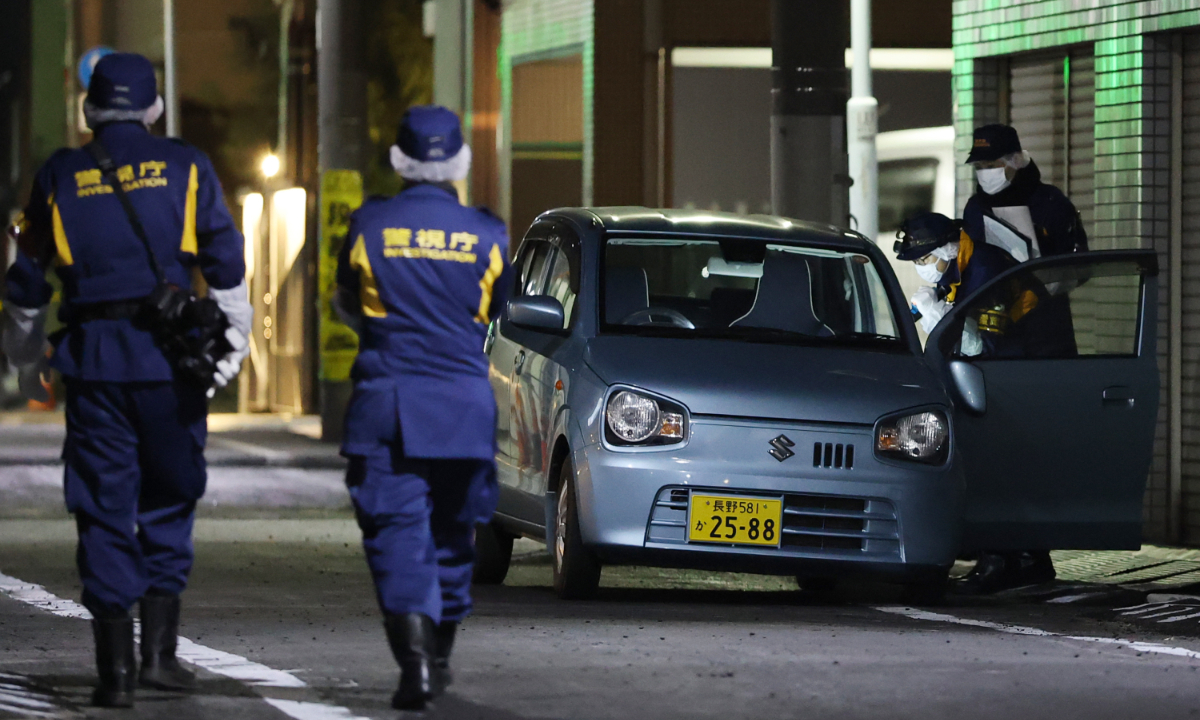
- Police were seen guarding the embassy following the incident.
- Tokyo has not confirmed whether the man is indeed an active JSDF member.
Why This Incident Matters
1. Diplomatic sensitivity
Embassy intrusions are rare and treated as serious violations of international law.
This case is especially sensitive because it involves:
- A military‑affiliated suspect
- A Chinese diplomatic facility
- Two countries already managing strained relations over security issues
2. Regional security tensions
The incident comes amid:
- Ongoing disputes in the East China Sea
- Japan’s expanding defense posture
- China’s concerns about Japanese military normalization
3. Domestic implications in Japan
If the suspect is confirmed as a JSDF member, it may raise questions about:
- Security vetting
- Extremist motivations
- Embassy protection protocols
Explainer for Readers: Why Embassy Security Incidents Are Serious
For non‑expert readers, here’s the key point:
Under the Vienna Convention, embassies are protected spaces.
Any forced entry — especially by someone claiming military status — is treated as:
- A major diplomatic breach
- A potential security threat
- Grounds for formal protests and diplomatic consequences
Sources
- Bloomberg — Chinese MFA statement on embassy break‑in, threat to diplomats (March 24, 2026).
- The Independent — Details on suspect’s claims, threats, and China’s protest (March 24, 2026).
- South China Morning Post — MFA briefing, suspect’s confession, threat details (March 24, 2026).
- TRT World — Embassy wall breach, China’s demand for investigation (March 24, 2026).
- Reuters via US News — China’s formal complaint and description of “forceful break‑in” (March 24, 2026).
.
What's Your Reaction?
 Like
0
Like
0
 Dislike
0
Dislike
0
 Love
0
Love
0
 Funny
0
Funny
0
 Wow
0
Wow
0
 Sad
0
Sad
0
 Angry
0
Angry
0
















Comments (0)