

CCP’s New 5-Year Plan Outlines Wartime Economy: Analysts


.
Beijing’s recently announced five-year plan is an attempt to put the economy on a war footing, according to some China analysts, who say that the communist regime is preparing for a prolonged technological blockade or conflict with the United States. Other China-watchers, however, suggest that the plan is merely a continuation of previous strategies.
Five-year plans are a signature tool of planned economies used by the former Soviet Union and other socialist states, including communist China.
According to the Oct. 24 official communique, the five-year plan, aims to “build a modernized industrial system and reinforce the foundations of the real economy” and to “achieve greater self-reliance and strength in science and technology.” These goals are followed by “expanding domestic demand” and “improving living standards.”
Industrial modernization and technological independence have been the key for the Chinese regime to strengthen its position in its competition with the United States.
The plans demonstrates that “the CCP is making structural adjustments to prepare for a future Sino-U.S. tech war or a prolonged technological blockade,” according to Sun Kuo-hsiang, a professor of international affairs and business at Nanhua University in Taiwan
“Internally, it prioritizes the real economy and technological self-reliance as the material foundation for national security. Externally, it aims to counter Western supply chain blockades through domestic demand and independent innovation,” he told The Epoch Times.
The Chinese communist regime’s plans for economic and other policy goals for the next five years were announced following the ruling communist party’s top political meeting, known as the Fourth Plenum.
The communique on the plans repeatedly mentioned “high-quality development” for the economic goals in the five-year plan outline but didn’t specify economic growth targets. China’s economy has been sluggish since the Chinese Communist Party (CCP) enforced its draconian total lockdown policies during the COVID-19 pandemic.
Although the CCP pledged to increase efforts on “improving living standards while increasing consumer spending” in the communique, it did not detail how these goals would be achieved or how they would be funded.
In terms of national security and foreign policy, the communique reiterated the CCPs’s goals of “modernizing national defense and the armed forces” and “pursuing major-country diplomacy,” while emphasizing “boosting combat preparedness.”
As always, it paid tribute to the communist theory of class struggle between the oppressors and the oppressed, outlining the need for party members to “demonstrate the courage and competence to carry forward our struggle, and dare to brave high winds, choppy waters, and even dangerous storms.”
Wartime Economic Order
The order of priorities outlined in the CCP’s 15th Five-Year Plan is essentially “a wartime economic order,” Sun Kuo-hsiang, a professor of international affairs and business at Nanhua University in Taiwan, told The Epoch Times.Putting “scientific and technological self-reliance” above expanding domestic demand reveals that the CCP has already regarded science and technology as a security issue rather than an economic issue, he said. “Science and technology is no longer a free activity of innovation but has been incorporated into the national security system to be managed by the state.”
“This plan emphasizes state control over market guidance,” Sun added.
The decline of China’s middle class after the COVID-19 pandemic has led to weak domestic consumption, which is the biggest concern for the Chinese economy at present, Wang He, a U.S.-based China affairs observer, told The Epoch Times. “But the five-year plan is still centered on industrial development. This is not based on economic considerations, but a strategic and political consideration, particularly focused on war,” he said.
China’s manufacturing industry is already at severe overcapacity, Wang noted, but the CCP is still emphasizing industry.
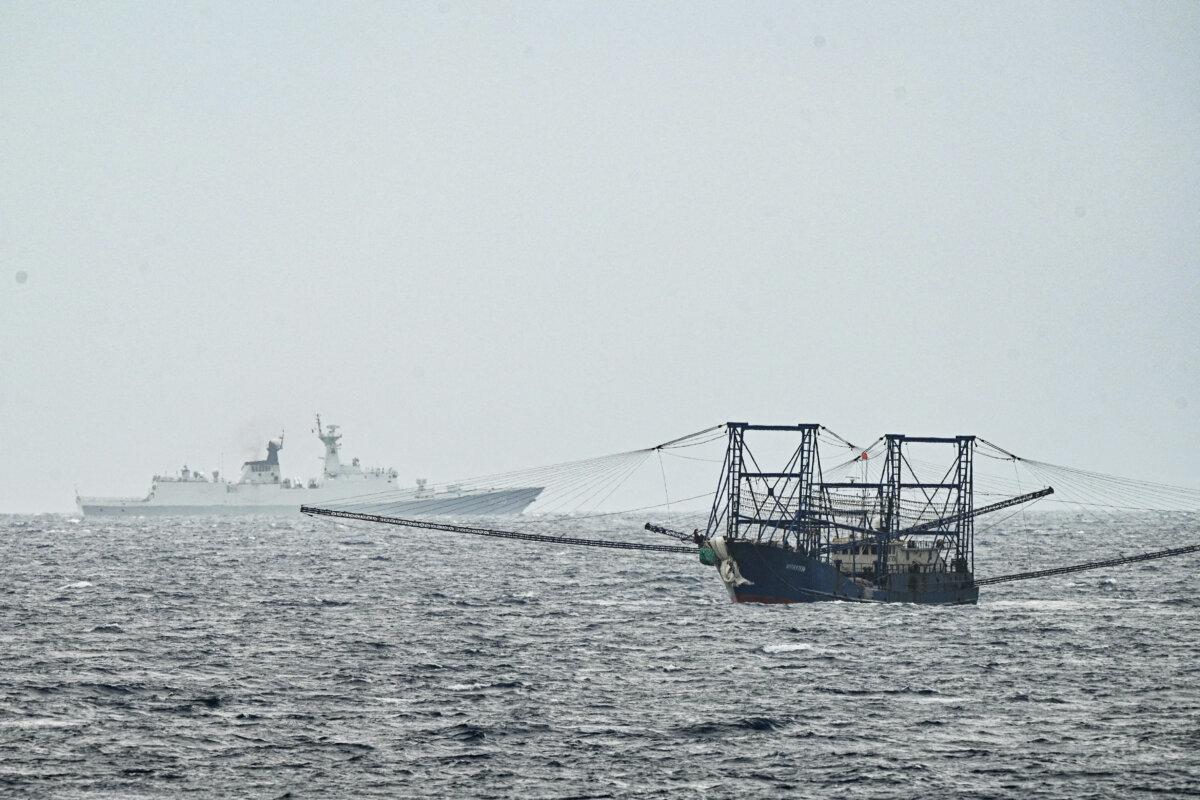
“If a war breaks out between China and the United States, such as a naval conflict, China’s shipbuilding capacity is 100 times that of the United States. The CCP’s weapons and military industry boasts over twice the capacity of the United States,” he said. “The CCP’s political considerations outweigh economic ones, leading to a serious distortion in China’s economic policies and investments, deviating from the normal economic trajectory.”
.
Flaws in the 5-Year Plan
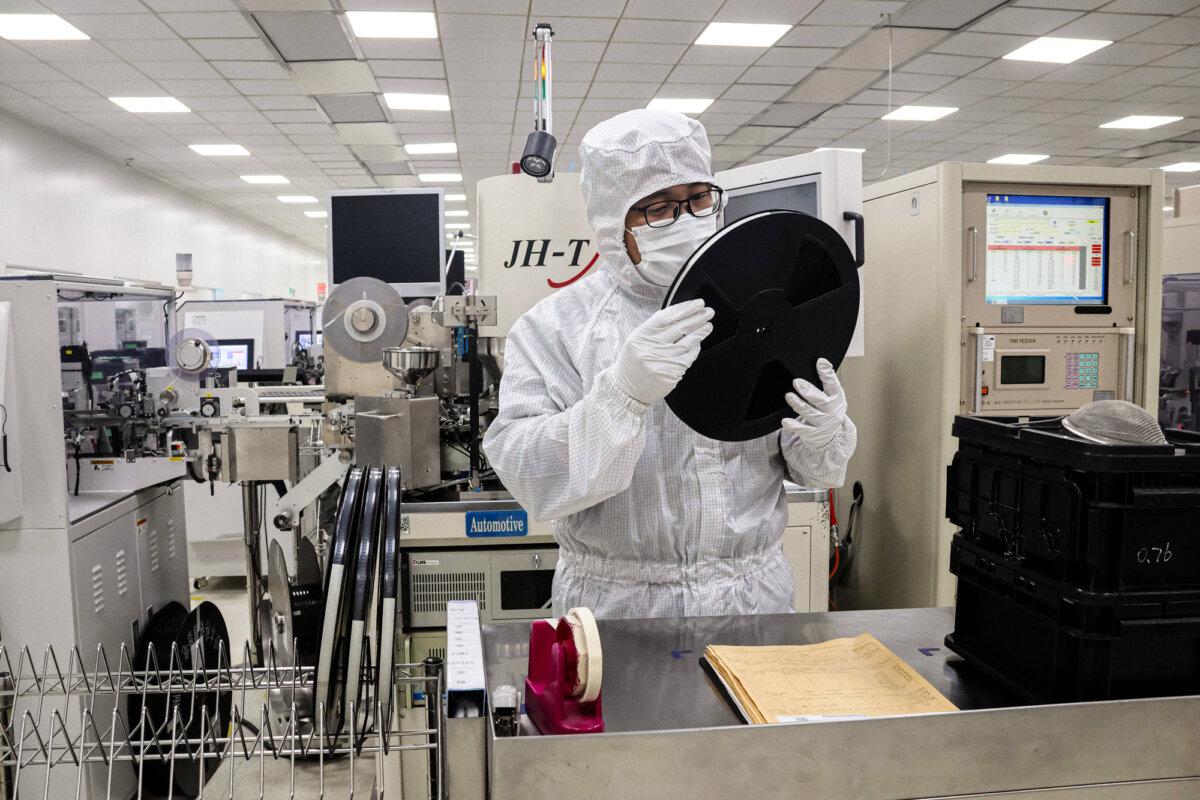
China’s manufacturing represents around 27 percent of the country’s GDP. Manufacturing exports make up over 90 percent of China’s total exports.“China’s manufacturing industry is highly dependent on the international market,” Wang said.
“But in the context of the CCP’s wolf warrior diplomacy, with China as a ‘major country,’ confrontation with the West will inevitably lead to economic decoupling, which is the most fatal flaw of its 15th Five-Year Plan,” Wang said.
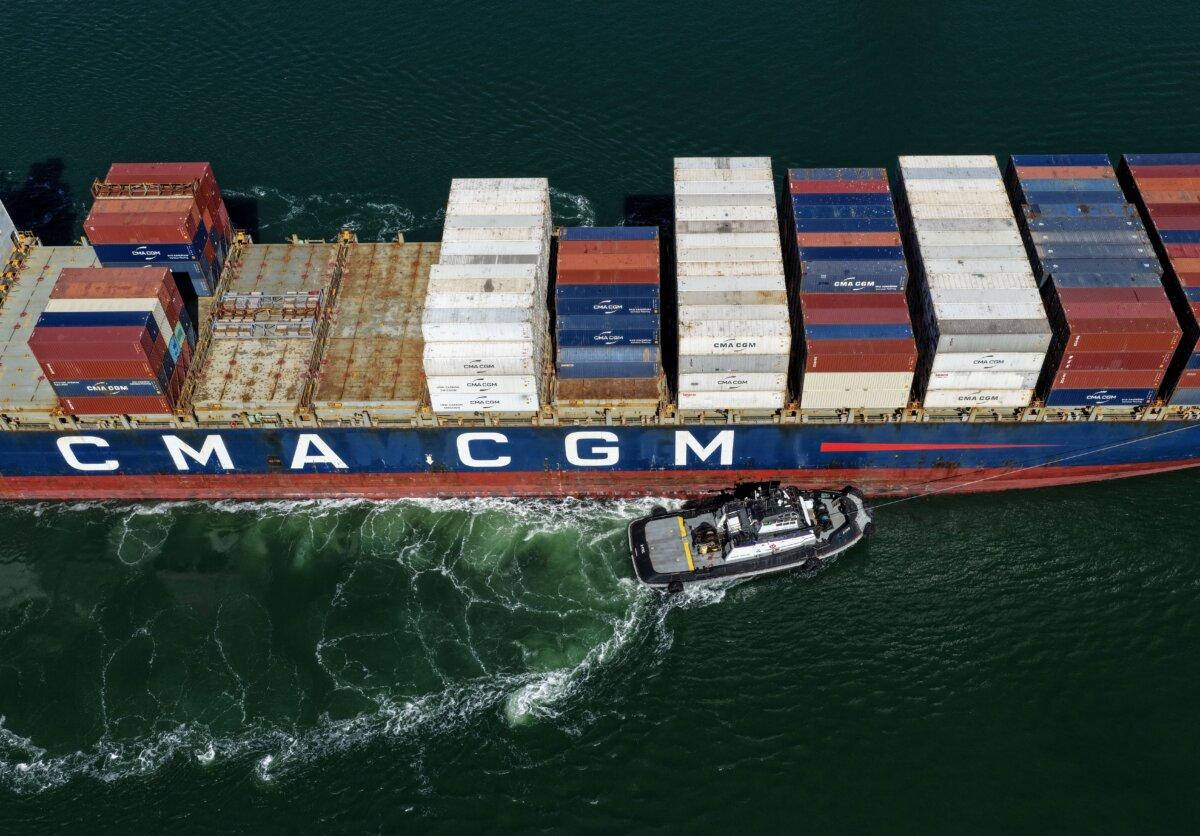
A container ship is assisted by a tugboat as it arrives at the Port of Oakland on Oct. 10, 2025. (Justin Sullivan/Getty Images)With insufficient domestic demand, China’s huge production capacity relies on demand in the international market to support its industry, Wang said.
To compete with the United States, “China must establish its own independent industrial system and its own independent scientific and technological industrial system,” Wang said.
However, without close scientific, technological, educational exchange with the outside world, “it is impossible for China to develop science and technology on its own,” he said.
.
There’s nothing much new in the communique, and overall, China’s current internal political challenges, including power struggles and personnel changes within the Party remain a focus, Wu Se-Chih, a researcher at Cross-Strait Policy Association in Taiwan, told The Epoch Times.
The new five-year plan outline reflects the CCP’s current major concerns related to the economy, Wu said.
“The CCP is focused on the progress of macroeconomic policies and addressing local issues from a top-down perspective from the central government,” he said, “And the local issues, of course, are the risks of the huge local government debt.”
Amid the predicament of China’s overall economic development, “the main focus is on stabilizing employment, which is tied up with domestic consumption. An unemployment issue would lead to social unrest,” Wu said.
What's Your Reaction?
 Like
0
Like
0
 Dislike
0
Dislike
0
 Love
0
Love
0
 Funny
0
Funny
0
 Wow
0
Wow
0
 Sad
0
Sad
0
 Angry
0
Angry
0














Comments (0)