

Taiwan Draws the Line: Beijing's Maritime Patrol Ends — But the Power Struggle Has Only Just Begun
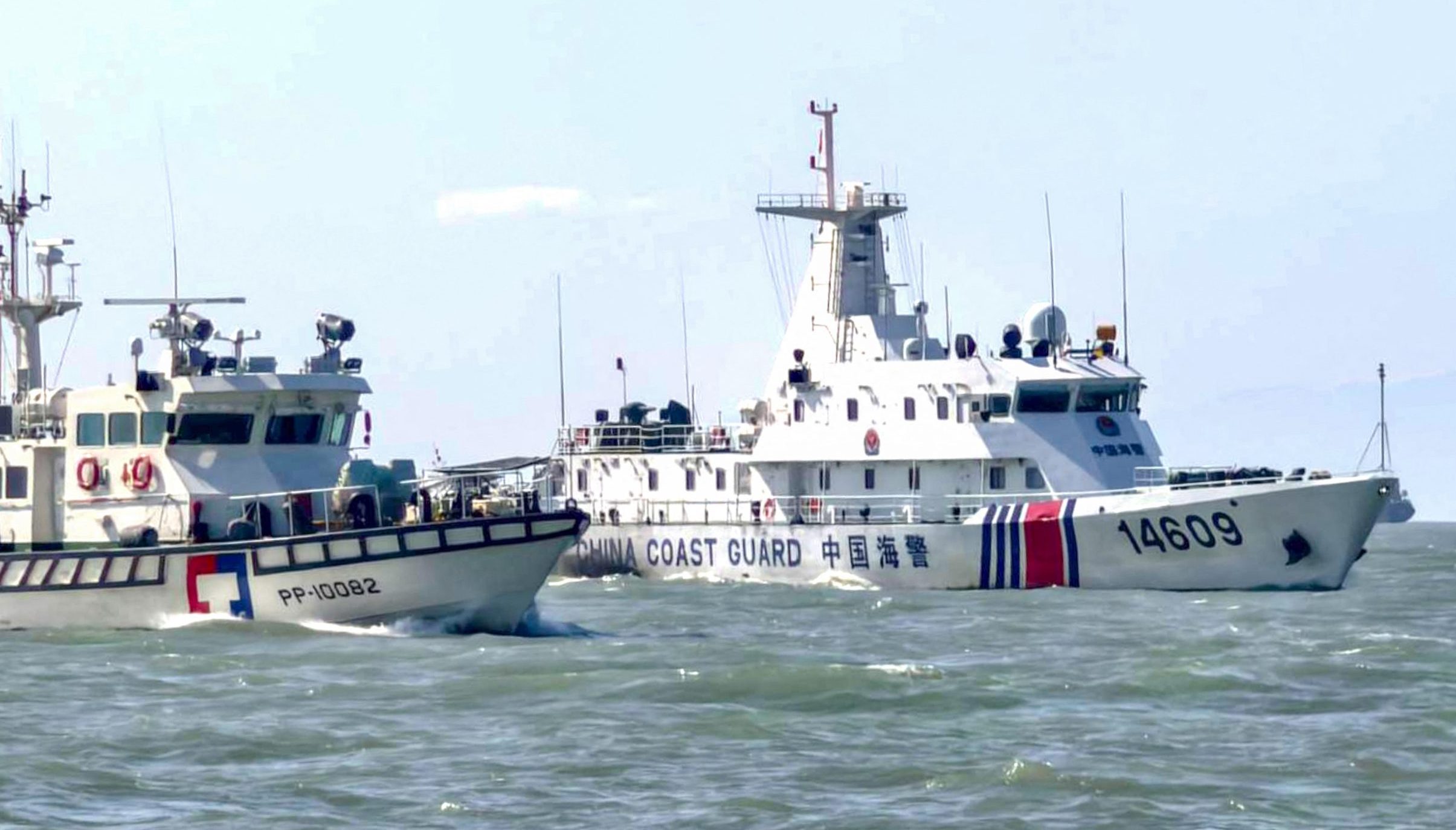
China wrapped up a four-day coast guard operation in waters east of Taiwan on Wednesday, after inspecting nearly 200 vessels and provoking sharp condemnation from Taipei. Taiwan's coast guard warned that its maritime sovereignty "cannot be violated" and that any ship asserting Chinese jurisdiction will be forcibly expelled. The standoff marks a significant new escalation in Beijing's strategy to assert control over waters it does not legally govern.

.
What Just Happened
A Chinese maritime law enforcement operation in the waters east of Taiwan has ended — but not before leaving a clear political message behind.
China's Ministry of Transport announced it had completed a four-day special operation to maintain law and order in a maritime section in the waters east of Taiwan. The operation covered 1,030 nautical miles, inspected 198 passing vessels, and rectified violations involving three ships, according to Beijing's account.
Chinese state media also reported that vessels conducted hydrographic surveys (underwater mapping operations) and patrolled areas where undersea cables are located — a detail analysts say reveals the strategic scope of the mission well beyond routine traffic enforcement.
Taiwan Hits Back: "No Jurisdiction Here"
Taipei was unambiguous in its response. Taiwan's Coast Guard Administration (CGA) stated that Beijing holds no legal authority over those waters whatsoever.
"China does not enjoy any sovereign rights in waters east of Taiwan," the CGA said, adding that Beijing's actions violated international law and were "seriously deviating from the facts."
The agency went further in a follow-up statement, vowing that whenever Chinese ships appear, Taiwanese vessels will respond forcefully. "Our nation's maritime sovereignty cannot be violated," it declared. "Any country that asserts jurisdiction will be expelled without exception."
Those were not empty words. Taiwan's coast guard said its ships had "expelled" four Chinese government ships that entered restricted waters off the island's south, after the two sides broadcast testy warnings to each other — an escalation of tensions.
The Trigger: Japan, the Philippines, and a Disputed Sea Boundary
The entire episode traces back to a diplomatic announcement made in late May. During Philippine President Ferdinand Marcos Jr.'s visit to Japan, the two countries announced plans to begin formal talks on the delimitation of their maritime boundaries east of Taiwan.
Beijing reacted furiously. China's Coast Guard called the Japan-Philippines move a "serious infringement upon China's territorial sovereignty and maritime rights and interests," and framed its patrol operation as a "necessary action."
The core of Beijing's objection: it considers Taiwan its own territory, and therefore views any maritime boundary talks in waters adjacent to Taiwan — even between two unrelated countries — as requiring China's approval.
Tokyo and Manila had said they would start formal talks "to delimit the maritime boundary" of an economic zone and continental shelf between them, while Taipei said it should be consulted on the talks.
"Cognitive Warfare" — Taiwan's Defence Minister Speaks Out
Taiwan's Defence Minister Wellington Koo did not mince words when addressing parliament. "First this is a provocative act, and second it is cognitive warfare," Koo said. "They are attempting to first claim the eastern waters as their domain, like casting a large spider's web over the area. This is a serious affront to our national sovereignty."
Taiwan's National Security Council Secretary-General Joseph Wu went even further, calling the operation "a major escalation of regional tension" and urging all commercial vessels in the area to disregard any radio communications from Chinese coast guard ships.
Taiwan's government accused Chinese vessels of harassing commercial ships by requesting information about their routes, origins, and destinations — all while asserting Chinese jurisdiction in nearby waters.
The Bigger Picture: A Playbook of Incremental Control
This operation did not happen in isolation. It fits a pattern that experts and regional governments have watched grow more aggressive over recent years.
For now, neither Japan nor the Philippines directly entered the standoff. Taiwan took responsibility for responding to the Chinese presence, while at the same time avoiding steps that could trigger escalation.
What makes the eastern waters particularly significant is their strategic value. These are not shallow coastal zones — they are open Pacific waters used by international shipping, and they sit above major undersea cable infrastructure connecting East Asia to the rest of the world. The fact that Chinese vessels specifically patrolled cable areas during this operation has drawn close attention from security analysts.
China's military and coast guard operate around Taiwan on an almost daily basis. Chinese warships and warplanes routinely circle the island, and Beijing has consistently refused to acknowledge any limit on its claimed jurisdiction.
Taiwan's President Offers Talks — Beijing Refuses
Taiwan's President Lai Ching-te has repeatedly called for dialogue with Beijing. Those overtures have been rejected each time. Beijing labels Lai a "separatist" and has refused direct engagement with his administration.
Taiwan's government maintains that only the island's own people have the right to decide their political future — a position firmly grounded in democratic principles and international norms.
China, for its part, has never renounced the use of military force to bring Taiwan under its control.
What Comes Next
The patrol may have ended, but the question of jurisdiction over these waters remains wide open — and contested. Beijing has made clear it intends to "strengthen control" in the area and conduct future operations. Taiwan has pledged to continue expelling any vessels that breach its waters.
With Japan and the Philippines pressing ahead with their maritime boundary talks, and China showing no sign of scaling back its assertiveness, the eastern waters off Taiwan are likely to remain one of the region's most volatile flashpoints in the months ahead.
.
Sources:
- Focus Taiwan / CNA — Taiwan's CGA condemns China's maritime operations east of Taiwan (June 7, 2026): https://focustaiwan.tw/politics/202606070006
- Xinhua / English.news.cn — China concludes maritime traffic enforcement operation east of Taiwan: https://english.news.cn/20260610/83c3169421b14afebfc01007852e6ed6/c.html
- Reuters / U.S. News & World Report — Taiwan Coast Guard 'expels' Chinese ships from restricted waters (June 7, 2026): https://www.usnews.com/news/world/articles/2026-06-07/taiwan-coast-guard-expels-chinese-123622681
- Taipei Times — Taiwan underscores maritime rights (June 8, 2026): https://www.taipeitimes.com/News/front/archives/2026/06/08/2003858699
- Outlook India — Taiwan condemns Chinese coast guard patrols as 'provocative act' (June 9, 2026): https://www.outlookindia.com/international/taiwan-condemns-chinese-coast-guard-patrols-as-provocative-act-near-its-eastern-waters
- Domino Theory — China concludes special maritime law enforcement operation near Taiwan (June 11, 2026): https://dominotheory.com/china-concludes-special-maritime-law-enforcement-operation-near-taiwan/
- Militarnyi.com — China announces maritime operation near Taiwan amid Japan-Philippines maritime border talks: https://militarnyi.com/en/news/china-maritime-operation-near-taiwan-talks/
.
What's Your Reaction?
 Like
0
Like
0
 Dislike
0
Dislike
0
 Love
0
Love
0
 Funny
0
Funny
0
 Wow
0
Wow
0
 Sad
0
Sad
0
 Angry
0
Angry
0










Comments (0)