

Carney in Beijing: What’s the Core Chinese Regime Condition for Better Ties?


.
The Chinese Communist Party (CCP) appears to have issued a public warning to Prime Minister Mark Carney a day before his China visit: if you want better ties, stop following Washington’s lead.
The editorial notes how Carney has made efforts to develop a “healthy relationship” with China since he took office, leading to the first visit by a Canadian prime minister since 2017.
A move forward, however, will depend on rolling back some existing policies and not following the U.S. lead on China, says the state-backed publication.
This messaging by the CCP comes as the Trump administration is pressing ahead with its new National Security Strategy seeking to more effectively counter China and remove its influence in the Western Hemisphere.
China had previously made it known that it wants Canada to drop its U.S.-inspired tariffs on Chinese steel, aluminum, and electric vehicles before removing its retaliatory duties it placed on Canadian agricultural and seafood products. The Trudeau government, following in U.S. footsteps, targeted the Chinese goods in late 2024, and Beijing retaliated against Canada in March 2025.
What the China Daily editorial provides in terms of insight is instead related to the CCP’s perception of world affairs, of its own power, and of Canada’s place and current situation as it multiplies efforts to boost non-U.S. exports.
Carney will be in China from Jan. 13 to 17, accompanied by a sizeable delegation of ministers and officials.
Beijing is not oblivious to Canada’s trade woes with the United States and sees an opportunity to use this leverage to peel apart the longstanding allies.
China Daily says that Canada has been weakened by the United States’ protectionist policies and that it’s in this context that it seeks closer ties with China.
The publication mentions how the geopolitical landscape has “shifted dramatically” since U.S. President Donald Trump returned to office in January 2025, and that Canada has “not been spared.” Trump’s universal tariffs on metals and automobiles have particularly impacted Canadian industries.
.

“Under such circumstances, the rationale behind Canada’s desire for rapprochement with China is clear,” says the China Daily.
The publication says Carney has to demonstrate that his intent to get closer to China is “not just a makeshift move to reduce the bill being charged by the [United States].”
Grievances
The China Daily editorial paints the previous actions of the Canadian government as being responsible for a deteriorating relationship between Ottawa and Beijing, and insists progress is dependent on Canada taking distance from Washington.“If the Canadian side reflects on the root causes of the setbacks in bilateral relations over the past few years — the previous Justin Trudeau government’s policies to contain China in lockstep with the United States — it will realize that it can avoid the same outcome by upholding its strategic autonomy in handling China-related issues,” says the publication.
Trudeau took power in 2015 as a strong proponent of increased engagement with China, even pursuing a free trade deal. The drive for closer ties stopped abruptly when Canada in late 2018 executed a U.S. extradition warrant for Huawei executive Meng Wanzhou. China in apparent retaliation arbitrarily detained Canadians Michael Kovrig and Michael Spavor for over 1,000 days.
These are an irritants for the Chinese regime, with China Daily calling for a “nondiscriminatory” treatment of Chinese companies.
Ottawa made those moves on national security grounds which remain today, as many of the irritants for Canada in its relationship with Beijing relate to security concerns.
During the election campaign, Carney called China the “biggest security threat” facing Canada due to its extensive involvement in foreign interference.
Global Issues
On the global stage, Ottawa has a number of areas of tension with China, including on Ukraine and Iran. Closer to China, tensions around Taiwan and freedom of navigation in the area are also of concern.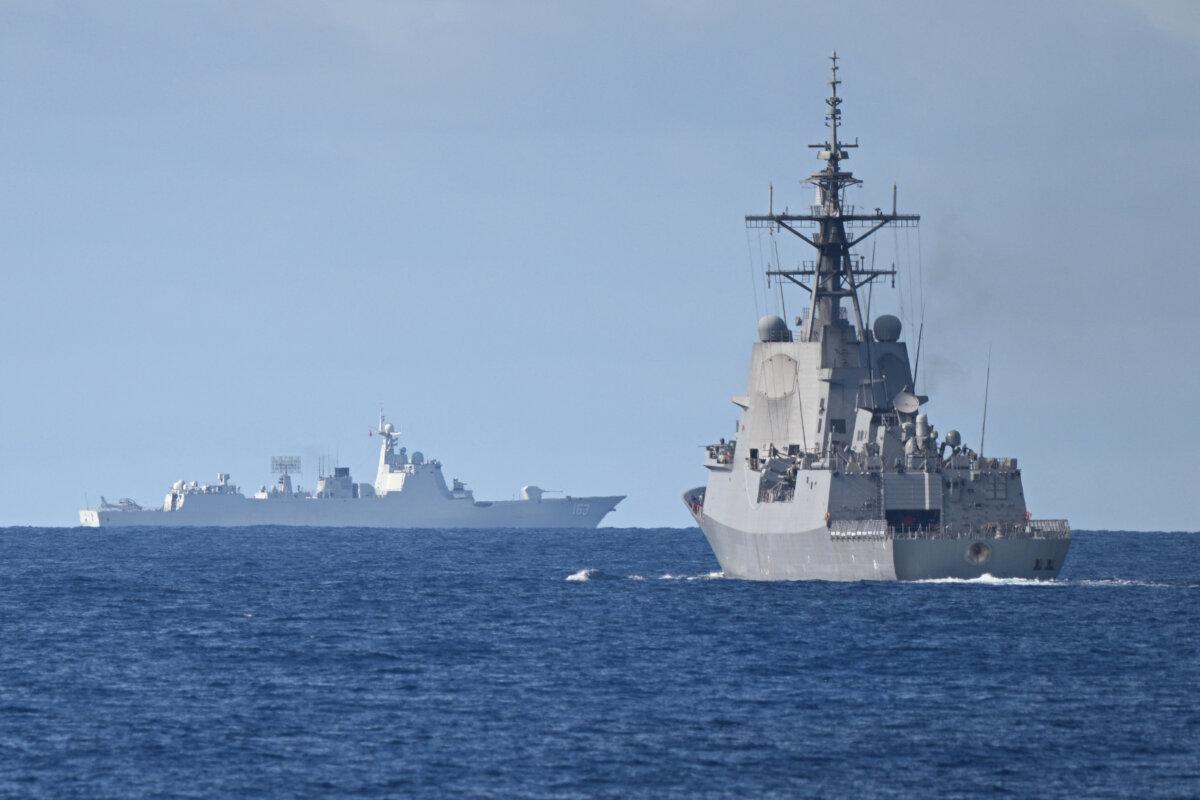
Taiwan didn’t fall under CCP rule when it took control of China in 1949, and Beijing seeks to bring the island under its rule.
An event this week, however, illustrated Ottawa’s dilemma on supporting Taiwan while trying not to upset Beijing ahead of Carney’s visit.
Two Liberal MPs from the government caucus, part of a delegation of parliamentarians visiting Taiwan, cut their visit short on Jan. 12 after receiving advice from Ottawa.
“It’s important that we avoid confusion with Canada’s foreign policy, given the overlap with the Prime Minister’s engagement in Beijing, which was only confirmed last week,” said MPs Marie-France Lalonde and Helena Jaczek in a statement to The Epoch Times.
Beijing does not have diplomatic ties with countries who recognize Taiwan as a sovereign nation.
The early return by the Liberal MPs was criticized by Conservatives as “rewarding” Beijing’s “intimidation.”
‘Pragmatic’ Engagement
The Carney government has said it using a “pragmatic” strategy to pursue increased engagement with China while having key disagreements.The CCP also uses that term in the China Daily editorial. It says the development of relations should be based on “pragmatic cooperation” not influenced by any other country, and that differences should be “properly” managed.
China Daily said this “can be viewed as a sign that the Carney government recognizes its predecessor’s mistakes.”
The Epoch Times contacted the Prime Minister’s Office for comment but did’t receive a response.
Liberal MP Kody Blois, the prime minister’s parliamentary secretary, said earlier this week that Carney seeks to “recalibrate” the relationship with China.
Carney “believes there’s opportunity for partnership, that there’s opportunity that China plays a role amongst the many countries that we are building relationships with, as part of our idea to be able to build out more trade around the world,” Blois told CBC News.
Asked about human rights in China and how Ottawa intends to navigate the issue, which speaks to a country’s values, Blois said what is important is opening diplomatics channels to have the “opportunity for a dialogue.”
The coalition asked the prime minister to address the plight of pro-democracy activists in Hong Kong and the repression against Conservative Joe Tay in Canada, as well as human rights violations against Uyghurs, Falun Gong practitioners, and Tibetans.
.
What's Your Reaction?
 Like
0
Like
0
 Dislike
0
Dislike
0
 Love
0
Love
0
 Funny
0
Funny
0
 Wow
0
Wow
0
 Sad
0
Sad
0
 Angry
0
Angry
0















Comments (0)