

Australia Races to Secure Fuel as China's Export Ban Deepens Energy Crisis
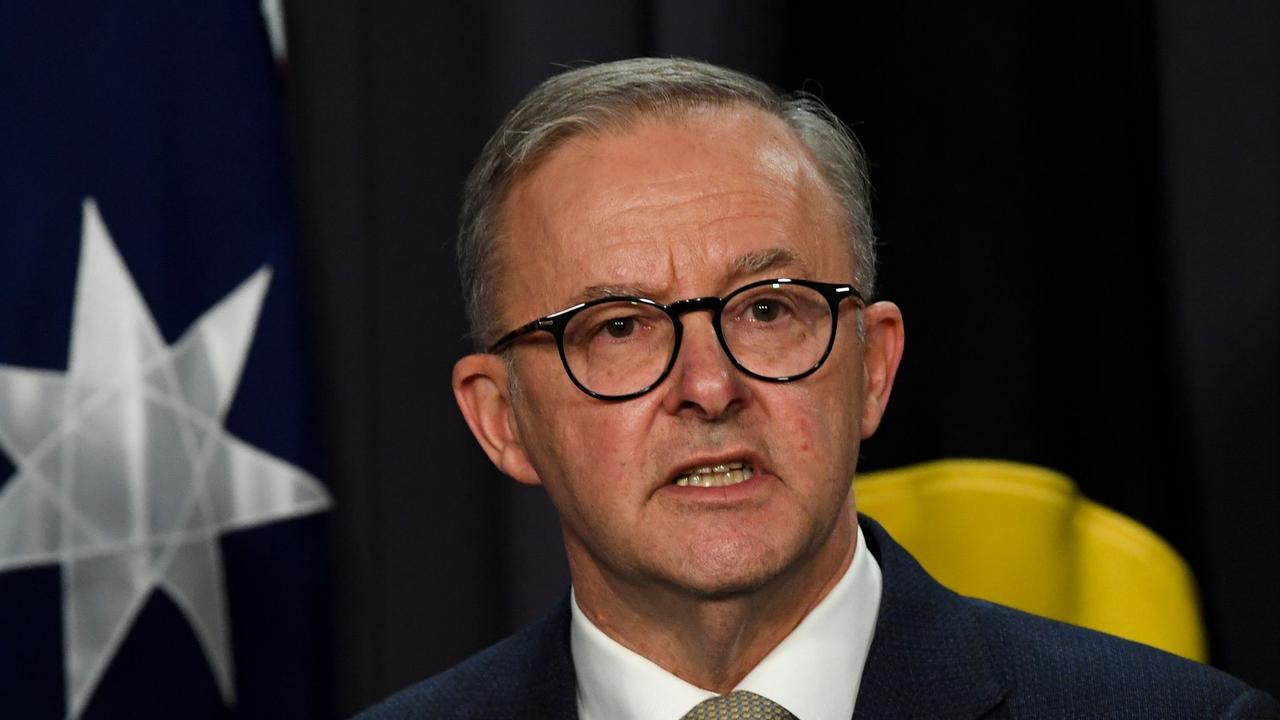
Australian Prime Minister Anthony Albanese held an emergency phone call with Chinese Communist Party (CCP) Premier Li Qiang on Tuesday, seeking assurances over regional fuel supply as a widening energy crisis — sparked by the ongoing war in Iran — continues to squeeze Asia's fuel markets. The two leaders discussed the importance of energy security and agreed to step up government-to-government communication so that both countries are working in support of regional energy stability, according to a statement from Albanese's office.

.
Albanese Calls Beijing, Flies to Singapore in Urgent Push to Stabilize Supply
Australian Prime Minister Anthony Albanese held an emergency phone call with Chinese Communist Party (CCP) Premier Li Qiang on Tuesday, seeking assurances over regional fuel supply as a widening energy crisis — sparked by the ongoing war in Iran — continues to squeeze Asia's fuel markets.
The two leaders discussed the importance of energy security and agreed to step up government-to-government communication so that both countries are working in support of regional energy stability, according to a statement from Albanese's office.
Speaking publicly afterward, Albanese described the exchange as constructive and forward-looking without disclosing specifics. He posted on social media that the conversation covered how the two nations can work together "for the benefit of our nations and our region."
Beijing's Talking Points Diverge Sharply From Canberra's
Despite the diplomatic tone from the Australian side, Beijing's official account of the call told a noticeably different story. According to China's state news agency Xinhua, Premier Li focused on green cooperation and electric vehicles — with no mention of energy security or fuel supply in the Chinese readout at all.
The discrepancy is telling. While Canberra is urgently seeking fuel supply assurances, Chinese authorities have quietly instructed oil refiners to halt fuel exports to protect the domestic market — a decision Beijing has not publicly acknowledged.
This kind of opacity is consistent with the CCP's pattern of managing information around economically sensitive decisions. The regime's refusal to officially confirm the export ban — while enforcing it in practice — has left trading partners in the dark and scrambling for alternative sources.
The Scale of Australia's Fuel Problem
The timing of the diplomatic push underscores just how exposed Australia is. The country relies on imports for roughly 90 percent of its refined petroleum products, most sourced from Asia.
China is Asia-Pacific's largest exporter of jet fuel and kerosene, but its shipments fell nearly 40 percent month-on-month in March, dropping to 204,000 barrels per day according to trade data firm Kpler. The impact was swift and severe.
As of mid-March 2026, Australia held approximately 29 to 32 days of jet fuel in strategic reserve — well short of the 90-day stockpile required of International Energy Agency members.
Australian mines have warned of potential shutdowns due to dwindling diesel supplies, while airlines across the region are adding fuel surcharges and considering grounding planes.
Singapore Trip Brought Forward
With the clock ticking, Albanese brought forward his planned trip to Singapore, now scheduled for April 9–11, where he will meet Prime Minister Lawrence Wong to discuss securing trade in essential supplies including diesel and liquefied natural gas.
Singapore is a logical partner. The city-state's refineries have remained operational throughout the crisis, and the two countries had already begun laying the groundwork for a supply arrangement. Singapore and Australia reached an agreement earlier to keep energy trade flowing, with Singapore's economic officials confirming the country's refineries are maintaining stable operations by drawing on diverse crude supplies.
A Regional Crisis With Deep Roots
The Iran war — now in its fifth week — has effectively closed the Strait of Hormuz (a narrow waterway through which roughly 20 percent of the world's oil normally flows). The International Energy Agency has called it the "largest supply disruption in the history of the global oil market."
China's fuel export ban — covering diesel, gasoline, and jet fuel — has removed a supplier responsible for roughly $22 billion in annual exports from the regional market, forcing countries to scramble for alternatives.
Diesel derivatives in Asia surged to $150 a barrel in mid-March, jet fuel climbed to $163, and gasoline reached nearly $140 — roughly double pre-war levels.
Australia, Bangladesh, and the Philippines are among the countries most heavily dependent on Chinese fuel deliveries. Several nations have formally asked Beijing to grant export exemptions, and sources indicate the CCP is considering allowing limited shipments to countries in greatest need — though no official announcement has been made.
The Bigger Picture: A Wake-Up Call for Australia
Australia's predicament is, in part, self-inflicted. Successive governments allowed domestic refining capacity to decline over decades, betting on cheap and reliable imports. Sydney Airport's chief executive has stated that the airport is completely reliant on imported jet fuel with no refinery capacity of its own.
The current crisis has exposed that vulnerability in stark terms. The broader regional response — with governments reverting to coal power, restarting nuclear reactors, and fast-tracking electric vehicle adoption — suggests the Iran war may permanently reshape Asia's energy strategy.
For Australia, the immediate task is keeping planes in the air and mines running. The longer task — rebuilding energy resilience — is one the country has delayed for too long.
-
Sources
- AAP / Canberra Times – Australia, China phone call focuses on energy security (April 8, 2026): https://www.canberratimes.com.au/story/9217267/australia-china-phone-call-focuses-on-energy-security/
- Capital Brief – Albanese speaks with Chinese Premier on Iran fuel crisis ahead of Singapore trip (April 8, 2026): https://www.capitalbrief.com/briefing/albanese-speaks-with-chinese-premier-on-iran-fuel-crisis-ahead-of-singapore-trip-6e4bc123-9eca-40e4-8c19-8d3136c08a3b/
- RTHK – Li, Albanese discuss energy, bilateral trade (April 7, 2026): https://gbcode.rthk.hk/TuniS/news.rthk.hk/rthk/en/component/k2/1850237-20260407.htm
- South China Morning Post – Australia and Japan face jet fuel supply crunch as China cuts exports (April 2026): https://www.scmp.com/economy/china-economy/article/3348642/australia-and-japan-face-jet-fuel-supply-crunch-china-cuts-exports
- The Conversation / Samantha Hepburn, Deakin University – China's ban on fuel exports is deeply worrying for Australian air travellers (March 2026): https://theconversation.com/chinas-ban-on-fuel-exports-is-deeply-worrying-for-australian-air-travellers-278313
- Modern Diplomacy – China's Fuel Export Freeze Deepens Asia's Energy Shortage (March 2026): https://moderndiplomacy.eu/2026/03/17/chinas-fuel-export-freeze-deepens-asias-energy-shortage/
- Fortune – Coal is back and nuclear is next: The Iran war is rewiring Asia's energy future (March 29, 2026): https://fortune.com/2026/03/29/iran-war-hormuz-asia-energy-crisis-coal-nuclear/
- Wikipedia – 2026 Iran war fuel crisis: https://en.wikipedia.org/wiki/2026_Iran_war_fuel_crisis
.
What's Your Reaction?
 Like
0
Like
0
 Dislike
0
Dislike
0
 Love
0
Love
0
 Funny
0
Funny
0
 Wow
0
Wow
0
 Sad
0
Sad
0
 Angry
0
Angry
0











Comments (0)