

As Military Purges Deepen, CCP’s Fourth Plenum to Test Xi Jinping’s Grip on Power: Analysts


.
In the latest shake-up within China’s top leadership, the Chinese Communist Party (CCP) announced on Oct. 16 the expulsion of nine senior military officers, including one of the two vice chairmen of the Central Military Commission (CMC) and a member of the CCP’s powerful Politburo.
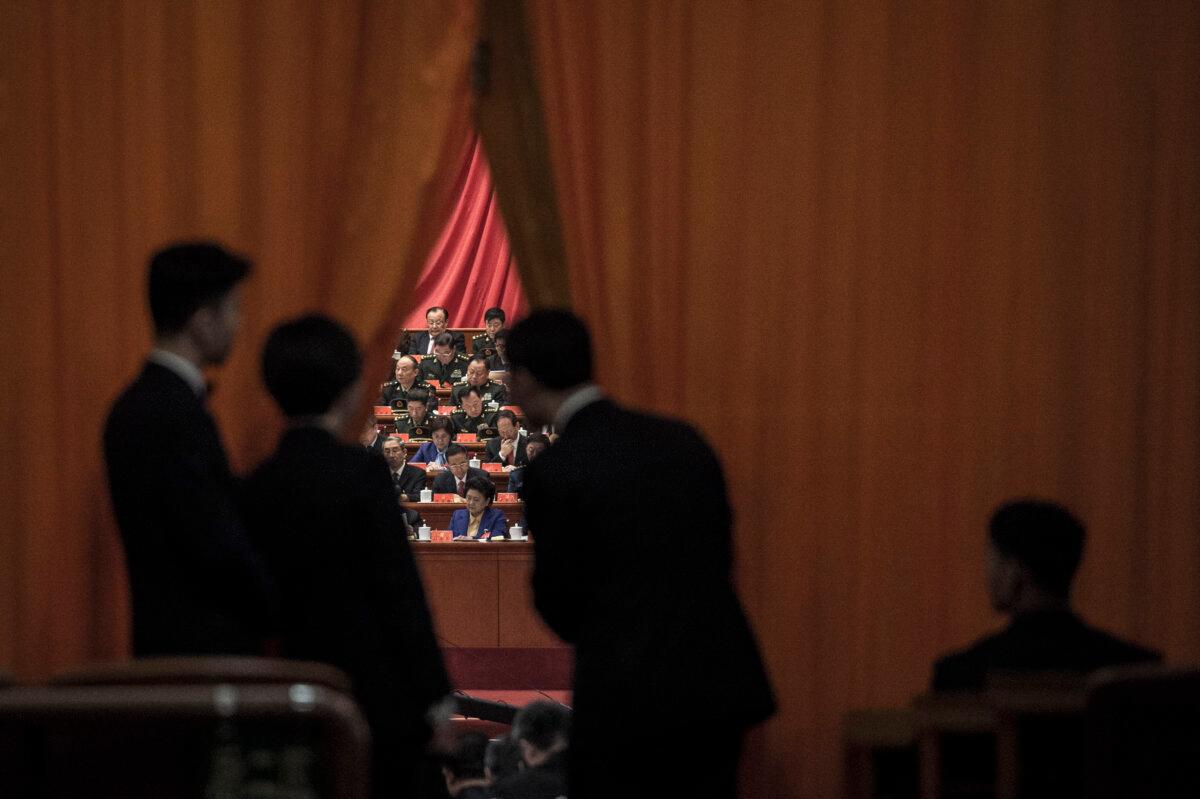
The announcement was made days before the CCP’s Fourth Plenum of the 20th Central Committee, scheduled for Oct. 20–23 in Beijing. The timing and scale of the shake-up have fueled speculation that the CCP’s political system may be entering a period of dramatic change.
Shrinking Attendance
The Fourth Plenum takes place midway through the current Central Committee’s five-year term, which began at the 20th CCP Congress in 2022 and will end in 2027. Analysts say attendance at the upcoming meeting could serve as a public barometer of how deep rumored internal purges have gone.China current affairs commentator Li Linyi told The Epoch Times that if the number of Central Committee members attending drops sharply, excluding those absent for health or official reasons, it could provide the clearest evidence yet of a large-scale power struggle within the CCP.
China analyst and freelance writer Du Zheng has counted 46 Central Committee members who have reportedly faced disciplinary or corruption charges since 2022, although only 19 of them have been officially announced as having been removed.
The announcements suggest that more military and political figures could be implicated. The removal of Central Committee members will also trigger replacements, a process that could reveal further shifts in loyalty and power.
“Even the new appointees [for the Party’s Central Committee] could be unpredictable,” said Taiwanese defense researcher Shen Ming-Shih, noting that past replacements have bypassed expected candidates due to corruption probes.
.

Getty Images, Baidu, Namuwiki, Public Domain, CCTV
.
A Test of Xi’s Grip on Power
Officially, the Fourth Plenum will focus on drafting China’s “15th Five-Year Plan,” which covers economic and social development goals from 2026 to 2030. However, political observers believe personnel changes and questions about CCP head Xi Jinping’s authority will dominate the closed-door discussions.U.S.-based physician and current affairs commentator Tang Jingyuan told The Epoch Times that the original agenda was focused on economic planning, but last week, Xi suddenly escalated trade tensions with the United States, extending China’s rare earth export controls globally.
“Xi Jinping suddenly provoked a trade war and has led to the Trump administration announcing to impose 100 percent tariffs on Chinese imports,” Tang said. “U.S. allies are also considering similar measures. This has thrown the leadership into confusion: should the meeting focus on immediate responses to the trade war, or return to long-term economic planning?”
According to Tang, the central question is whether Xi’s power will face erosion, either through formal redistribution among party elites or behind-the-scenes containment of his authority.
Shen agrees. “Even [U.S. President Donald] Trump has said Xi had a ‘bad moment,’” he said. “That shows the world is watching closely whether Xi’s dominance within the CCP is being challenged.”
Speculation about possible shake-ups has intensified. Some insiders wonder if personnel changes will be made to the Politburo Standing Committee, the CCP’s top decision-making body, or if the 24-member body might be expanded.
“If nothing changes at the top, that would signal Xi’s control remains firm,” Shen said. “But scandals like the Yu Menglong case, the Yang Lanlan case, and the public anger over Li Keqiang’s death have all turned scrutiny back on Xi himself.”
Potential Power Struggle Between CCP Factions
Both Shen and Tang warn that the Fourth Plenum could deliver unexpected turns. “There could be sudden announcements of criminal charges before or during the meeting,” Shen said. “In an extreme scenario, senior Party elders could pressure Xi to resign, or the military could propose his removal. If Xi refuses, it could even lead to a power struggle involving force.”Such scenarios have historical precedent. Shen noted that when former Chinese leader Jiang Zemin’s term as CMC chairman was due to end, the military pushed to extend it by two to three years and no one dared oppose it—a reminder that the Chinese military has always been a decisive political actor.
Tang believes the CCP’s political elites have split into three competing blocs: Xi’s loyalists, often called the “Xi faction”; a group of retired elder leaders aligned with former Premier Wen Jiabao, Wang Yang, and former Chinese leader Hu Jintao, who retain significant influence; and a third faction centered around senior generals such as CMC vice chairman Zhang Youxia and Liu Yuan.
“Like it or not, they [the military] have become the key force that could decide China’s political future,” he said.
.
Fourth Plenum a Turning Point
Fourth Plenums have often coincided with major turning points in CCP history. The 1979 meeting under former leader Deng Xiaoping marked the beginning of China’s economic reform era. A decade later, after the 1989 Tiananmen Square massacre, Party elders installed Jiang Zemin as leader at the Fourth Plenum, replacing Zhao Ziyang.In Xi’s era, the 2019 Fourth Plenum consolidated his “core leadership” status amid the U.S.–China trade war and Hong Kong’s pro-democracy protests, paving the way for tighter political control and the imposition of Hong Kong’s draconian National Security Law. Then came the pandemic, during which Xi’s “zero-COVID” policy devastated the economy and standard of living for everyday Chinese people.
Tang said that the Chinese regime is now entering a different era. “Cases like Yu Menglong’s death would have been quietly buried in the past,” he said. “But now they’re exploding into the international arena, and every crisis triggers new chain reactions, which will eventually impact the foundations of the CCP’s totalitarian rule.”
What's Your Reaction?
 Like
0
Like
0
 Dislike
0
Dislike
0
 Love
0
Love
0
 Funny
0
Funny
0
 Wow
0
Wow
0
 Sad
0
Sad
0
 Angry
0
Angry
0














Comments (0)