

As China Erects Chip-Import Barriers, an MIT Professor Blames CCP’s Military Ambitions


.
Analysts believe this may be an attempt to reduce dependence on U.S. technology and support the development of domestic chip manufacturing. The United States and China are building increasingly high barriers in the chip sector, and a renowned MIT business administration professor figures the Chinese Communist Party’s militaristic ambitions are one reason.
“I'd prefer there being just an open market and let the chips fall where they may, but people worried about security take a different position,” Michael Cusumano, SMR distinguished professor of management at MIT’s Sloan School of Management, told The Epoch Times.
“We’ve seen the Chinese government, President Xi [Jinping] in particular, be quite aggressive in Hong Kong with suppressing dissent and threatening the United States and Japan over the relationships with Taiwan. And so all of that leads to these worries in the United States about exporting our most advanced technology, because it could be used against us if it does come down to a military confrontation.”
Trump Approves H200 Export Amid National Security Concerns
On Jan. 13, the Department of Commerce announced that chip giant Nvidia had been approved to sell its second-most advanced semiconductor chip, the H200, in China, sparking strong opposition from some members of Congress and former officials.The day after the Commerce Department announced the export of H200 chips, Matt Pottinger, who served as a senior advisor on Asia during Trump’s first term, testified before Congress that the administration had gone astray in the field of artificial intelligence, and that allowing such chip sales would undermine its goal of winning the AI race.
Pottinger stated that selling H200 chips to China “would greatly advance Beijing’s military modernization, enhancing its capabilities across the board, including nuclear weapons, cyber warfare, drones, biological warfare, and intelligence and influence operations.” He added, “Congress needs to establish safeguards to prevent such mistakes from happening again.”
The Trump administration said its policy allows controlled sales of advanced chips to prevent Chinese companies from accelerating the development of domestically produced alternatives. White House AI director David Sachs stated that this move aims to maintain America’s technological leadership, ensuring American companies remain at the forefront of the global market rather than ceding ground to competitors.
CCP Forces Use of Domestically Produced Chips
Cusumano figured that the CCP’s move is intended to support the domestic chip industry.“I do think it’s the current policy of the Chinese government now to force Chinese companies to use local technology like Huawei chips, for example, and there’s one or two other companies. So I think the Chinese government does not want its companies to be dependent on the American technology.”
However, Chinese tech companies are eager to obtain Nvidia’s H200 chips. Reuters reported that Chinese companies are very interested in the H200 because its AI model training capabilities are currently unmatched by domestic products, which are better suited for inference.
.
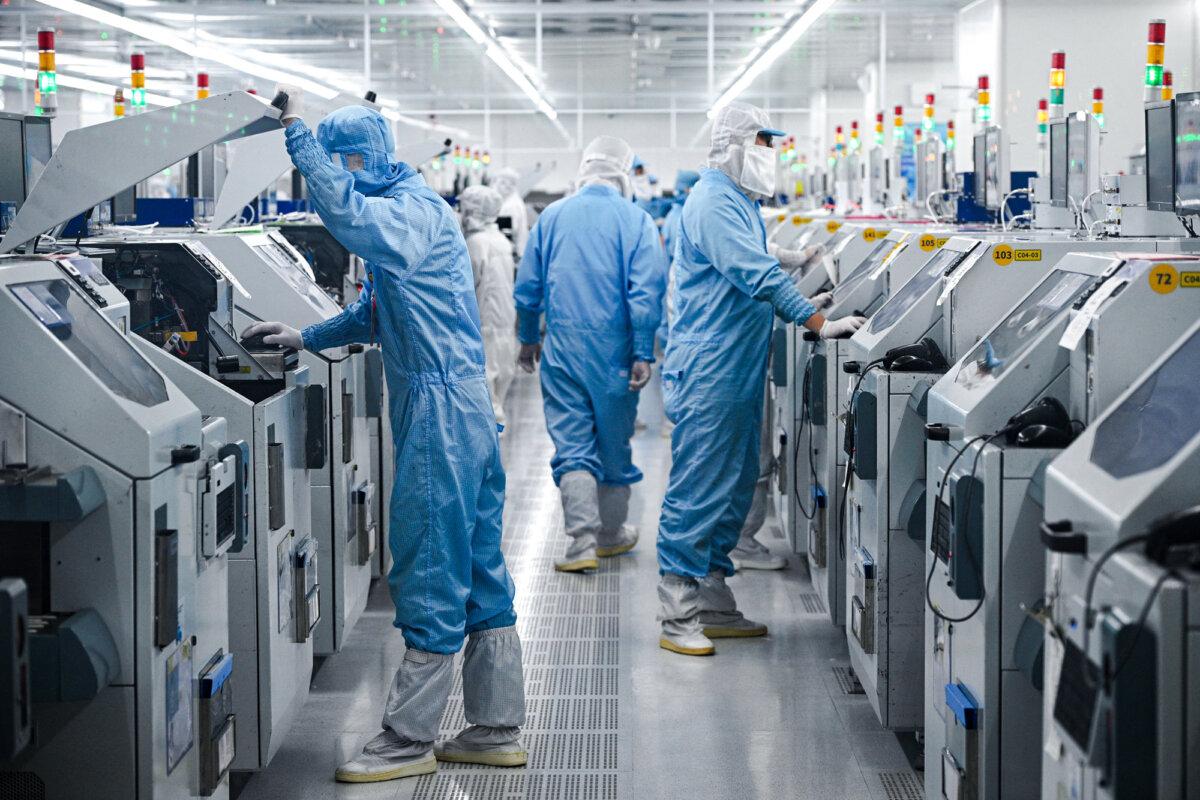
A Reuters review of more than 100 tender documents and academic papers revealed that top Chinese universities, data center companies, and entities with ties to the Chinese military also attempted to procure H200 chips through grey market channels.
Chinese Chips Lag Behind Nvidia Chips
The ban by Chinese customs dealt a heavy blow to these eager companies. The CCP is attempting to force Chinese companies to use domestically produced chips. However, the performance of Chinese chips lags behind Nvidia chips by three to five years.“One of the big problems,“ Cusumano said, ”is not only design, but the manufacturing of those chips. And right now, TSMC Taiwan has a monopoly on the manufacturing ability. And it’s TSMC in partnership with a Netherlands company, ASNL, which makes the most important photolithographic equipment for creating the actual designs on the chips. So those two companies basically have a monopoly. A couple of Japanese companies also produce some very important equipment. And so it’s not only Chinese companies that are behind, but also American companies. So that’s a really big problem, so I don’t think that’s going to be easy to solve. So the Chinese long-term bet, it might not actually work.”
Furthermore, Nvidia chips have a unique advantage in handling massive data streams.
Cusumano said: “The Huawei chips are actually designed more specifically for neural networks, whereas the NVIDIA GPUs are designed for graphics processing. So the NVIDIA chips need these software tools to make them very useful for AI. Huawei chips are more specifically designed for AI. So that’s a good thing. But the problem is they can’t handle the same transfer of information or data. We call that a bandwidth problem. Whereas the NVIDIA chips were designed for these very small graphic pixels, and so they can handle enormous amounts of very simple data streams. And it turns out that’s very useful for the generative AI models.”
Cusumano added that another advantage of Nvidia is the software tied to its chips.
“NVIDIA’s big advantage is not only the design of their GPUs, but it’s their software libraries and toolkit called CUDA, a Compute Unified Device Architecture, which about 80 percent, 80 to 90 percent of all generative AI software is written with that software technology. And NVIDIA gives it away for free. The problem is if you use that toolkit, then the software that you write only runs on the NVIDIA hardware. So that’s created this platform network effect between their free software and their very expensive GPUs. So that’s a lock-in that, of course, China does not like. Chinese companies do not like. Huawei has come up with its alternative, but it is several years behind what Nvidia has to offer.”
Despite Chinese tech companies’ eagerness to acquire Nvidia’s advanced chips, the Chinese government is willing to suffer short-term pain in order to achieve its long-term goal of technological self-sufficiency.
.
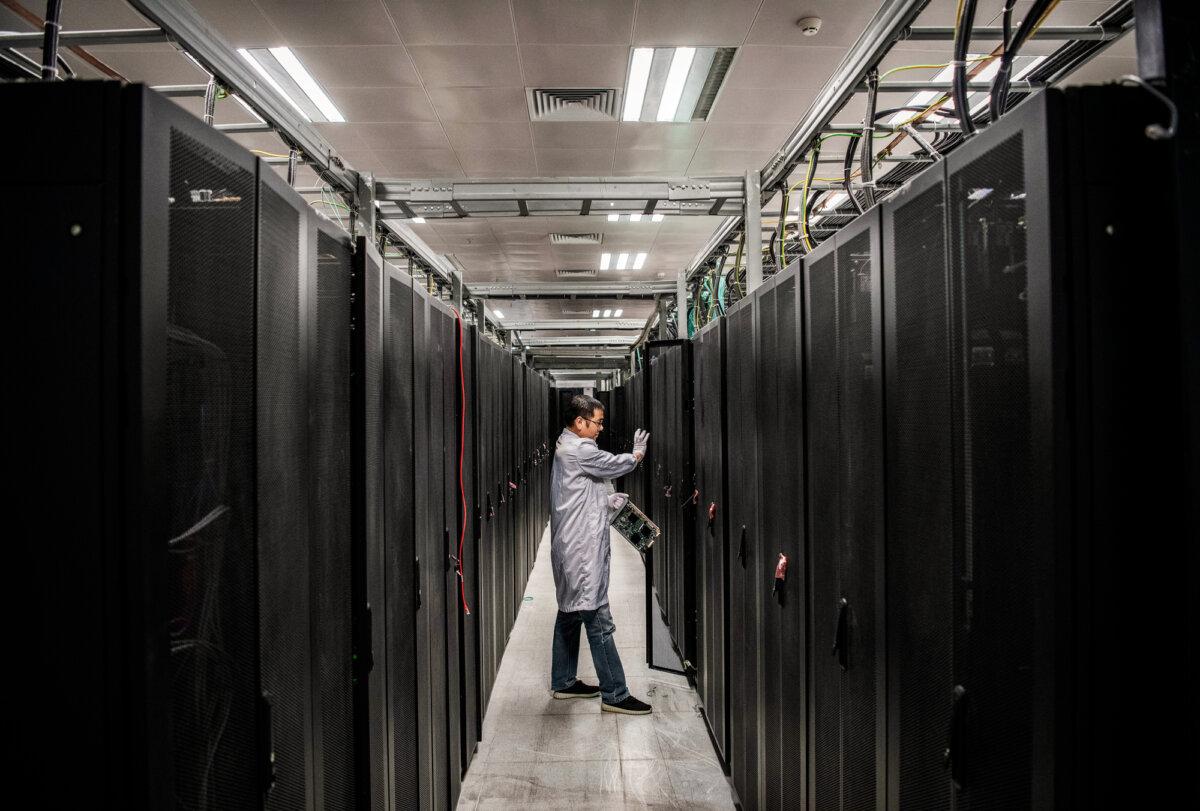
Chinese leader Xi Jinping has called on domestic semiconductor companies, universities, and research institutions to rebuild the entire supply chain domestically. This plan is heavily supported by Beijing’s “Big Fund,” which launched its third phase in 2024, allocating 344 billion yuan (about $49 billion) to invest in domestic chip manufacturing technology.
Furthermore, according to Reuters, the Chinese Communist Party requires domestic chip manufacturers to use at least 50 percent domestically produced equipment.
Rising Chip Barriers Between the US and China
As a business management and entrepreneurship expert, Cusumano does not want to see increasingly higher chip barriers between the United States and China.“Looking at the world through China versus America conflict [is one thing]. But there’s another point of view, which is why not just let the best technology be available to everybody and let the best technology win? And I think the Chinese companies have shown they think they are extremely good at software engineering and they’re very efficient. They produce very clever models, not necessarily inventing new technology, but using very good engineering principles. And they’ve shown that their models encourage us to develop better technology here. I don’t think it’s a good idea in terms of progress of technology to try to build walls around the West and around China.
Geopolitical Rivalry Leads to Chip Barriers
Cusumano acknowledges that from the perspective of U.S.-China geopolitical rivalry, mutual distrust in technology is justified.“People in the United States worry that Chinese companies and government will use this technology in advanced weapon systems, for example, controlling drones or attacking in cybersecurity areas. And so that’s why we’re nervous about having the most advanced technology available to China. Personally, I’m not so worried about it, but ... I think you can make an argument that those are valid worries from the American point of view. And from the Chinese point of view, you can make a valid argument that it’s dangerous for China to become, or to continue to be so dependent on American technology.”
Eighty-five years after Nazi Germany’s rule over much of Europe, a new storm is brewing in the Western Pacific. A newly emerging authoritarian state is undertaking the largest military buildup since World War II. While the CCP is not Nazi Germany, it is attempting to control the world’s most dynamic region and reshape the global order, at the expense of American interests to protect its own.
The most dangerous and likely trigger for a U.S.-China conflict is the Taiwan crisis. According to former CIA Director William Burns, Xi has ordered the People’s Liberation Army to prepare to seize Taiwan by force by 2027.
Cusumano believes that there shouldn’t be so many technological barriers between the United States and China. But reality has changed.
“In my opinion, it shouldn’t be that way. I'd rather leave Taiwan as it is and leave China as it is, but that doesn’t seem to be the policy of the Chinese government. So that’s why Americans are worried, and I think there’s some validity to their worries.”
.
What's Your Reaction?
 Like
0
Like
0
 Dislike
0
Dislike
0
 Love
0
Love
0
 Funny
0
Funny
0
 Wow
0
Wow
0
 Sad
0
Sad
0
 Angry
0
Angry
0

















Comments (0)