

Ancient Clay, Modern Science: How Bentonite May Help Your Gut Recover After Antibiotics
Antibiotics save lives — but they also damage the delicate bacterial ecosystem in our gut, sometimes for months. Bentonite clay, a volcanic mineral used in traditional medicine for centuries, is now being examined by researchers as a low-cost, natural aid for gut recovery. Here's what the science says, and what you need to know before trying it.

.
The Hidden Cost of Antibiotic Treatment
When a doctor prescribes antibiotics, the goal is to eliminate harmful bacteria causing an infection. The problem: antibiotics can't always tell the difference between the bad actors and the billions of beneficial microbes that keep your gut healthy.
Even after a course of antibiotics ends, certain bacterial populations may fail to recover to their previous levels. The result is a long-term reduction in microbial diversity that can leave the gut vulnerable to secondary infections and contribute to systemic problems such as metabolic disruption and immune dysregulation.
Antibiotics also alter the production of short-chain fatty acids — compounds essential for maintaining the intestinal barrier and regulating immune responses. The damage, in other words, goes well beyond an upset stomach.
What Is Bentonite Clay?
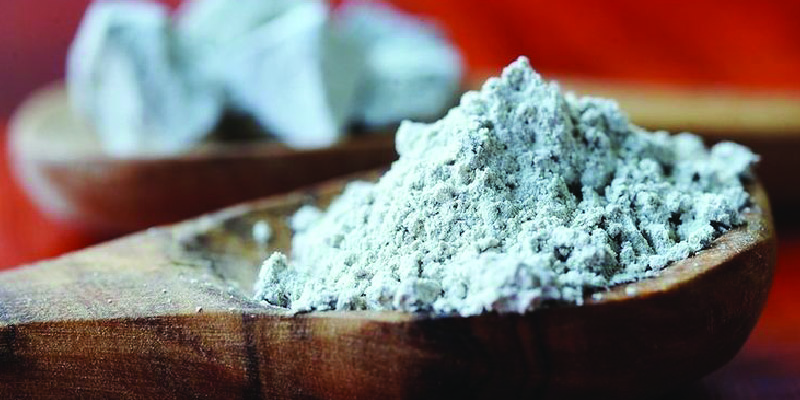
Bentonite clay is a fine, grayish-green powder derived from ancient volcanic ash. It takes its name from Fort Benton, Wyoming, where large natural deposits were first identified. For thousands of years, cultures across the world have used it to treat digestive complaints, purify water, and heal wounds.
What makes bentonite scientifically interesting is its unusual physical structure. The clay carries a naturally negative electrical charge across most of its surface, giving it a powerful ability to attract positively charged molecules — much like a magnet attracting iron filings. It also has an exceptionally large surface area relative to its weight, thanks to a layered structure full of microscopic platelets and pores.
These properties make it a remarkably effective adsorber — meaning it can bind to substances and carry them out of the body without being absorbed itself.
The Science: Can Bentonite Protect the Gut During Antibiotic Treatment?
A 2024 study published in Medical Hypotheses (ScienceDirect) specifically examined bentonite's potential role in protecting the gut from antibiotic side effects. The researchers concluded that bentonite clay shows genuine promise in safeguarding the intestinal microbiota from antibiotics and in reducing both the frequency and severity of pseudomembranous colitis — a severe form of gut inflammation associated with antibiotic use.
The proposed mechanism is straightforward: unlike enzymatic methods of antibiotic removal, bentonite operates as a cost-effective and low-risk physical adsorbent. It can bind residual antibiotic molecules in the gut, limiting their exposure to beneficial bacteria. The clay's antibacterial, prebiotic, and anti-inflammatory characteristics further contribute to its protective profile, along with its known wound-healing potential on the intestinal lining.
A separate 2024 review cited in ScienceDirect also noted that conventional activated charcoal, anion exchange resins, and chitosan microspheres are already established for intestinal antibiotic adsorption — and bentonite clay may protect the gut microbiota through similar mechanisms.
What Bentonite Does in the Digestive Tract
Bentonite's particles are extremely fine — less than two micrometers in diameter. When swallowed with water, they swell dramatically and form a gel-like coating along the intestinal walls. This action has several documented effects:
- Binding residual antibiotics: The clay's negative charge attracts positively charged antibiotic molecules, trapping them and escorting them out of the body before they can further disrupt gut bacteria.
- Soothing the intestinal lining: The protective gel can reduce irritation in the gut wall — particularly relevant after antibiotic-associated diarrhea.
- Absorbing dietary toxins: Animal studies have shown bentonite can bind aflatoxins — dangerous mold-derived compounds found in improperly stored grain. This is already being used as a dietary intervention in parts of Africa and Asia to reduce aflatoxin bioavailability before the toxins reach the bloodstream.
- Adding bulk to stool: Its swelling capacity helps firm up loose stools — a common side effect of antibiotics — by increasing stool mass.
The Safety Question: A Critical Look
Here is where the picture becomes more complicated — and where careful consumer judgment is essential.
In 2016, the FDA issued a public warning about a product called "Best Bentonite Clay" after laboratory testing revealed elevated lead levels. The agency warned that the product posed a lead poisoning risk, noting that lead exposure can cause serious damage to the central nervous system, kidneys, and immune system. This was not an isolated incident.
The FDA has issued multiple warnings against specific bentonite clay brands after laboratory testing found lead concentrations as high as 37.5 parts per million (ppm). To put that in perspective, the safety threshold for lead in fruit juice is just 0.05 ppm.
The reason contamination occurs is geological: because bentonite is a natural material mined from the earth, it can contain heavy metals. If you use bentonite topically, the risk from trace contaminants is lower than with internal use, since intact skin provides a reasonable barrier. When ingested, however, stomach acid can increase the bioavailability of any contaminants present.
A 2019 review in a toxicology journal examined commercial bentonite products and found that many exceeded safe limits for heavy metals. Clinical data on internal use remain scarce, with most studies focused on topical applications.
The bottom line: bentonite clay is not a standardized pharmaceutical product. Quality varies enormously depending on the source and manufacturer.
How to Use Bentonite Clay Safely
If you decide to try food-grade bentonite clay after a course of antibiotics, the following precautions are essential:
Before you start:
- Consult your doctor or pharmacist — especially if you take prescription medications, have kidney disease, or are pregnant.
- Choose a certified food-grade product that has been independently tested for heavy metals. Do not assume "natural" means safe.
- Use wooden or plastic utensils when preparing bentonite; metal can interact with its mineral charge.
While taking it:
- Drink plenty of water throughout the day to help move the clay through your digestive tract and prevent constipation.
- Take bentonite at least two hours away from any medication or meal, to avoid the clay adsorbing nutrients or drug molecules you actually want your body to absorb.
- Use bentonite only after completing your prescribed antibiotic course — not during — unless specifically directed by a healthcare professional.
- Limit internal use to a maximum of two weeks as a short-term recovery aid. For any longer-term use, seek medical advice.
Signs to stop immediately:
- Muscle weakness, cramping, or tingling — these may indicate low blood potassium (hypokalemia), which can be a serious risk.
- Signs of constipation or difficulty with bowel movements; excessive clay intake can slow or even block the digestive tract.
A Simple Recipe for Internal Use
For those who have cleared internal use with their healthcare provider, here is a standard starting approach:
Ingredients:
- ¼ to ½ teaspoon food-grade bentonite clay
- 8 ounces (240 ml) of water or herbal tea
Instructions: Stir the clay slowly into the liquid — it takes several minutes to dissolve and may initially clump. Drink the full glass. You can divide the daily amount between morning and evening if preferred.
The Bigger Picture: Bentonite as One Tool Among Many
Bentonite clay is not a cure-all, and it is not a replacement for the established strategies of post-antibiotic recovery. Probiotics such as Bifidobacterium and Lactobacillus help replenish beneficial bacteria lost during antibiotic treatment and accelerate microbiota recovery. Prebiotics — plant fibers that feed beneficial microbes — further support this restoration. A fiber-rich diet, fermented foods, and adequate hydration remain the backbone of gut recovery.
What bentonite may offer is a complementary short-term support: a way to physically remove residual antibiotic molecules from the gut before they cause additional harm. The 2024 research is encouraging, but it remains preliminary. Larger, randomized human trials are still needed before firm clinical recommendations can be made.
As with all natural remedies, the key is informed, cautious use — not enthusiasm based on marketing.
.
Sources
-
Heydari R, Abiri R, Rezaee-Shafe H. Evaluating bentonite clay's potential in protecting intestinal flora and alleviating pseudomembranous colitis following antibiotic usage. Medical Hypotheses, 2024. https://www.sciencedirect.com/science/article/abs/pii/S0306987724001865
-
NIH/PMC: The Lasting Imprint of Antibiotics on Gut Microbiota: Exploring Long-Term Consequences and Therapeutic Interventions, 2025. https://pmc.ncbi.nlm.nih.gov/articles/PMC12165447/
-
ScienceDirect: Engineered probiotics that produce antibiotic binding sites, 2024. https://www.sciencedirect.com/science/article/abs/pii/S0306987724003013
-
ScienceInsights: What Is Bentonite? Formation, Uses, and Safety, 2026. https://scienceinsights.org/what-is-bentonite-formation-uses-and-safety/
-
U.S. Food and Drug Administration: FDA Warns Consumers Not to Use "Best Bentonite Clay", 2016. https://www.fda.gov/Drugs/DrugSafety/ucm491396.htm
-
Medical News Today: Benefits of bentonite clay: How to use it and side effects. https://www.medicalnewstoday.com/articles/325241
.
What's Your Reaction?
 Like
0
Like
0
 Dislike
0
Dislike
0
 Love
0
Love
0
 Funny
0
Funny
0
 Wow
0
Wow
0
 Sad
0
Sad
0
 Angry
0
Angry
0












Comments (0)