

Iran Deepens Ties With Russia and China as Trump Declares "Economic D-Day"
Tehran is racing to build a financial and military lifeline with Moscow and Beijing as President Trump unveils what he calls the most sweeping economic campaign ever launched against a single nation. Analysts warn that Iran's outreach to BRICS and the Shanghai Cooperation Organization is turning the country into a "linchpin" connecting hostile state powers with regional terror proxies. Fresh reporting also points to Russian arms shipments reaching Iran across the Caspian Sea.

.
Trump Announces "Economic D-Day"
President Donald Trump used a Truth Social post on Wednesday evening to announce what he called the "most crushing economic operation ever taken against any country," aimed squarely at Iran. He described the measure as an "ECONOMIC D-DAY" and warned that any nation helping Tehran evade sanctions — through oil smuggling, currency swaps, front companies, or shipping registries — would face "tremendous" consequences.
The announcement builds on Operation Economic Fury, the pressure campaign the administration has run since earlier this year, and comes as the broader military confrontation between the United States, Israel and Iran drags on with no resolution in sight. Treasury Secretary Scott Bessent had signaled the shift days earlier, saying Trump had ordered his department to apply "maximum pressure" on the Iranian regime.
Trump's rhetoric was characteristically blunt: he claimed Iran's navy and air force had been crippled, its military factories reduced to rubble, and its currency in free fall. Independent reporting has not verified the full extent of these claims, but they underline how central economic warfare has become to the White House's Iran strategy.
.
Tehran's Pivot to Moscow and Beijing
Regional security analysts say Iran is responding to this pressure not by seeking compromise, but by deepening its integration with the two powers most capable of shielding it from Western sanctions: Russia and China. Behnam Ben Taleblu, senior director of the Iran Program at the Foundation for Defense of Democracies, told Fox News Digital this week that Tehran is working to "maximize its enmeshment" with countries that have themselves weathered heavy U.S. and Western pressure.
According to Taleblu, Iran sees groups such as BRICS — the economic bloc anchored by Brazil, Russia, India, China and South Africa — and the China- and Russia-led Shanghai Cooperation Organization as vehicles to blunt American economic leverage and chip away at the dominance of the U.S. dollar in global trade.
.
A Financial Lifeline Through the BRICS Bank
Iran's clearest institutional move has been toward the New Development Bank, the BRICS-founded lender often called the "BRICS Bank." Central Bank of Iran Governor Abdolnasser Hemmati told state media in mid-August that Iranian membership was imminent, calling the bank the most important achievement of BRICS cooperation and expressing hope for expanded monetary ties with other member states.
Reuters reported that the bank's own communications office could not confirm Iran's accession, and other outlets covering the same BRICS finance meeting in India noted that Tehran has pursued NDB membership since joining the bloc in 2024 without yet securing it. Even so, the push illustrates how central alternative financial infrastructure has become to Iran's survival strategy as its wartime economy buckles under inflation, a collapsing currency and diminished growth.
Trump has previously described BRICS policy as "anti-American" and has floated tariffs against countries aligned with the bloc's dedollarization efforts.
.
Russian Arms Flow Across the Caspian Sea
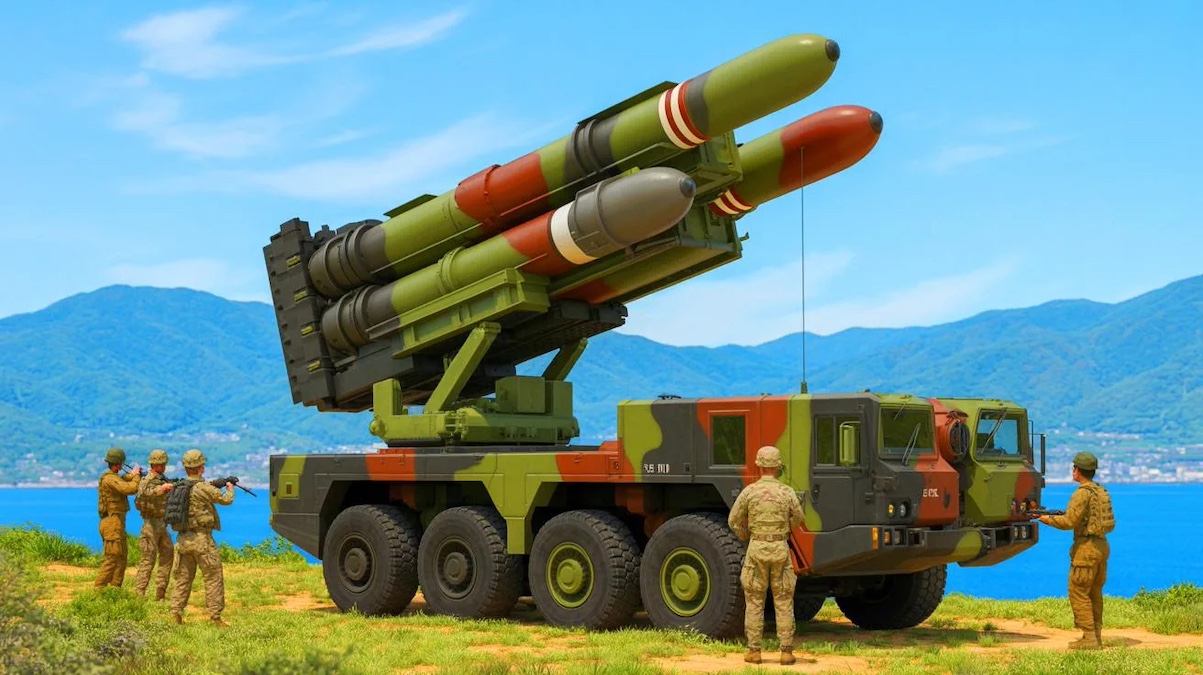
Iran's outreach is not limited to finance. NBC News reported on August 17, citing a European government document verified by a Western official, that Russia has shipped ammunition, drone components and TNT to Iran's Amirabad port via more than two dozen vessels crossing the Caspian Sea. The explosive material is reportedly used to fill warheads for Iranian ballistic missiles and drones — weapons systems strained by months of U.S. and Israeli strikes.
A former CIA analyst told NBC that Iran's reliance on Russian supplies suggests that Israeli and American strikes have degraded Tehran's own production capacity, forcing it to lean on foreign suppliers, at least in the short term, to rebuild depleted stockpiles.
The military relationship runs both ways: Iran has for years supplied Russia with Shahed-series drones for use against Ukraine, some of which Moscow has rebranded as "Geran" drones. Analysts say this reciprocal arrangement — weapons and know-how flowing between Moscow and Tehran even as both remain locked in separate confrontations with the West — reflects a deepening authoritarian partnership rather than a one-off transaction.
.
An "Axis of Aggressors" Meets an "Axis of Resistance"
Taleblu frames Iran's position within two overlapping networks: an "Axis of Aggressors" made up of authoritarian states — Russia, China and North Korea — hostile to the U.S.-led order, and Iran's own "Axis of Resistance," the web of regional proxies including Hamas, Hezbollah, Iraqi Shiite militias and the Houthis.
"The linchpin between the state threats the U.S. faces in the 21st century, from the Axis of Aggressors, and the non-state threats in the Middle East, is the Islamic Republic of Iran," Taleblu said, describing Tehran as a bridge that channels money, weapons and technology from authoritarian states down to non-state militant groups.
That dual role is a central reason Washington views Iran's deepening relationship with Beijing and Moscow as more than a routine sanctions-evasion story. Beijing, which continues to face international criticism over human rights abuses at home — including its long-running persecution of Falun Gong practitioners, Uyghurs and other religious and ethnic minorities — has positioned itself as an economic and diplomatic backer of Tehran's regime even as it faces its own credibility problems abroad.
.
Outlook
Even if Iran's push for full BRICS Bank membership stalls, as it has so far, the broader political, economic and military cover it receives from Moscow and Beijing gives Tehran room to absorb Trump's new sanctions campaign rather than capitulate to it. Taleblu argues that Washington policymakers need to recognize how tightly these state relationships are becoming interwoven — and that the "authoritarian axis" may currently be better at managing its internal frictions than the Western alliance system is at maintaining unified pressure.
With Trump signaling that economic measures, not further military escalation, will define the next phase of the confrontation, the coming weeks are likely to test whether sanctions enforcement can outpace Iran's efforts to build alternative financial and military pipelines through Russia and China.
.
Sources:
- Reuters – Iran to join BRICS development bank soon, central bank governor says: https://finance.yahoo.com/economy/policy/articles/iran-join-brics-development-bank-080750525.html
- NBC News – Russia is shipping explosives to Iran to bolster its missile and drone arsenal in U.S. war: https://www.nbcnews.com/politics/national-security/russia-shipping-explosives-iran-bolster-missile-drone-arsenal-us-war-rcna592892
- Al Jazeera – Trump announces 'most crushing economic operation ever' against Iran: https://www.aljazeera.com/news/2026/8/19/trump-announces-most-crushing-economic-operation-ever-against-iran
- CNBC – Iran looks to join BRICS bank as war with U.S. drags on: https://www.cnbc.com/2026/08/13/iran-war-brics-bank.html
- Times of Israel – Iran to join BRICS development bank soon, central bank chief says: https://www.timesofisrael.com/iran-to-join-brics-development-bank-soon-central-bank-chief-says
.
What's Your Reaction?
 Like
0
Like
0
 Dislike
0
Dislike
0
 Love
0
Love
0
 Funny
0
Funny
0
 Wow
0
Wow
0
 Sad
0
Sad
0
 Angry
0
Angry
0












Comments (0)