

China's Top Diplomat Courts Seoul as Trump Reshapes Korean Peninsula Diplomacy
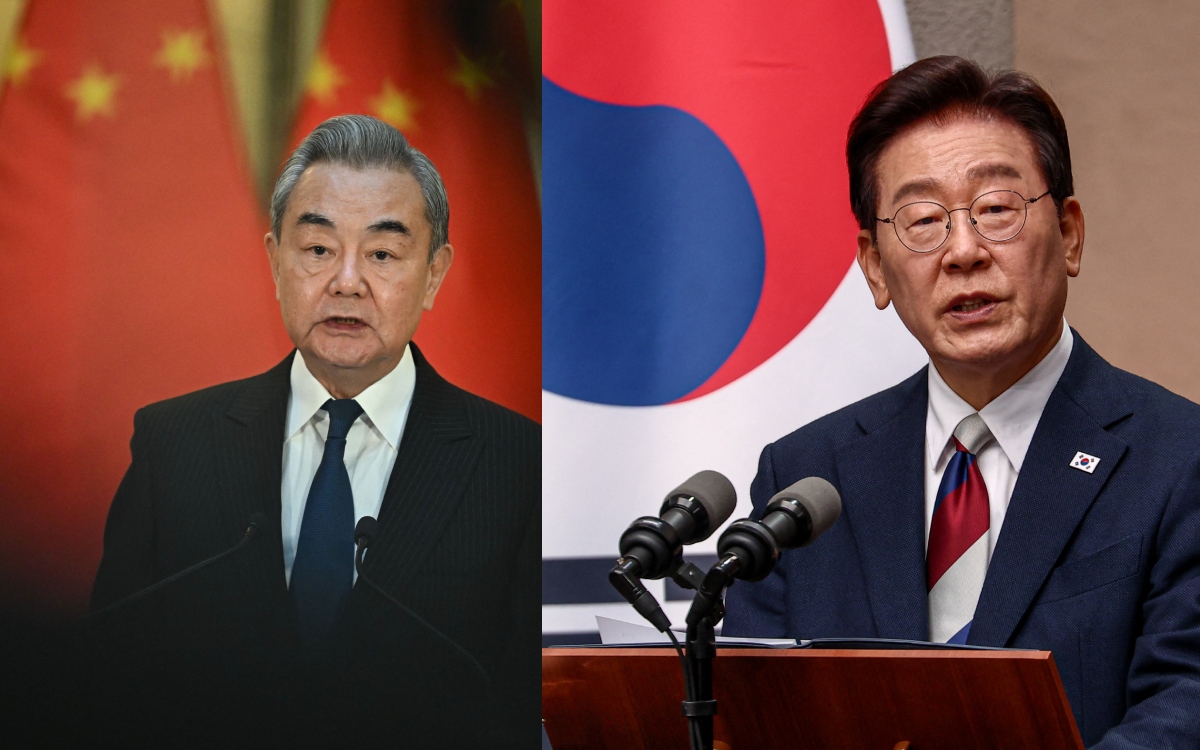
Chinese Foreign Minister Wang Yi arrived in Seoul this week for his first bilateral visit to South Korea in five years, meeting with Foreign Minister Cho Hyun and President Lee Jae-myung. The trip follows US President Donald Trump's decision to scale back joint military drills with Seoul as part of a renewed push to re-engage North Korean leader Kim Jong Un. Beijing is using the moment to deepen ties with Seoul while South Korea pursues a possible summit between Lee and Chinese leader Xi Jinping later this year.

.
A Rare Visit, Freighted With Meaning
Wang Yi's two-day trip to Seoul, which began Wednesday, is his first bilateral visit to South Korea since 2021. He held talks and a dinner with Foreign Minister Cho Hyun on Wednesday evening, and is set to meet President Lee Jae-myung and National Security Adviser Wi Sung-lac on Thursday. The agenda: bilateral relations, the security situation on the Korean Peninsula, and broader regional affairs.
The timing is no accident. Wang's arrival comes just days after Washington and Seoul scaled back their joint military exercises, a move Trump said he personally ordered because of his "very good relationship" with Kim Jong Un. Trump has also signaled he is open to meeting the North Korean leader again, a notable shift after years of stalled diplomacy.
Beijing's Calculated Silence
China, which remains North Korea's only formal treaty ally, has been careful not to comment directly on Trump's outreach to Pyongyang. Instead, a Chinese Foreign Ministry spokesperson repeated Beijing's long-standing formula on Wednesday, saying that peace on the Korean Peninsula and a political settlement serve "the common interests of all parties."
That kind of carefully worded restraint is typical of the Chinese Communist Party's diplomatic playbook: publicly non-committal, while working behind the scenes to preserve its own leverage over Pyongyang. Beijing has watched Trump's Kim outreach with unease, wary of being sidelined on an issue at its own doorstep.
Seoul's Balancing Act
For President Lee, the visit is an opportunity to advance his stated goal of "peaceful coexistence" with North Korea. Lee has also proposed multilateral talks among the parties to the 1950–53 Korean War to work toward a lasting peace agreement — an ambitious diplomatic opening that would require buy-in from Washington, Beijing, and Pyongyang alike.
Cho Hyun told South Korea's parliament earlier Wednesday that he expected to discuss the recently scaled-back military exercises with Wang. Seoul's Foreign Ministry is also working to arrange a summit between Lee and Xi Jinping on the sidelines of the APEC summit in Shenzhen this November, where Lee is expected to attend. It would follow Lee's state visit to China in January, when he held talks with Xi.
Wang's Seoul trip also follows a period of intensified Chinese-North Korean engagement: Wang visited Pyongyang in April, and Xi followed with his own state visit to North Korea in June — a sequence that had raised concern in Seoul about Beijing's growing footprint on the peninsula even before this week's visit.
A Test for Washington's Regional Standing
Trump's decision to cut back the joint drills has unsettled some in Seoul, reportedly catching officials there by surprise. It also feeds into a broader narrative, one that the Trump administration would likely frame differently: rather than retreat, the administration has argued that easing military friction with Pyongyang and pursuing direct dialogue with Kim is a pragmatic path toward reducing tensions and cutting costly, largely symbolic drills — a more results-oriented approach than decades of stalemate diplomacy under previous administrations.
Whether that opens real space for denuclearization talks, or instead hands Beijing more room to expand its regional influence, remains an open question.
What Comes Next
Wang's visit sets the stage for a busy diplomatic season. South Korea is pushing for a Lee-Xi summit in Shenzhen in November, while Trump continues to signal interest in a renewed encounter with Kim Jong Un. How these overlapping tracks — Washington's outreach to Pyongyang, Seoul's balancing act between the US and China, and Beijing's own interests in North Korea — intersect will shape the security picture on the peninsula well into next year.
.
Sources
- Reuters – "China's Wang Yi in South Korea for talks amid Trump push to revive North Korea diplomacy" – https://www.reuters.com/world/china/chinas-wang-yi-south-korea-talks-amid-trump-push-revive-north-korea-diplomacy-2026-08-19/
- The Korea Herald – "Chinese FM Wang Yi visits Seoul as Korea seeks momentum for multiparty Korean War end talks" – https://www.koreaherald.com/article/10845782
- Korea JoongAng Daily – "China's Wang Yi to visit South Korea for talks on North Korea and regional security" – https://www.koreajoongangdaily.com/korea/chinas-wang-yi-to-visit-seoul-amid-korean-peace-push/12829967
- The Japan Times – "China's top envoy to visit Seoul as Trump shakes U.S.-South Korea ties" – https://www.japantimes.co.jp/news/2026/08/18/asia-pacific/politics/wang-yi-china-south-korea/
- Reuters – "North Korea denounces US-South Korea joint military drills, KCNA says" – https://www.reuters.com/world/asia-pacific/north-korea-denounces-us-south-korea-joint-military-drills-kcna-says-2026-08-18/
.
What's Your Reaction?
 Like
0
Like
0
 Dislike
0
Dislike
0
 Love
0
Love
0
 Funny
0
Funny
0
 Wow
0
Wow
0
 Sad
0
Sad
0
 Angry
0
Angry
0











Comments (0)