

What Looks Upbeat in China’s Economy Comes With Reservations


.
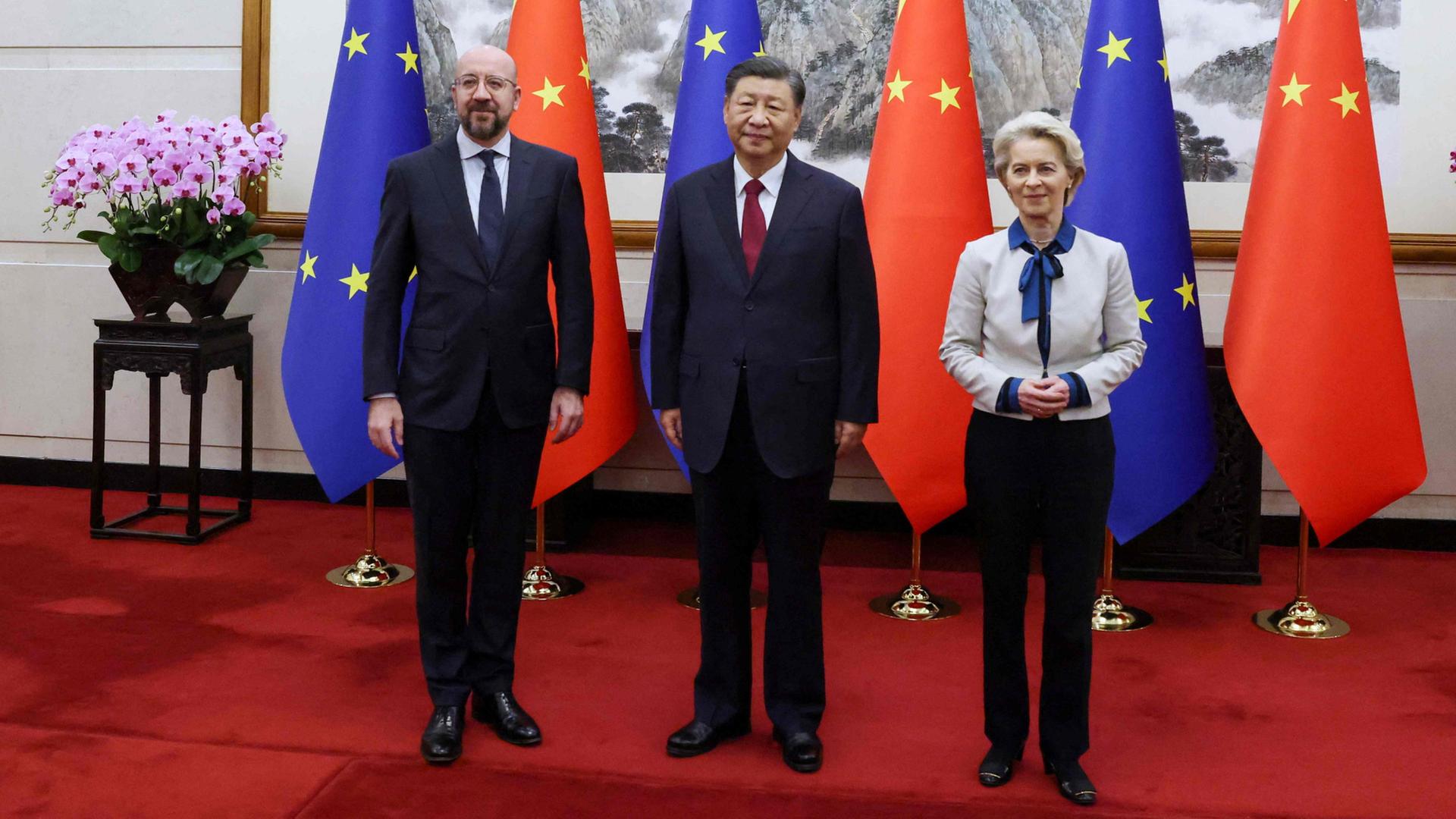
Recent economic news from China carries two points of light. First, Beijing has reached an agreement with the European Union (EU) that could relieve some of the tariff pressure on Chinese-made electric vehicles (EVs). Second, the youth unemployment rate has slightly edged down.
While both bits of news say something positive in an otherwise beleaguered economy, neither speaks to anything approaching a fundamental fix or even a movement in that direction.
The deal with Europe has some novel and interesting aspects. European officials had originally imposed tariffs on Chinese-made EVs because Brussels claimed that Beijing heavily subsidizes EV producers, enabling them to sell at extremely low prices in Europe. The Europeans argued that this kind of unfair competition had placed the whole European auto industry in jeopardy.
The accord sets a minimum price for Chinese-made EVs sold in the EU, intended to offset the effect of subsidies Beijing provides to Chinese producers. Compliance will need to be tested on a case-by-case basis, but the prospects for Chinese EV sales in European markets should improve. Those sales levels will, of course, fall short of what they might have been had lower prices prevailed, but they should run higher than if the EU tariffs had remained in place.
The relatively imaginative shape of this agreement has the potential to serve as a model in other disputes with other countries, for instance, between China and Brazil, or Canada, or even the United States. The agreement does indeed relieve tensions.
Nonetheless, the new arrangement leaves untouched other points of trade friction in other industries, such as semiconductors, pharmaceuticals, and rare-earth elements. Nor does the agreement address the underlying problem of Beijing’s trade practices that often burden foreign companies wanting to sell in China while subsidizing domestic companies or by forcing technology transfers, practices that engendered Western and Japanese hostility to China trade in the first place.
On the labor front, Beijing’s National Bureau of Statistics reports that the jobless rate for people between the ages of 16 and 24 years old fell to 16.5 percent of that workforce in December, the most recent period for which data are available, from 16.9 percent last November. This rate compares favorably with the 18.9 percent rate recorded last August when recent university graduates flooded into the labor market.
The Bureau also reports that unemployment among those aged 25 to 29 fell to 6.9 percent in December from 7.2 percent in November. The overall unemployment rate held steady at 5.1 percent.
While this news no doubt makes for pleasant reading among Chinese authorities, it says little about China’s underlying labor problem. Years of low fertility rates have left the country with too few entrants to the workforce to fill vacancies created by the large segment of the population that is retiring. At the same time, Beijing’s long-standing push for more university graduates, especially in engineering and science, has created many more candidates in these areas than there are positions.
The result is a dire shortage of blue-collar workers—hence the relatively low overall unemployment rate—while at the same time, the nation cannot employ many of its recent university graduates—hence the high youth unemployment rate. In this context, minor month-to-month fluctuations in the figures mean little.
What's Your Reaction?
 Like
0
Like
0
 Dislike
0
Dislike
0
 Love
0
Love
0
 Funny
0
Funny
0
 Wow
0
Wow
0
 Sad
0
Sad
0
 Angry
0
Angry
0















Comments (0)