

Trump Administration Ramps Up Funding to Counter CCP Influence Across the Americas, Africa and Asia
The U.S. State Department is preparing to spend hundreds of millions of dollars on new programs aimed at pushing back against the Chinese Communist Party's global reach. The plans include replacing aging undersea cables in the Caribbean, protecting ports and fisheries from CCP-linked infiltration, and countering Beijing's attempt to control the succession of the Dalai Lama.


.
A New Wave of Funding After Last Year's Cuts
The Trump administration is moving to restore and expand funding for programs designed to counter the Chinese Communist Party's influence around the world. Washington had paused many of these initiatives last year during sweeping budget and staffing cuts. Now, according to internal government documents, officials want to bring that money back — and add substantially more.
The administration has told Congress it plans to spend $175.8 million to replace outdated undersea telecommunications cables in the Caribbean and Central America. The goal is to keep CCP-linked companies from filling that infrastructure gap. Officials view the region's aging cable networks as a strategic vulnerability that Beijing has been eager to exploit.
.
Why Undersea Cables Matter
The new initiative is officially called the "Countering CCP Control of Caribbean and Central America Undersea Cables" project. It will fund the installation of new cable infrastructure and help foreign governments partner with trusted private-sector cable companies instead of CCP-linked firms.
A State Department official, speaking on condition of anonymity, said the CCP's economic activities in the Western Hemisphere pose direct risks to U.S. national security and prosperity. According to the official, Chinese state-linked offers may look cheaper at first, but often end up costing more due to overruns, hidden fees and poor performance once contracts are signed.
Funding under the new cable program is expected to support El Salvador, Guatemala, Honduras and Haiti. Nicaragua is also listed as a potential beneficiary region, though Washington's relationship with the country's government remains strained, and any support there would not flow through official government channels.
.
A Much Larger Push Is Taking Shape
The undersea cable project appears to be only the opening move. According to an internal State Department document, officials are weighing close to half a billion dollars in additional spending on programs aimed at CCP influence across the Western Hemisphere, Africa and Asia.
"The United States must respond to the CCP's growing economic, technological, and diplomatic leverage around the world, which undermines our national interests," the document states.
Many of these programs were previously funded but were shelved last year when the Department of Government Efficiency (DOGE), under Elon Musk, carried out deep cuts across the federal government. Those cuts dismantled the U.S. Agency for International Development and eliminated hundreds of diplomatic posts worldwide — sidelining several ongoing anti-CCP projects in the process.
A senior U.S. official confirmed the administration's intent to significantly boost this funding, though the official said many of the larger projects are still in the discussion phase and did not offer further specifics.
.
Ports, Fisheries and Critical Minerals
Beyond cables, the State Department document outlines more than 50 specific projects worth over $340 million. These would fund new security operations centers in Argentina and Belize to monitor CCP-linked threats to critical infrastructure and cyber networks in the region.
Other proposed programs would help Ecuador, Jamaica, Mexico, Paraguay, Peru and Uruguay guard against alleged CCP attempts to infiltrate port operations and illegally exploit offshore fishing grounds and critical mineral deposits. These plans build on a broader pattern of concern the administration has voiced about Chinese Communist Party-linked companies owning ports at both ends of the Panama Canal and financing regional infrastructure through Beijing's Belt and Road Initiative.
.
The CCP's Reach Extends to Religious Affairs
One of the more striking elements of the proposal targets a very different kind of CCP ambition: control over the succession of the Dalai Lama. The document says Washington wants to develop secure communications technology to help protect the process from CCP interference.
This concern is not new. Human rights groups have documented the Chinese Communist Party's decades-long effort to assert authority over Tibetan Buddhist reincarnation, treating a centuries-old spiritual tradition as a matter of state control. Amnesty International has called on Chinese authorities to end political interference in Tibetan religious practices and stop using religious succession as a tool for control and coercion. The group has pointed to the case of a boy identified by the Dalai Lama in 1995 as the reincarnated Panchen Lama, who was forcibly disappeared by Chinese authorities, with Beijing never properly accounting for his fate.
Analysts say Washington and Beijing are on a collision course over the issue. The Dalai Lama's own institutional body, the Gaden Phodrang Foundation, has reiterated that no external political authority has legitimacy to interfere in the reincarnation process, while the United States and European governments increasingly view the succession question through the dual lens of strategic competition and religious freedom. Washington has formally opposed any government role in the process through legislation such as the Tibetan Policy and Support Act.
The broader State Department proposal would also work to counter Chinese Communist Party efforts to build international support for its space program and block Chinese firms from exporting surveillance and censorship technology to other countries — tools the CCP has used domestically to monitor and suppress dissent, including against religious and ethnic minorities.
.
Diplomatic Balancing Act
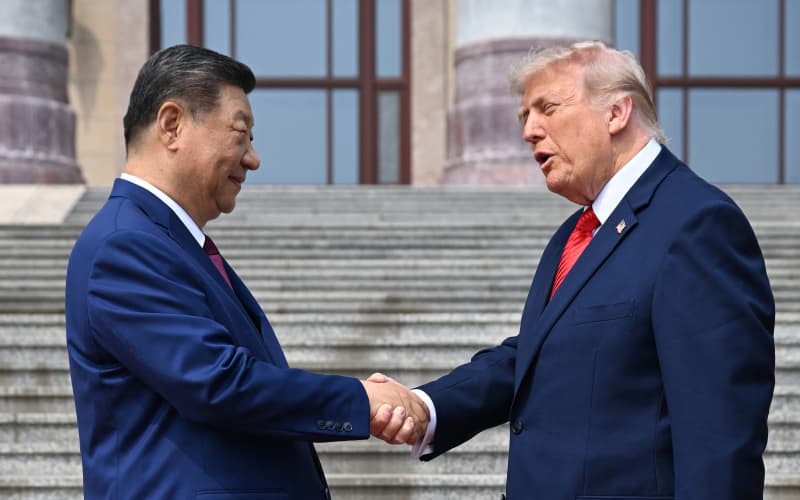
The funding push comes at a delicate diplomatic moment. President Trump is expected to meet Chinese leader Xi Jinping in September, around the time of the U.N. General Assembly gathering in New York. Secretary of State Marco Rubio met with Chinese Foreign Minister Wang Yi last week at a regional security conference in the Philippines to lay groundwork for that meeting.
The administration has pursued a dual-track approach toward Beijing: presenting a cooperative face in high-level diplomacy while simultaneously working to blunt the Chinese Communist Party's influence operations elsewhere. In the Western Hemisphere specifically, the administration has combined the new counter-CCP funding with a broader crackdown on authoritarian governments in the region, including the capture of Venezuelan leader Nicolás Maduro earlier this year and tightened sanctions on Cuba's socialist government and Nicaragua.
.
What Comes Next
Much of the expanded funding remains under internal discussion, and officials caution that not every proposed project will move forward. Still, the scale of the plans — spanning telecommunications, cybersecurity, fisheries, mineral rights and religious freedom — signals a broad, sustained effort to push back against Chinese Communist Party influence, independent of how the Trump-Xi relationship develops on the surface. The real-world impact of these programs will likely take months or years to become clear.
.
Sources:
- Associated Press — "US looks to boost anti-China spending worldwide by hundreds of millions, documents say" — https://apnews.com/article/trump-countering-china-funding-e8ed66bd2d8a2a06dd750b6157979a1e
- Amnesty International — "China: Authorities must end interference in Tibetan religious practices as Dalai Lama announces succession plan" — https://www.amnesty.org/en/latest/news/2025/07/china-authorities-must-end-interference-in-tibetan-religious-practices-as-dalai-lama-announces-succession-plan/
- The Diplomat — "The Dalai Lama's Succession Battle: The Stakes for Tibetans and Beijing" — https://thediplomat.com/2026/04/the-dalai-lamas-succession-battle-the-stakes-for-tibetans-and-beijing/
.
What's Your Reaction?
 Like
0
Like
0
 Dislike
0
Dislike
0
 Love
0
Love
0
 Funny
0
Funny
0
 Wow
0
Wow
0
 Sad
0
Sad
0
 Angry
0
Angry
0













Comments (0)