

The Dam Is Breaking: How the Iran-U.S. Deal Is About to Flood Oil Markets
After nearly four months of war and a near-total shutdown of one of the world's most critical shipping lanes, the United States and Iran have struck a deal to end hostilities and reopen the Strait of Hormuz. For the global oil market, the consequences are enormous — and immediate.

.
A Narrow Passage That Shapes the World Economy
The Strait of Hormuz is just a few miles wide at its narrowest point. But through this thin sliver of water between Iran and Oman, roughly a fifth of the world's oil and natural gas once flowed every single day. When the conflict between the U.S., Israel, and Iran erupted on February 28, that flow effectively stopped. The consequences — surging energy prices, supply shortages, economic pressure on importing nations — rippled across every continent.
Now, a deal signed this week between Washington and Tehran is about to change that.
What the Deal Says
U.S. President Donald Trump and Iranian President Masoud Pezeshkian digitally signed a 14-point memorandum of understanding on Wednesday. Iran's official state news agency IRNA published the key terms: both sides commit to ending combat operations on all fronts and lifting naval blockades in the Gulf region. Iran has also pledged not to develop or acquire nuclear weapons.
In return, the United States has agreed to unfreeze Iranian financial assets and end the blockade of Iranian ports and ships. Tehran, for its part, must facilitate the return of maritime traffic in the Gulf and Gulf of Oman to prewar levels. A formal signing ceremony is scheduled for Friday in Switzerland, brokered by Pakistan.
Trump hailed the agreement on social media: "Ships of the World, start your engines. Let the oil flow!"
Millions of Barrels, Ready to Move
The reopening of the strait is expected to trigger an immediate and massive surge of oil onto global markets. According to Kpler, an energy analytics firm, approximately 93 million barrels of non-Iranian crude are currently stranded in the Persian Gulf, unable to move. Those barrels belong to Gulf producers who had no viable exit route once Hormuz was effectively closed.
On top of that, around 72 million barrels of Iranian oil sit on tankers just west of the Iranian port of Chabahar, waiting for sanctions relief that the deal is expected to provide. As soon as restrictions are lifted, these volumes could begin moving to buyers — particularly in Asia.
Iran's tanker fleet has already started preparing. Several Iranian vessels reactivated their transponders and repositioned toward the strait in the days leading up to the signing.
Prices Are Already Falling — And May Fall Further
Oil markets have been reading the writing on the wall for days. Prices dropped approximately 15% over four consecutive trading sessions — the longest losing streak of 2026. Spot differentials for Middle Eastern crude had already slipped into discount territory earlier this week, a sign that sellers are struggling to find buyers at current price levels.
The logic is straightforward: more supply means lower prices, and the market knows it. Crude sellers will need to offer further discounts to attract buyers once the strait formally reopens, especially since some major trading firms still hold unsold cargoes.
Asia Is Not Ready to Rush In
Despite the incoming flood of oil, major Asian buyers are in no hurry to load up. Most refiners in China, South Korea, Japan, and Taiwan have already secured their crude supplies through July and August. Chinese refineries are actually heading into a period of planned maintenance, with more than 1.8 million barrels per day of processing capacity scheduled to be offline in July alone.
China's overall refinery throughput — already at a near four-year low — is expected to drop further this month before recovering in July. Analysts point to structural reasons for subdued demand: China's rapid shift to electric vehicles is dampening fuel consumption, reducing the incentive to buy more crude even when prices are low.
A large-scale surge in Chinese buying is considered unlikely unless Beijing eases restrictions on fuel exports or decides to top up its strategic petroleum reserves — its emergency stockpiles of oil.
India and Taiwan Prepare to Rebalance
While China holds back, other Asian importers are positioning themselves to benefit. India could increase its Gulf oil imports by as much as 400,000 to 600,000 additional barrels per day through August, according to Kpler projections, as refiners shift away from alternatives they had sourced during the strait's closure — including oil from Russia and the Americas.
Taiwan's state-owned refiner CPC has stated it is ready to resume importing heavier, high-sulphur Middle Eastern crude grades to meet domestic demand for products such as bitumen (an asphalt-like material used in road construction) and sulphur. Middle Eastern producers have also approached Indian refiners about honouring existing term contracts that were difficult to fulfil during the blockade period.
Not a Flick of a Switch
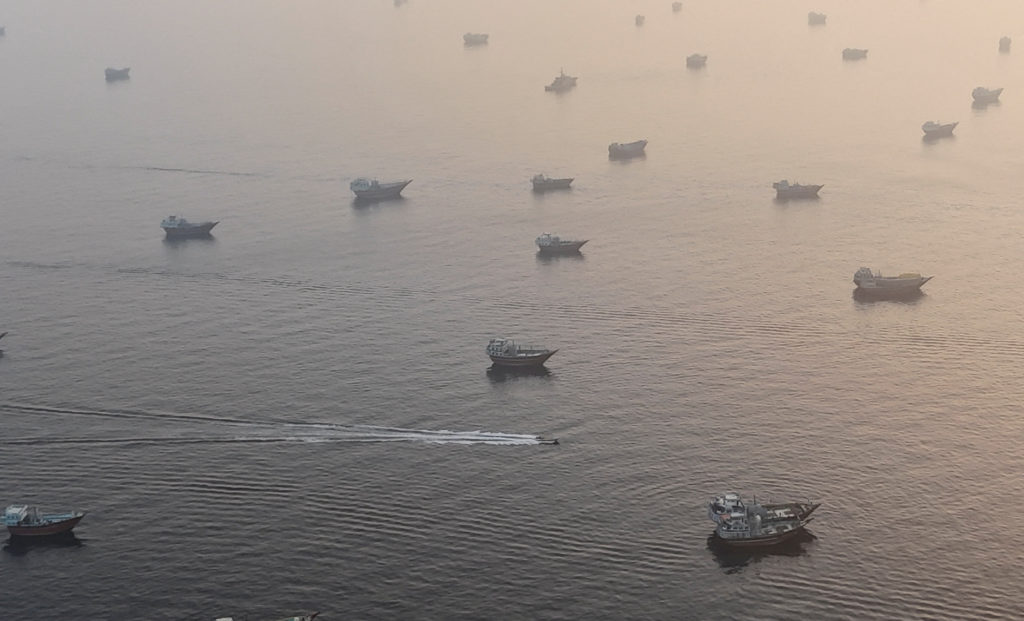
Despite the optimism surrounding the deal, a rapid return to normal shipping will not happen overnight. Around 500 commercial vessels remain anchored in the Persian Gulf, and they cannot all pass through the narrow strait simultaneously. Experts estimate mine clearance alone could take up to six months. Restarting oil production in countries like Iraq — which had to shut in fields due to lack of storage — may take months as well.
Ship captains will also need confidence that the route is genuinely safe before risking expensive vessels and cargo. The deal's implementation hinges on a 30-day maritime normalisation window and a 60-day deadline for broader negotiations, including unresolved questions about Iran's nuclear programme and the situation in Lebanon, where Israel has signalled it intends to maintain its military presence.
A Deal With Global Consequences
Whether the implementation goes smoothly or hits obstacles, the direction is clear: one of the most disruptive energy crises in recent memory is moving toward resolution. The Trump administration's deal-making approach has produced a concrete result — an agreement that global markets, importers, and energy-dependent economies had been waiting for since late February.
For oil-importing countries, lower fuel prices could offer relief from months of elevated costs. For oil-exporting nations, the recalibration will be painful. For the world economy, the reopening of the Strait of Hormuz is the first genuinely positive signal in a quarter defined by energy anxiety.
.
Sources:
- Reuters – Hormuz reopening to release wave of oil supply, depress prices (June 18, 2026): https://www.reuters.com/business/energy/hormuz-reopening-release-wave-oil-supply-depress-prices-2026-06-18/
- Reuters – Iran and US to end fighting and maritime blockades in the Gulf area per MoU (June 17, 2026): https://www.reuters.com/world/china/iran-us-end-fighting-maritime-blockades-gulf-area-per-mou-irans-official-news-2026-06-17/
- Associated Press / PBS NewsHour – Iran will reopen the Strait of Hormuz and can sell oil freely under deal with the U.S.: https://www.pbs.org/newshour/world/iran-and-u-s-reach-an-initial-deal-to-extend-the-ceasefire-and-open-the-strait-of-hormuz-but-challenges-remain
- PBS NewsHour / AP – Even with a deal to reopen the Strait of Hormuz, it could take weeks or months for oil to fully flow: https://www.pbs.org/newshour/world/even-with-a-deal-to-reopen-the-strait-of-hormuz-it-could-take-weeks-or-months-for-oil-to-fully-flow
- NPR – U.S. and Iran announce an initial deal to end the war and reopen the Strait of Hormuz: https://www.npr.org/2026/06/15/nx-s1-5858590/us-iran-deal-updates
.
What's Your Reaction?
 Like
0
Like
0
 Dislike
0
Dislike
0
 Love
0
Love
0
 Funny
0
Funny
0
 Wow
0
Wow
0
 Sad
0
Sad
0
 Angry
0
Angry
0













Comments (0)