

China Draws a Line in the Sand as Trade Talks With US and EU Loom
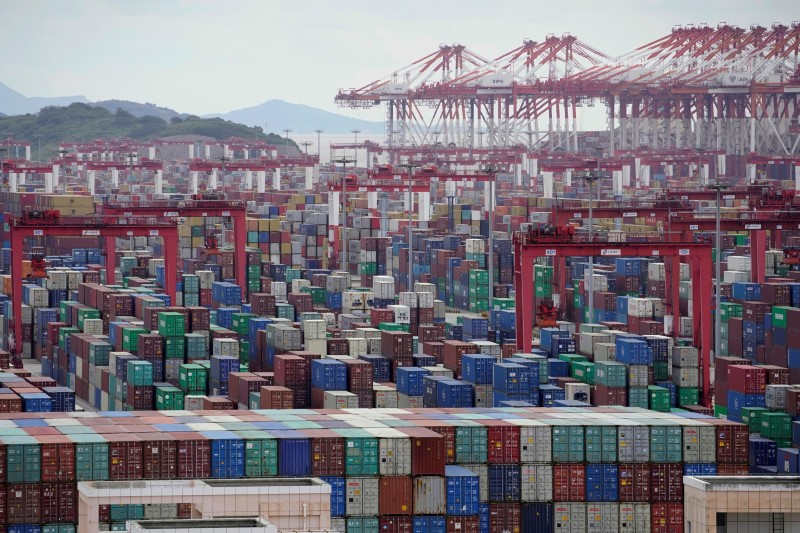
China's leadership is doubling down on its state-driven, export-heavy economic model just as trade negotiations with Washington and Brussels reach a critical point. Beijing's Communist Party is rejecting Western complaints about overcapacity and unfair subsidies, even as fresh research suggests the criticism is justified. Analysts say the message is less about compromise and more about drawing "red lines" before talks begin.

.
A Defiant Message From Beijing
China's ruling Communist Party is standing firmly behind an economic strategy that pours money into factories and advanced technology while leaving ordinary consumers with comparatively little spending power. A top-level Party meeting this week made clear that Beijing will not shift toward the consumer-driven growth that Western governments and many independent economists have been demanding for years.
The timing is no coincidence. Presidents Xi Jinping and Donald Trump are expected to hold further talks this year, while the European Union has given Beijing until October to resolve growing frustration over its trade surplus with the bloc.
.
Beijing Pushes Back on "Overcapacity" Complaints
Just days before the Party meeting, China's Commerce Ministry published a paper dismissing Western concerns about industrial overcapacity as based on "logical flaws" and "ulterior motives." The state's top ideological journal, Qiushi, went further, defending China's chronically weak household consumption as a "historically justified" side effect of its investment-first development model.
Economist Xu Tianchen of the Economist Intelligence Unit called this a dual signal: an attempt to explain Beijing's reasoning to the West, and a warning that certain limits are non-negotiable. "The commerce ministry paper made clear that China doesn't accept discriminatory measures against its firms and products," he noted.
Premier Li Qiang has tried to rebrand the concern altogether, describing fears of a Chinese manufacturing wave — sometimes called "China shock 2.0" — as instead a "China opportunity 2.0" for the world economy.
.
A Narrative Facing Growing Skepticism
Independent experts are not convinced. Eswar Prasad, a Cornell University trade policy professor and former IMF China director, said Beijing's framing is failing to land in the countries most affected by the flood of Chinese exports. He pointed out that China's dependence on exports to compensate for weak domestic demand undercuts its own argument that this is a gift to the world.
The numbers back up that skepticism. According to the OECD, subsidies explain market-share gains for nearly 60 percent of Chinese firms. A Bank of Italy study estimated that domestic overcapacity and weak consumption drive around three-quarters of China's export growth, while McKinsey Global Institute research found China adds three times more productive capacity each year than the US and Europe combined — despite capital returns roughly 40 percent lower.
"Chinese arguments are more frequent and formal now because the evidence of systemic domestic economic problems leading to spillovers on the rest of the world is mounting even faster," said Daniel Rosen of the Rhodium Group.
.
Europe Loses Patience Over Trade Gap
The European Union's frustration has been building for months. The EU's goods trade deficit with China reached roughly €360 billion in 2025, a jump of nearly 20 percent from the year before, and Brussels has set October as the deadline for Beijing to address the imbalance following talks between EU Trade Commissioner Maroš Šefčovič and China's commerce minister. Germany alone accounts for about €90 billion of that gap.
German Chancellor Friedrich Merz has been especially outspoken, arguing the yuan is undervalued by as much as 30 percent — nearly double the International Monetary Fund's own estimate of around 16 percent. Speaking after a European Council summit, Merz accused Beijing of "flooding markets" through state subsidies and said an artificially cheap, non-convertible currency was "not acceptable." France and Germany have since said they want a joint roadmap to confront the issue.
.
Washington's Leverage — and Its Limits
The United States already tested a harder line last year, imposing tariffs exceeding 100 percent on Chinese goods. Beijing responded by leaning on its near-monopoly over rare earth elements, materials critical to industries worldwide, to blunt the pressure and regain the upper hand. That standoff appears to have shaped Beijing's current approach toward Europe as well.
"The U.S. tariff episode appears to have supplied a template of managed engagement that Beijing is also applying to Europe — essentially buying time," said Alicia Garcia-Herrero, chief Asia-Pacific economist at Natixis. She added that China's messaging on its economic model now comes across as noticeably more confident than it did a year or two ago.
.
A Cautious Nod to Reform — Without Real Change
Beijing is not claiming everything is fine. Officials have acknowledged a supply-demand "contradiction" and pledged to rein in the deflationary price wars squeezing manufacturers' profits. The Qiushi journal itself conceded that "historical justification does not mean long-term justification" for weak consumption, admitting a change in the model was "necessary."
In practice, this has meant modest steps like tighter scrutiny of local government spending, which economists blame for fueling overcapacity — but no sign of the deeper structural reforms trading partners have called for.
.
Outlook: A Test of Confidence Before the Talks
Beijing's posture suggests a government betting it can weather Western pressure without giving up the industrial policies at the heart of its economic model, much as it did against Washington's tariffs. Whether that confidence holds will become clear in the coming months, as the EU's October deadline approaches and further meetings between Xi and Trump take shape. For now, China's Communist Party leadership appears intent on managing the optics of trade friction rather than resolving its root causes — a familiar pattern for a system more focused on preserving its own model than on genuine market reform.
.
What's Your Reaction?
 Like
0
Like
0
 Dislike
0
Dislike
0
 Love
0
Love
0
 Funny
0
Funny
0
 Wow
0
Wow
0
 Sad
0
Sad
0
 Angry
0
Angry
0















Comments (0)