

Taiwan Tells Washington: "We Will Not Wait for the Cavalry"
Taiwan's top diplomat in the United States has made an urgent appeal for Washington to proceed with a stalled $14 billion arms deal — as Beijing ramps up military pressure and the Trump administration weighs competing priorities.

.
Taiwan's Envoy Speaks Out
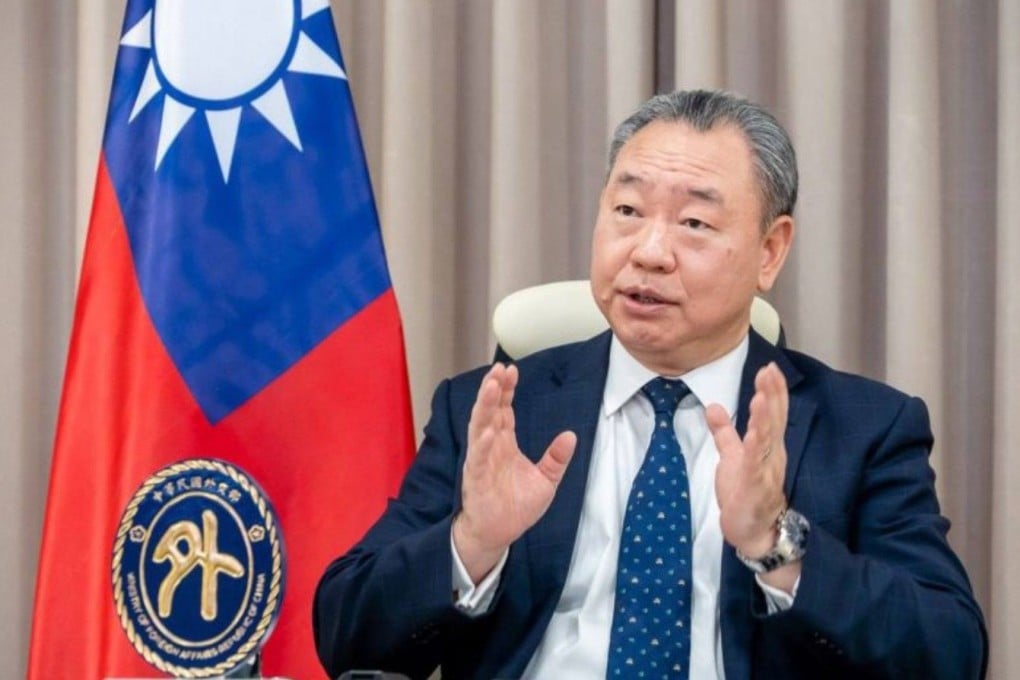
Alexander Yui Tah-ray, the head of the Taipei Economic and Cultural Representative Office in Washington — Taiwan's de facto embassy — left no room for ambiguity in a recent interview with the Associated Press. Taiwan needs the weapons, and it needs them now.
"We need those arms for defensive purposes," Yui said. "We're trying to increase our defense expenditure. We try to increase our ability to defend ourselves better and survive times of crisis."
He was equally clear that Taiwan does not intend to rely on outside intervention to protect itself. "We will not wait and depend on the U.S. cavalry to come and save us," he said. "That's why we're willing to acquire, to buy U.S. equipment and arms to make ourselves stronger."
A Deal in Limbo
The $14 billion arms package — which would be the largest weapons transfer to Taiwan in history — has been stalled for months. The U.S. Congress approved it in January 2026, but final authorization requires President Trump's signature.
Trump discussed the deal during his May summit with Chinese leader Xi Jinping in Beijing. Afterwards, he told reporters he made "no commitment either way." Xi reportedly warned that the Taiwan question was the most sensitive issue in U.S.-China relations and could lead to serious conflict if mishandled.
Adding to the uncertainty, Acting Navy Secretary Hung Cao confirmed to a Senate hearing that the sale had been put on "pause" — to ensure sufficient munitions for ongoing U.S. military operations against Iran, known as Operation Epic Fury. He said the sale would resume "when the administration deems necessary."
Taiwan's government, for its part, said it had not been officially informed of any pause.
Washington's Position: Officially Unchanged
Secretary of State Marco Rubio sought to calm nerves at a congressional hearing this month. He affirmed that U.S. policy on Taiwan has not changed and pushed back firmly against the notion that Washington consults Beijing on arms sales.
"They are not negotiated, and they are not consulted," Rubio said of China's role in the process. He acknowledged the sale was under review and cited competing demands on U.S. weapons stockpiles — drawn down significantly during operations in Iran — as a key factor in the delay.
The Trump administration did, however, approve a separate $11 billion arms package for Taiwan in December 2025 — a record at the time. It included HIMARS rocket artillery systems, ATACMS missiles, self-propelled howitzers, and drones.
China's Growing Military Pressure
Taiwan's envoy Yui was blunt about who bears responsibility for the current tensions. "We're not the aggressors. It is the People's Republic of China who is sending all the planes and ships," he said. "They're the ones who are trying to annihilate our freedom and democracy in Taiwan."
China sends warships and military aircraft into Taiwan's vicinity almost daily. In recent years, Beijing has conducted large-scale military exercises simulating a blockade or invasion of the island. China's Communist Party leadership views Taiwan as a breakaway province and has vowed to bring it under its control — by force if necessary.
Chinese Foreign Ministry spokesperson Lin Jian dismissed Taiwan's security efforts, calling it "a dead end" to seek protection through arms purchases and ties with Washington.
Taiwan Is Not Waiting Passively
Despite the uncertainty over the U.S. deal, Taiwan is pushing ahead with its own defense buildup. President Lai Ching-te's government has pledged to raise defense spending to 3.3% of gross domestic product in the near term, with a target of 5% by 2030. A special defense budget of $25 billion was passed by Taiwan's legislature earlier this year.
Taiwan is also developing its own air defense system, known as "Taiwan Dome," designed to provide layered detection and interception capabilities against missile and air threats.
President Lai told reporters his administration is in close contact with Washington. "We hope the arms purchase from the U.S. can be approved as soon as possible," he said.
A Test of U.S. Resolve
Analysts and members of Congress from both parties have framed the $14 billion sale as a critical test of U.S. commitment to Taiwan. The Taiwan Relations Act of 1979 legally obliges Washington to supply the island with sufficient defensive weapons. A Reagan-era agreement known as the Six Assurances additionally pledged that the U.S. would not negotiate the timing or content of arms sales with Beijing.
Observers warn that indefinite delay — or the appearance of Chinese influence over the decision — could encourage Beijing to escalate pressure and erode confidence in American security guarantees across the wider Pacific region.
Taiwan's envoy Yui, while navigating the unpredictable currents of the second Trump administration, expressed measured confidence. "It's important to look at the actions, what is happening, not just the rhetoric," he said. "The big stick is still there."
.
Sources:
- Associated Press – Taiwan diplomat interview with Alexander Yui: https://apnews.com/article/taiwan-trump-arms-sales-china-eab716f67fe5aa36ec05ff8209d0f605
- CBS News – Acting Navy Secretary on arms sale pause: https://www.cbsnews.com/news/navy-secretary-says-14-billion-dollar-taiwan-arms-sale-put-on-pause-over-iran-war/
- Al Jazeera – US pause on $14B Taiwan arms sale: https://www.aljazeera.com/news/2026/5/22/us-pausing-14bn-arms-sale-to-taiwan-due-to-iran-war-navy-chief-says
- NPR – $11 billion arms sale approved December 2025: https://www.npr.org/2025/12/18/nx-s1-5648080/us-arms-sales-taiwan-10-billion
- American Enterprise Institute – Analysis of the $14B deal as Trump's litmus test: https://www.aei.org/op-eds/a-14-billion-taiwan-arms-sale-is-trumps-litmus-test-on-china/
.
What's Your Reaction?
 Like
0
Like
0
 Dislike
0
Dislike
0
 Love
0
Love
0
 Funny
0
Funny
0
 Wow
0
Wow
0
 Sad
0
Sad
0
 Angry
0
Angry
0










Comments (0)