

Southeast Asia's Top Diplomats Gather in Manila as Iran War Rattles the Region
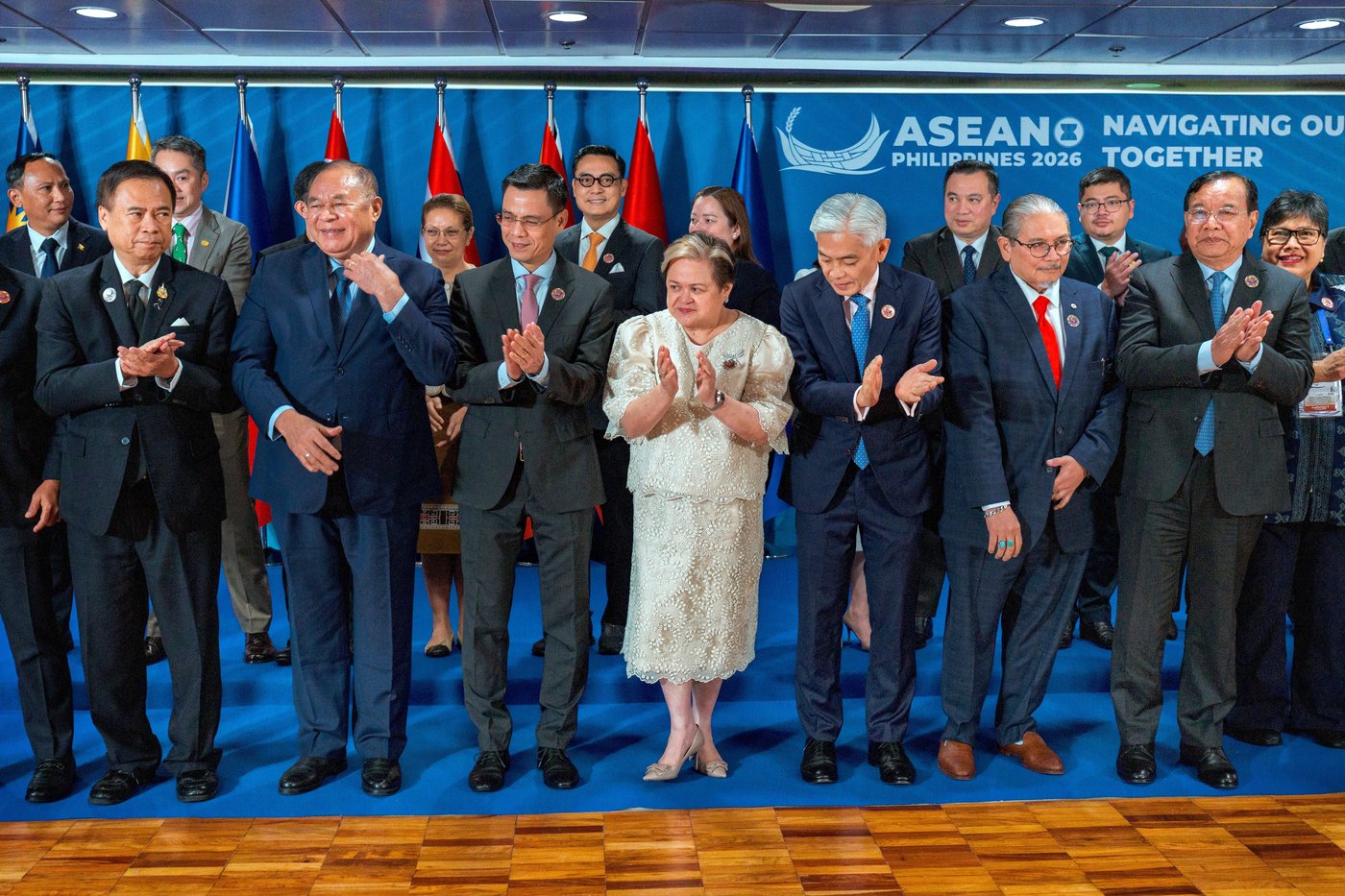
Foreign ministers from ASEAN and major world powers, including the United States and China, met this week in Manila under the shadow of the escalating US-Iran conflict. The Philippine-hosted talks also confronted two long-running regional crises: Myanmar's civil war and stalled negotiations over a South China Sea code of conduct with Beijing. Washington's Marco Rubio and China's Wang Yi were both in attendance, with a bilateral meeting seen as possible.

.
A Diplomatic Gathering Overshadowed by War
Foreign ministers from the eleven ASEAN member states and their international partners convened in Manila this week for a set of high-level meetings that were meant to focus on Southeast Asian security and economic cooperation. Instead, the agenda was quickly reshaped by events thousands of miles away. The reignited military confrontation between the United States and Iran has unsettled global energy markets and raised fresh fears over inflation and slowing growth.
Philippine officials, who chair ASEAN this year, confirmed that the Middle East crisis would take center stage in several sessions. A spokesperson for the Department of Foreign Affairs said ministers would have multiple occasions to raise the topic during the week's events. The gathering, held at the Philippine International Convention Center, marks the Philippines' turn as ASEAN's rotating chair for 2026.
Concerns over the Strait of Hormuz, a critical corridor for global oil shipments, loomed large. With fighting between Washington and Tehran now stretching into more than a week, delegates from Asia's trade-dependent economies arrived in Manila keenly aware of how a distant war could reach their own economies through energy prices and shipping disruptions.
Washington and Beijing in the Same Room
Among the most closely watched developments was the presence of both U.S. Secretary of State Marco Rubio and Chinese Foreign Minister Wang Yi at the same string of meetings. Philippine officials confirmed that Rubio and Wang were expected among the foreign ministers arriving in Manila for the high-level ASEAN gatherings. A bilateral sit-down between the two was considered a real possibility on the sidelines, though not formally announced in advance.
Rubio, representing the Trump administration, also traveled to Manila to reaffirm Washington's commitment to its Indo-Pacific partners at a moment of global uncertainty. He was reported to have voiced openness to also meeting Russia's Sergey Lavrov during the same string of events, though he stopped short of confirming any meeting was locked in. The administration's active engagement in the region stands as a signal that Washington intends to remain a steady counterweight to Beijing's growing assertiveness, even while managing a separate military crisis in the Middle East.
Russian Foreign Minister Sergey Lavrov was also present, alongside ministers from India, Japan, Australia, South Korea, Britain and the European Union. Rubio was additionally expected to take part in a meeting of the Quad, the four-nation security dialogue joining the United States, India, Japan and Australia that Beijing has long criticized as an attempt to contain China's influence, according to reporting on the sidelines events planned for the week.
Beijing's Stalled Promises in the South China Sea
Talks between ASEAN and China over a long-delayed code of conduct for the South China Sea remained a central and unresolved irritant. Regional officials had set 2026 as the target year to conclude the agreement, a deadline that now looks increasingly out of reach. Manila's own foreign secretary acknowledged that even basic definitions remain contested, noting that the meaning of "self-restraint" has not been resolved after nearly a decade of talks.
The slow pace reflects a pattern critics say is by design. One prominent South China Sea researcher went so far as to call a 2026 conclusion "100 per cent not likely," pointing to Beijing's reluctance to accept terms that would reference the 2016 international arbitration ruling that rejected most of China's expansive maritime claims. That ruling, which Beijing has never recognized, remains a persistent flashpoint between China and Southeast Asian claimant states, including the Philippines, Vietnam and Malaysia.
In the meantime, tensions on the water have continued. Philippine forces have documented aggressive maneuvers by Chinese coast guard vessels near contested reefs and shoals, including incidents involving water cannons against Filipino boats. Analysts note that the absence of a binding framework leaves crisis management dependent on political goodwill rather than clear, enforceable procedures, a gap that has done little to reassure smaller claimant nations wary of Beijing's expanding footprint in the region.
Myanmar's War Enters Its Fifth Year Without Resolution
Myanmar's civil war, now in its fifth year since the 2021 military coup, again proved a difficult subject for ASEAN's consensus-driven diplomacy. The conflict has killed an estimated 100,000 people since the junta seized power, and the bloc's own peace initiative has struggled to gain any real traction on the ground. ASEAN foreign ministers were scheduled to hold an informal consultation specifically on Myanmar during the week's meetings.
Myanmar's ruling military government was represented only at a lower diplomatic level, reflecting the bloc's continued unease with fully engaging the junta at senior levels. The lack of progress underscores a broader challenge facing ASEAN: a bloc built on non-interference and consensus often finds itself with limited tools to resolve conflicts within its own membership.
Outlook
With the Middle East crisis, Myanmar's war, and the unfinished South China Sea negotiations all competing for attention, this year's ASEAN meetings in Manila underscored how thinly stretched the bloc's diplomatic bandwidth has become. The Philippines, as host, framed the gathering as proof of ASEAN's continued relevance, but the string of unresolved and overlapping crises suggests that the region's diplomats face a demanding second half of 2026, with no shortage of tests to the bloc's unity and influence.
.
Sources:
- AP News (via ClickOnDetroit) – "Iran war, Myanmar crisis and South China Sea rifts under the spotlight in ASEAN ministerial talks" – https://www.clickondetroit.com/news/world/2026/07/20/iran-war-myanmar-crisis-and-south-china-sea-rifts-under-the-spotlight-in-asean-ministerial-talks/
- Philstar.com – "Marco Rubio, Wang Yi expected in Manila for ASEAN meetings" – https://www.philstar.com/headlines/2026/07/16/2542573/marco-rubio-wang-yi-expected-manila-asean-meetings/amp/
- Radio Free Asia (RFA) via GlobalSecurity.org – "ASEAN, China unlikely to finalize South China Sea Code of Conduct at upcoming summit" – https://www.globalsecurity.org/military/library/news/2026/04/mil-260424-rfa01.htm
- South China Morning Post (SCMP) – "South China Sea expert warns 2026 code of conduct is 'simply not achievable'" – https://www.scmp.com/news/china/diplomacy/article/3345137/south-china-sea-expert-warns-2026-code-conduct-simply-not-achievable
- Philstar.com – "Philippines targets end-2026 for South China Sea code of conduct" – https://www.philstar.com/headlines/2026/06/10/2534209/philippines-targets-end-2026-south-china-sea-code-conduct
- Arab News – "Manila to host Rubio, Lavrov and Wang Yi for ASEAN ministerial" – https://www.arabnews.com/node/2651608/world
.
What's Your Reaction?
 Like
0
Like
0
 Dislike
0
Dislike
0
 Love
0
Love
0
 Funny
0
Funny
0
 Wow
0
Wow
0
 Sad
0
Sad
0
 Angry
0
Angry
0











Comments (0)