

Fire, Tear Gas and a Mega-Dam: India Sends More Troops to Its Remote Northeast as Anger Over a Border River Boils
Violent protests have erupted in India’s far northeastern state of Arunachal Pradesh. Local villagers, mostly young people, oppose a giant dam that New Delhi wants to build on the Siang River. India sees the dam as a shield against a much larger Chinese project upstream in Tibet. After a police station was set on fire and at least 21 people were arrested, India is sending hundreds of extra security personnel to the region.

.
What happened in the Siang Valley
Last week, protests in the Siang Valley turned violent. Police fired tear gas, and young protesters threw stones. Authorities say a police station and an office of the state-owned National Hydroelectric Power Corporation (NHPC) were set on fire. At least 21 people were arrested.
On Tuesday, the state's police chief said more forces are being brought in "where required" to prevent a breakdown of law and order.
The unrest did not come out of nowhere. On September 30, protesters vandalised a local lawmaker's house, blocked roads and torched a police vehicle, just days after a separate clash with armed police forces at Geku.
Why villagers are fighting the project
The planned Siang Upper Multipurpose Project would generate about 11,000 megawatts, enough to make it India's largest hydropower plant. Members of the Adi tribe, who live in the Siang basin, say it threatens their lands and way of life.
Local groups give concrete numbers. One farmers' forum says that 27 ancestral villages would be completely flooded and dozens more affected. Protest leaders say they will not stop until the project is cancelled.
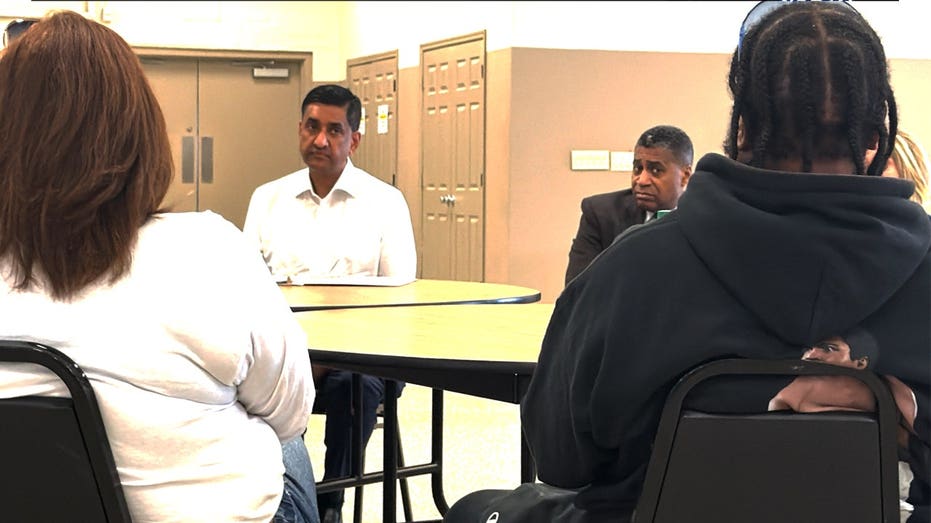
The protesters also complain about how the project has been handled. Residents have argued that there was no formal consent, too little public information and almost no real engagement with the affected communities. Many were angered when armed police were sent to protect surveyors working on the project. At one rally, villagers said the government was treating an indigenous community like an enemy of the state.
State authorities see it differently. They argue the project would boost economic growth, create jobs and strengthen water and energy security.
The bigger picture: a dam race on a shared river
The Siang flows out of Tibet, where it is called the Yarlung Tsangpo. It later becomes the Brahmaputra, a lifeline for millions of people in India and Bangladesh.
In December 2024, Beijing approved what is meant to be the world's largest hydropower project on this river. Chinese Premier Li Qiang presided over the ground-breaking ceremony in Tibet's Medog County, near the point where the river makes a sharp U-turn. Estimates of the cost run to well over $100 billion.
India's worry is simple. A country that controls the upstream flow could, in theory, hold back or suddenly release large amounts of water. China insists the project is fully within its sovereignty and presents it as clean energy. An Indian government analysis, reported earlier this year, warned the dam could cut the Brahmaputra's dry-season flow by as much as 85 percent.
Trust is also an issue. An agreement between India and China on sharing river data expired in 2023. Meanwhile, Beijing has a long record of silencing local opposition to its own dams. Past protests by Tibetans against dam projects were met with arrests and violent crackdowns. Residents of Tibet have no comparable freedom to speak out.
The territory itself is disputed. China claims Arunachal Pradesh as "southern Tibet", while India calls it an inseparable part of its territory. The state's chief minister has called the Chinese project an existential threat.
A dilemma with no easy answer
India's government is caught between two pressures. It wants a safeguard against a powerful and often secretive neighbour. At the same time, it faces citizens who feel their homes are being sacrificed to a geopolitical contest.
Some voices in the region urge another path. One local critic argues India should seek a diplomatic solution with China instead of using paramilitary forces against its own people. Experts also point out that the Chinese dam sits in an area with high earthquake risk, which makes open talks and data sharing even more important.
The chief minister has promised to protect national interests while respecting the people's rights. How he balances the two will decide whether the Siang Valley calms down, or whether more fires follow. The extra troops may keep order for now, but they do not answer the villagers' main question: what happens to the land their ancestors have lived on for generations?
.
Sources
- Reuters, "India deploys extra forces after protests over dam on Chinese border escalate" (27 Oct 2026): https://www.reuters.com/world/china/india-deploys-extra-forces-after-protests-over-dam-chinese-border-escalate-2026-10-27/
- ThePrint/PTI, "Arunachal: Upper Siang hydropower project protest turns violent, MLA's house vandalised" (30 Sep 2026): https://theprint.in/india/arunachal-upper-siang-hydropower-project-protest-turns-violent-mlas-house-vandalised/3058330/
- Business & Human Rights Resource Centre (summarising Scroll.in), "India: State armed forces deployment for dam survey sparks protests in Arunachal's Siang Valley": https://www.business-humanrights.org/en/latest-news/india-armed-forces-deployment-for-dam-survey-sparks-protests-in-arunachals-siang-valley/
- The Arunachal Times, "Komkar protest against deployment of armed forces": https://arunachaltimes.in/?p=254094
- Deccan Herald, "Damning the Brahmaputra: India, China and a looming water row": https://www.deccanherald.com/amp/story/india%2Fdamning-the-brahmaputra-india-china-and-a-looming-water-row-3341170
- Phayul (citing Reuters), "India fears 85% drop in Brahmaputra after China's Mega-Dam in Tibet": https://phayul.com/india-fears-85-drop-in-brahmaputra-after-chinas-mega-dam-in-tibet/
- Arise News, "China Begins Building World's Largest Hydropower Dam in Tibet": https://www.arise.tv/china-begins-building-worlds-largest-hydropower-dam-in-tibet-sparking-regional-tensions
.
What's Your Reaction?
 Like
0
 Dislike
0
 Love
0
 Funny
0
 Wow
0
 Sad
0
 Angry
0










Comments (0)